







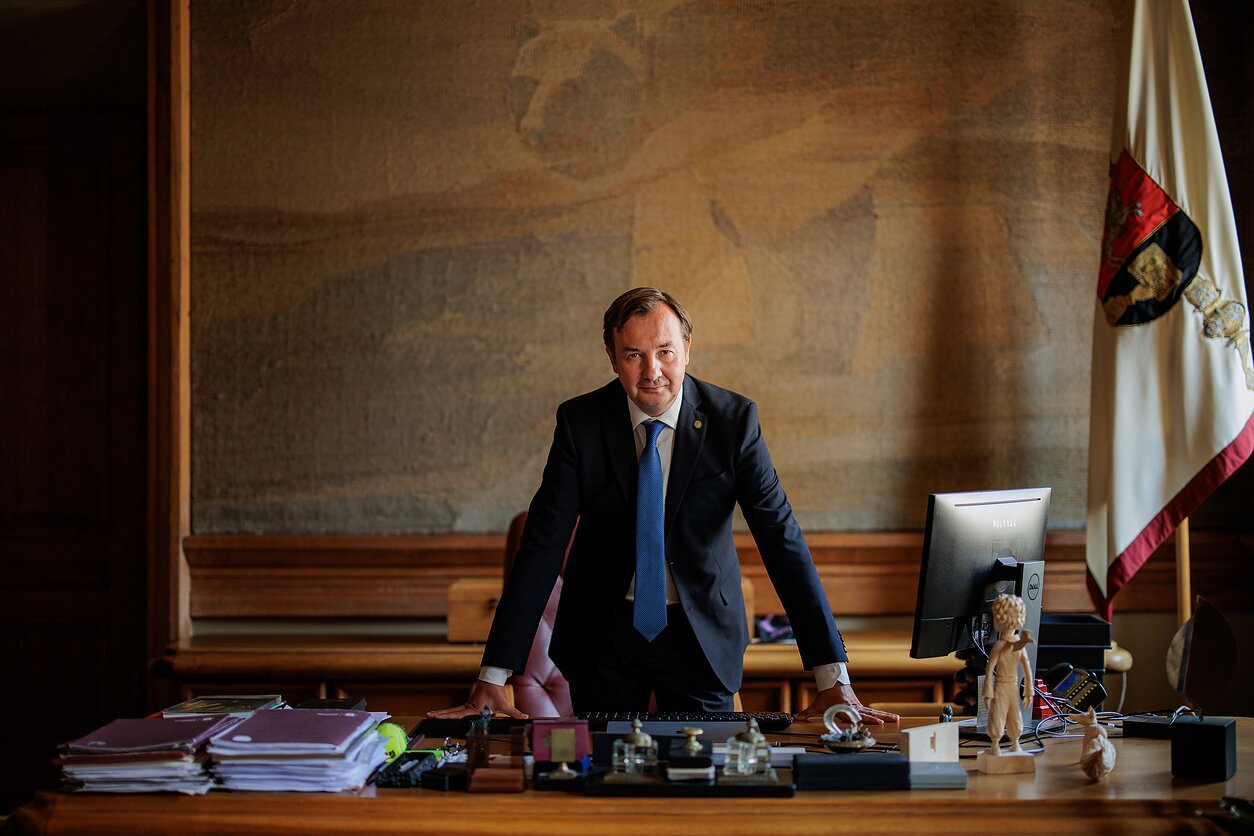
The Lithuanian Season in France will kick off on Thursday with the Vilnius and Sorbonne universities signing a cooperation agreement and hosting a conference tackling scientific subjects, as well as contentious histories.
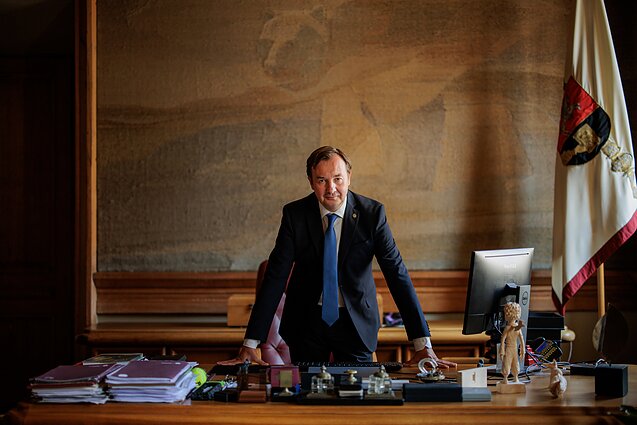
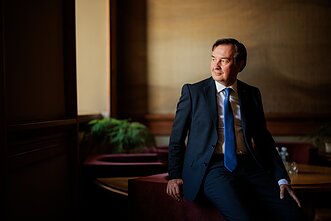
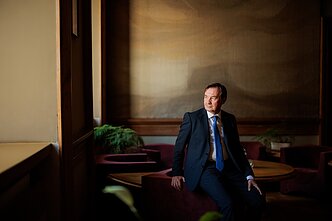
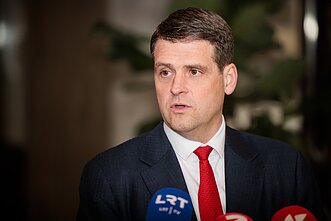
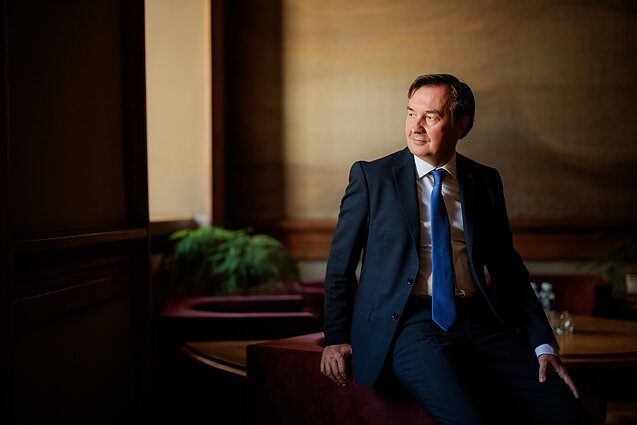
In the run-up to the date, LRT.lt spoke to VU Rector Rimvydas Petrauskas about the historical ties between Lithuania and France, the meaning of cooperation, and what is sometimes lacking in the Nobel Prize.
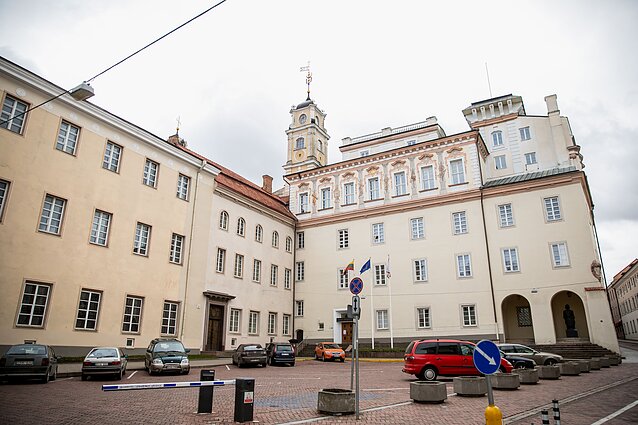
The Sorbonne University has always been one of the most important centres of science, and Vilnius University is also very important in the region. What connects these two centres of science?
There has not been such close contact for a long time. [...] If we look historically, Lithuanians started studying in German and Polish universities in the Middle Ages and modern times, because they were closer.
There were people from Lithuania going to France from the 16th century onwards but in relatively small numbers. In the 20th century, between the world wars, France had become a more important place in Lithuania, alongside Germany. It is probably not for nothing that, after the occupation, some of our intellectual emigrants also chose the Sorbonne in Paris.
Further reading
Perhaps the most prominent example is Algirdas Julius Greimas, one of the founders of our semiotic schools, as well as of the French one, who defended his dissertation at the Sorbonne after the war. Emanuel Levinas, a philosopher of Lithuanian origin who had emigrated from Lithuania, also worked at the Sorbonne.
If we compare the two institutions, the Sorbonne has had a lasting influence from the 13th century onwards and has had a profound impact on Western Europe. Vilnius University, if we look at the map of European universities in the 16th century, stands out in another way. It is the easternmost university.
There was no other university further east than 200 years after the founding of Vilnius University, which allowed it to cover, in a way, a wide geographical region, the lands of what is now Ukraine, Belarus and so on.
It is natural to refer to the Enlightenment when the French began to dominate European culture. The prosperity of the university at the end of the 18th century is also linked to some French professors.

Several French physicians established the Faculty of Medicine on their arrival here. Jean-Emmanuel Gilibert, a botanist from France, not only founded the Botanical Garden in Vilnius but also wrote and published the first textbook here, in Poland and Lithuania. So it is also through such links that our history can be told.
[...] As far as intellectual links are concerned, from the second half of the 18th century onwards, when France became not only a cultural but also a political model, French thinkers began to propose various reform programmes.
When the Polish-Lithuanian Commonwealth was ripe for reform, they contacted French philosophers, including Jean-Jacques Rousseau and others, for advice. The philosophers wrote everything down meticulously.
Of course, they were almost without context, they were very theoretical, and their recommendations were disconnected. Nevertheless, I think that the fact that such people sent advice, that they looked into it, really inspired the generation of reformers in Poland and Lithuania at that time.
What does it mean for the two universities to sign a cooperation agreement?
A contract [gives a] framework, and establishes conditions and opportunities. Researchers have to assess their capabilities. I think the humanities will have one foot in front of us when we start this conference, but I am sure that the other sciences will join in.
We have a very old partnership with the French, not only with the Sorbonne, in the field of lasers, going back to the Soviet era. Now some 60 different companies are working on a product that already plays an important role in the Lithuanian economy and allows Lithuania to show itself as a high-tech country.
The science of lasers, and later the flourishing of the industry, certainly has something to do with cooperation with the French. For example, one of the honorary doctors of our university is the French Nobel Prize-winning physicist Gérard Mourou, through whose contacts with Lithuanian physicists we have also been able to develop this field.
As far as the humanities are concerned, the establishment of the Graeme Centre is in a sense a re-export. Of course, the school of semiotics was here and formed independently, but the name of Greimas and his tradition, his works, some of which are originally written in Lithuanian, naturally inspired this centre.
[...] I think that the whole Lithuanian season in France is a significant event not only for Lithuania, but also, I hope, for France. It is an opportunity for our small country to show itself.
I am following the information, the interest is mutual. I would like to thank the former Lithuanian Ambassador to France, Nerijus Aleksiejūnas, for his idea for the season, which has become a reality thanks to his consistent stubbornness.
France certainly has a lot to choose from in the world, and the work of a consistent ambassador has made it possible for Lithuania to be this year's guest. I also thank all the institutions for believing in us and inviting us to organise such a conference.
Who will make up the conference? What was the direction you chose to take?
It was necessary to identify themes that are important both for Lithuania and for France. At the same time, we had to think that it would also be an opportunity to present Lithuania and the present of its history.
So we settled on a one-and-a-half-day format, consisting of one evening and one full day. The conference will start on September 12 and last until the evening of September 13. Anyone who will be in France is welcome to attend, all you need to do is register.
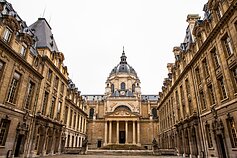
The conference will take place in a prestigious venue, the Sorbonne's main space, the so-called Amphitheatre. The signing of the treaty will be accompanied by two opening speeches, one of which I had the honour of preparing.
I have chosen a historical perspective on Lithuania. My presentation "From the last mediaeval kingdom to modern democracy: Lithuania's Road to Europe" will show Lithuania's history through the prism of relations with France.
I will start with the first French people who came here and whose experience, as is often the case in history, was negative. The French were among the many European nobles who bravely went to war against the last pagans in Europe in the 14th century. The Germans were closer to us, they were more numerous, but the French were relatively active.
They included exceptional personalities such as Marshal Boucicaut of the Kingdom of France. He came here three times, despite the political busyness in France, even though the Hundred Years' War with England was going on in parallel, he found the time and the means to travel great distances, to invest great sums of money to come here and to take part in the marches.
Then I'll talk about Charles VI of France, who sometimes went mad, and who, probably in his calm state, was the first monarch in Europe to congratulate Jogaila on his baptism. And so it goes. The conflict created the first contact, one of the results of which was the official recognition of congratulations on the baptism.
There may not have been so many contacts after that, but we know the story of Henryk of Valois, who very briefly became the first elected monarch of Poland and Lithuania. A new format emerged for that elected monarch to sign a treaty, so Henry's articulations – the treaty of the elected monarch with the lords – even became the envy of later times.
Even though he ruled for a very short time. When the opportunity arose to become King of France, he quickly fled, in the true sense of the word, to France, but we have a legacy from that. In the centre of Paris, on the wall of one of the palaces, we have the Lithuanian Vytis.
In a sense, I aim to show Lithuania's place in Europe, taking examples from its relations with the French.
The second will be a presentation by Céline Spector, Professor at the Sorbonne, entitled "France-Lithuania-Europe: the French perspective". France is primarily associated with the Enlightenment, human rights and their dissemination, and the Lithuanian context will also be included. It is important to note that the Polish-Lithuanian and French constitutions are contemporaneous, promulgated in the same year. Despite all the influences, Lithuanians and Poles were even a few months earlier. This is also a common experience that can be discussed.
And on the second day, the main day of the conference, the format will be more active. For the three debates, we have chosen themes that are topical but also linked to the French intellectual tradition. These are "The Enlightenment and the New Political Culture", which later took shape in Europe, "Modernisation – from culture to way of life", and "Memory". We have similar and different memories, we have traumatic memories, and this is a theme that links us all.
All these sessions will take the form of discussions. They will be moderated by Lithuanian professors Jonas Dagys, Marija Drėmaitė and Eglė Rindzevičiūtė. Lithuania will be represented by historians Irena Vaišvilaitė, Loreta Skurvydaitė, Giedrė Jankevičiūtė, Violeta Davoliūtė, philologists Mindaugas Kvietkauskas, Dalia Satkauskytė, philosophers Jonas Dagys and Kristupas Sabolius.
The other half will be French scientists. Among them, some have not had any links with Lithuania so far, and those who have already had personal links, such as the philosopher Danielle Cohen-Levinas, who is the wife of Levinas' son.
Did you encounter any misunderstandings or other challenges in setting up the programme and preparing the orientations?
When organising a conference like this, you have to try to find a common denominator of what is interesting, to understand how we want to be seen, and in what context we want to be interpreted, so there were certainly thematic adjustments.
Everyone on the panel will have an introductory short presentation from their own perspective. We have coordinated the titles of the presentations, the themes, to make the discussion more fluid and lead to a common theme.
Of course, there was a need for unity, some people knew more about the context, others less. We didn't want to talk about what was interesting only to us, we were looking for approaches that were above all interesting and academically valuable for everyone.
For example, the same topic of memory. In France, the evaluation of the Algerian war has recently come to the fore. Lithuania has its own challenges. So by talking to each other, by showing examples, we can see how we manage to reflect on it.

And how do you reflect on it?
Generally speaking, I think it is very important that we have the courage to talk about these issues. We have very similar challenges. And in France, there is no lack of attitude as to why we have to deal with our difficult memories, maybe we should forget some things.
A good example of this is [French President Emmanuel] Macron, who has simply opened up all the archives of the Algerian war, showing that difficult issues are not to be afraid of. Openness, accessibility of material and not being afraid to ask difficult questions are the basis for talking about memory.
The Lithuanian season in France has been talked about here and there for months. What is the meaning of the season? One is to present, the other is to show something new. Do you think Lithuania will do that?
I think so. Our artists and scientists, as we can see ourselves, already have a high level of achievement. An award at the Venice Biennale, one step toward the Nobel Prize in Chemistry.
Perhaps that is sometimes lacking. That extra knowledge is never a detriment to achieving the very highest goals. Although it is not for prizes that people work, prizes are often quite subjective and sometimes the scales tip one way or the other for a better, closer acquaintance.
I wish that the season will bring those new connections, friendships, acquaintances and that Lithuania will be rediscovered, in this case in France.
You say that Lithuania has not yet been discovered.
Of course, it is not. Maybe not as much as I think it is worth discovering.

Newsletter
Every Friday morning.