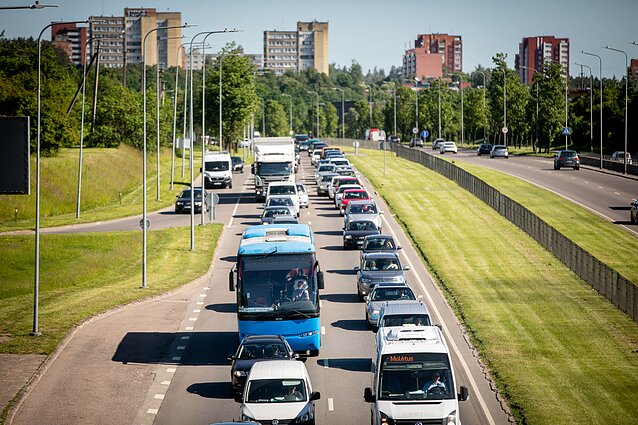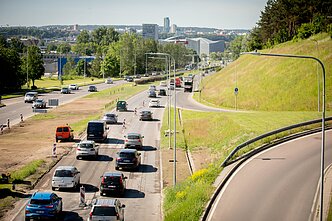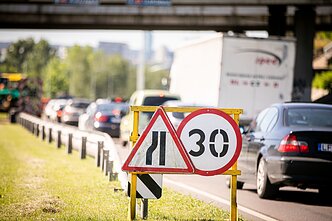












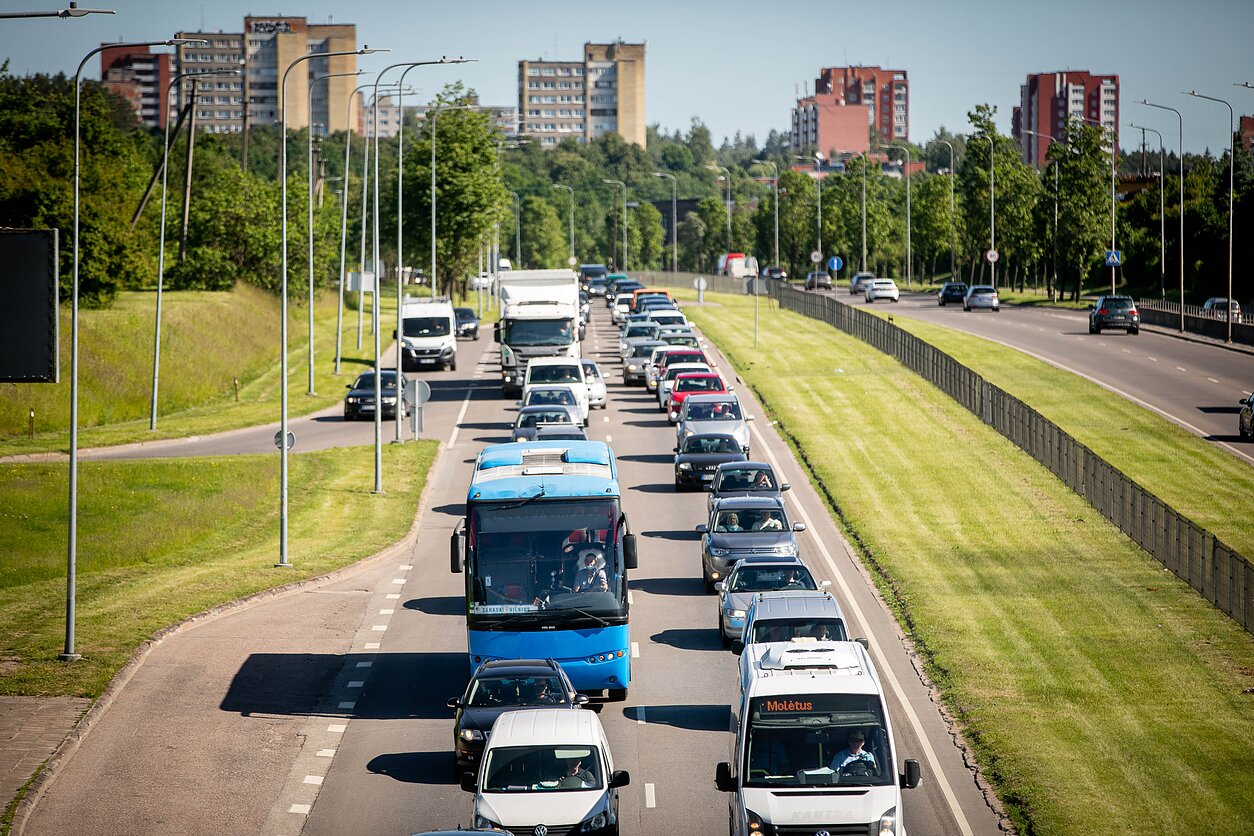
“Vilnius in gridlock”, “traffic in the capital is at a standstill” and similar headlines brace Lithuanian newspapers every September when students and commuters make the Lithuanian capital city’s perennial traffic jam problems even worse.
No wonder that every mayor in the last couple of decades was forced to address the problem, at least rhetorically, coming up with proposals that varied in ambition and realism.
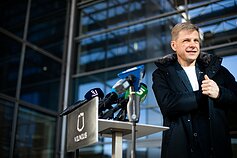
The incumbent, conservative Valdas Benkunskas, presented his bid last month: starting next May, Vilnius will have boats coursing along the Neris River.
The residents and visitors of the city will be able to travel from Žirmūnai to Žvėrynas on the river, get on and off at six stops – all close to key bridges – with more likely to follow later.
The municipality envisages buying eight boats in three phases to service the route, each coming at a price of about half a million euros.
“From next spring, the first boats on the Neris should already help people to get from A to B, as a public transport, but it will also serve as a recreational tool: to sail on the Neris, to go to the parks,” said Mayor Benkunskas when presenting his initiative.

While he spoke about the river boats as part of the city’s public transport system, it is not quite the case. For one, the river rides will have their own ticketing: the regular fare will be 3 euros, while getting the ticket onboard will set you back 4 euros. Regular bus and trolleybus single tickets are 0.65 (1 euro onboard).
While Benkunskas is not claiming that the river boats will overhaul the city’s traffic system, but he said he hoped it would take some pressure off.
Time to talk about the metro
Former mayor Artūras Zuokas, who spent three terms at the helm of he city in the 2000s and early 2010s, has made a name for himself for ambitious, if not always entirely realistic, public transport plans. They included a metro, a system of tram lines, and even gondolas ripping through Vilnius’ skyline.
Even today, as an opposition member of the city council, he does not give them up: it is only a matter of time before Vilnius has trams, he believes.
“The tram project is really necessary, especially since the first line from Santariškės to the Railway Station is ready, everything is in place and the call for tenders can be launched tomorrow,” he says.

“As for the metro, this is a bigger project, it would be impossible to implement without the national government’s participation and financial commitment. But I think the time to talk about it and make preparations is today,” Zuokas adds.
Humanising streets
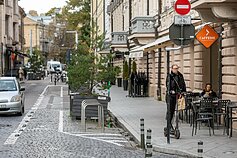
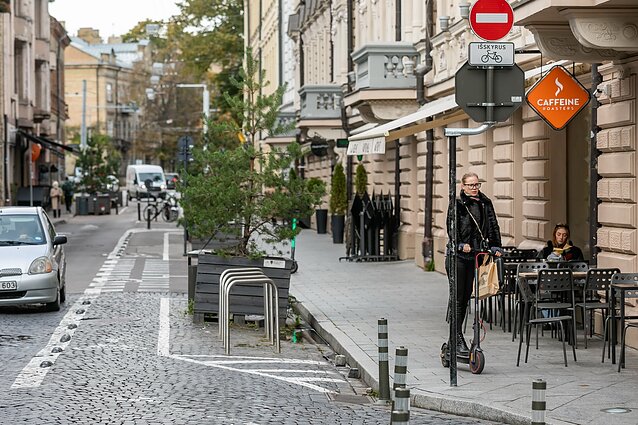
Remigijus Šimašius, the liberal mayor of Vilnius between 2015–2023, was famous for riding a bike. He therefore focused on mending the streets and building cycling lanes at the expense of carriageways. He called it the “humanisation of streets”, which mostly affected the central Naujamiestis area of Vilnius.
The other part of Šimašius’ legacy is introducing the so-called circular traffic in the Old Town – cars can no longer transit the historic part of the city, only move in and out of individual sectors, without crossing between them.

Today, he says one thing he regrets is not building any pedestrian bridges over the Neris River.
“We can only imagine what Vilnius looked like when there were no bridges, only one, when more bridges appeared. This teaches us a very clear lesson. [...] We very much lack pedestrian bridges,” says the former mayor.
State of affairs
As things stand now, there are no near-future plans for either new bridges or tram lines.
Meanwhile, car traffic has been growing steadily during August and, by mid-September, there may be 30-percent more cars on the streets than in summer.
That means testing traffic jams, with only two pieces of advice from the local authorities: be patient or switch to public transport.
“In line with the need to increase public transport services, around 30–35 percent more public transport vehicles are hitting the city streets,” says Loreta Levulytė-Staškevičienė, head of Public Transport Organisation at JUDU. “This means that public transport runs much more frequently, there are more routes and all timetables and schedules are adapted to the needs of passengers.”

Analysts say that Vilnius traffic congestion is caused by the high number of private cars. Drivers take to the streets at almost the same time – in the morning on their way to work and in the evening on their way home.
For many, a private car is still preferable to a bus or a trolleybus.
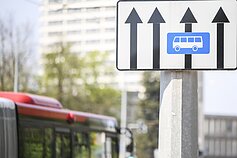
Changing that would require making public transport a more efficient way of moving around. A way to do it could be reserving more lanes – the so-called A lanes – exclusively for public transport.

“The priority is to increase the number of A lanes, to really free them up, with the right solutions, with priority traffic lights for public transport, so that those who are stuck in a traffic jam can see that those who have taken a bus are really travelling faster, getting to that place more conveniently and quickly,” says Vidas Žuraulis, a professor at Vilnius Tech.
But the idea of one day having a metro in Vilnius is still very much alive. In 2018, the national parliament adopted the Metro Development Act, which came into force in 2020. It allows private investors to take the initiative, although 50 percent of the project’s shares would have to belong to the municipality.

Newsletter
Every Friday morning.