











A fellow dissident remembers Nijolė Sadūnaitė, a nun, an activist for the rights of believers, and a prominent figure in Lithuania’s resistance to the Soviet rule. A press release by the Andrei Sakharov Research Center for Democratic Development at Vytautas Magnus University.
Thirty-seven years ago, on August 23, 1987, the dissident Felicija Nijolė Sadūnaitė gave a speech at a rally at the monument to Adam Mickiewicz in Vilnius. The rally, which was an important step in the liberation of Lithuania from the Soviet Union, was organised by the Lithuanian Freedom League (LLL), an underground organisation of dissidents working for the restoration of Lithuanian independence.
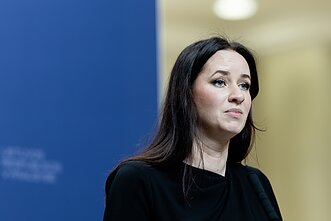
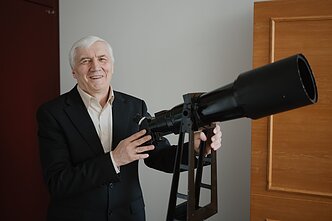
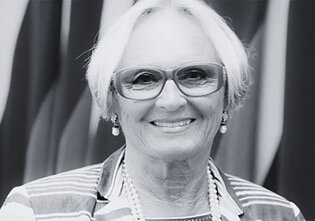
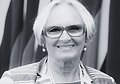
The life of Sadūnaitė, a nun, dissident, dedicated defender of religious freedom and the rights of believers, was a testimony to her unwavering faith, resilience and strong spirit in the face of oppression. Yelena Sannikova, a good friend and companion of Nijolė, a poet and publicist, who also survived the repression of the Soviet authorities – imprisonment and exile – shared her memories of Sadūnaitė, stressing the great influence Nijolė exerted on those around her.
The two dissidents had a special bond and worked together on the publication of Sadūnaitė’s book KGB Lens in Russian. You can also find out more about Sadūnaitė’s work in a new free audio tour in Lithuanian and English.

The first phone call
When talking about her first phone conversation with Nijolė, the dissident remembers calling with bated breath. “After all, her name was legendary for me.” However, despite the fear, this initial interaction marked the beginning of a deep and enduring friendship.
“But literally from the first words, we had a conversation that was easy and simple, as if we had known each other for a long time. If you ask me what we talked about, I would say about everything. About mutual friends and acquaintances, about those who remained in prison, about mutual acquaintances. And about the freedom of Lithuania, I guess.”
Yelena first contacted Nijolė in the summer of 1988, seeking information about another political prisoner, Sigitas Tamkevičius. “I had not been acquainted with her before, but of course, I knew and heard a lot about her. I became aware of the Chronicle of the Catholic Church in Lithuania and the Lithuanian freedom movement in my school years when I became keenly interested in the human rights movement in the USSR. At that time, I also learned about Nijolė Sadūnaitė, who was imprisoned,” Sannikova recalled.
According to Yelena, that was all Sadūnaitė was about – helping a real suffering person, her fellow human being, for her was in the first place compared to helping humanity as a whole.

Persecution, detention, exile
In the 1970s, at the age of 32, Sadūnaitė had already come under the scrutiny of the KGB. Her activities, deemed anti-Soviet, made her a target for constant surveillance, persecution, and terror. Despite this, she pursued nursing courses and continued her religious and activist work with unyielding determination.
In 1972, Sadūnaitė became one of the most active participants in the publication of the Chronicle of the Catholic Church in Lithuania, collected and verified information about the persecution of believers in Lithuania and beyond, typed texts with a typewriter, and distributed the Chronicle by bringing it to Moscow to be forwarded to the USA.
Yelena, prompted by her acquaintance with Sigitas Tamkevičius and his living conditions in exile, also started a bulletin called The Prisoner’s Page. “I typed it on a typewriter as soon as I got back to Moscow and put the date on the cover – September 5, 1988, the anniversary of the Red Terror,” she said. “It was from this newsletter that Nijolė Sadūnaitė and I translated her book In the KGB Lens into the Russian language.”

Sadūnaitė’s arrest in 1974, while printing the 11th issue of the Chronicle, marked the beginning of a tormenting chapter in her life. Imprisoned by the KGB in Vilnius for 10 months, Nijolė refused to cooperate with her captors.
On June 17, 1975, she was sentenced by the Supreme Court of the Lithuanian SSR to three years in a strict regime Mordovian women’s concentration camp, followed by three years of exile in Siberia, Boguchan settlement of the Krasnoyarsk region. There she continued to write letters and advocate for prisoner rights, becoming a beacon of hope and solidarity.
Similar experiences in Siberia
Yelena Sannikova shared a similar fate. She was also arrested in January 1984 and sentenced to one year in a camp and four years in exile. “I was released in December 1987, when I had just over a year left to serve.”
Recalling their conversations about their experiences in exile, Sannikova says: “A lot of things were similar, but in some ways her experience was harder, and in some ways mine was. The difference was that a significant part of my term was during Perestroika, so I even managed to get the right to study by correspondence at Tomsk University. And Nijolė’s exile came during the years of intensified Andropov repression. But the surveillance, the constant supervision, the pressure – everything was similar.”

Friendship between dissidents
Sannikova’s reflections on her friendship with Sadūnaitė offer a poignant insight into the nun’s character. Despite their differences, they shared a deep mutual respect and a common goal.
“We were different from each other in many ways. She was a completely open person, and I, on the contrary, was a reserved, introverted, secretive person. She was usually in high spirits, cheerful, and I was overcome by periods of despondency and sadness. She easily got along with people, easily spoke in small groups and to large audiences, while I was always shy and worried. And yet we met like relatives, and from the very first minutes of our acquaintance, we found a common language.”
Nijolė returned to Lithuania in 1980, under the KGB’s ongoing surveillance. She resumed her work with the Chronicle, transporting underground press materials to Moscow, from where it used to reach the West.
In 1987, together with Petras Cidzikas, Vytautas Bogušis, and Antanas Terleckas, she organised a rally to commemorate the 1939 Ribbentrop-Molotov Pact and gave a speech during the event. In 1989, she became one of the founders of the Lithuanian Catholic women’s association Caritas, also engaged in charity and human rights advocacy.
Sadūnaitė’s influence extended beyond her activism. Her ability to connect with people, her sense of humour, and her unwavering faith made her a beloved figure among those who knew her. “Faith, responsiveness, and love were like breathing for her. It wasn’t theory, it was life. Maybe it was the essence of her nature. Compassion and love for people strengthened faith, and faith generated the power of cheerful love. She had a very sensitive perception of Christianity,” recalls dissident Yelena Sannikova.

Compassion and love
One of the most significant lessons Sannikova learned from Sadūnaitė was the power of compassion and love. Sadūnaitė’s ability to see beyond actions to the humanity of every individual, even those who wronged her, was a profound example of her faith in practice.
“Nijolė was enthusiastic about people, able to appreciate and admire good people. And she was not hostile to anyone. She could deeply resent bad actions, but not the person. She had compassion for everyone, even her enemies. Even the KGB officers who persecuted her were Nijolė’s ‘unfortunate brothers’. Because they too are human beings, just misguided human beings, and therefore unfortunate. Perhaps this lack of a sense of hostility and the ability to rejoice in any circumstances, even very difficult ones, angered the authorities most of all.”
Contributions to the cause of freedom and human rights of Nijolė Sadūnaitė were recognised with numerous awards. In 1992, she received the commemorative medal of January 13. In 1998, she was awarded the Commander’s Grand Cross of the Vytis Cross Order, followed by the Lithuanian Independence Medal in 2000. In 2018, she received the prestigious Freedom Award, a fitting tribute to her lifelong dedication to justice and human rights.
Anyone interested in learning more about the dissidents, people who resisted Soviet rule in various ways, is invited to use a new free audio tour presented by the Andrei Sakharov Centre for the Study of the Development of Democracy.
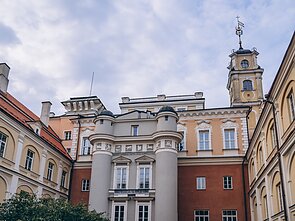
The Dissident tour is available online in Lithuanian and English, just bring your headphones and phone and listen to the guide’s instructions as you travel to different places in Vilnius and find out what happened there.

Newsletter
Every Friday morning.