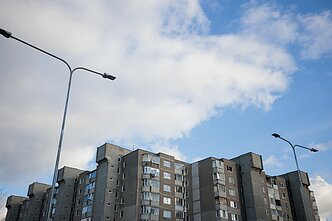
















Housing affordability in Lithuania is still worse than it was before the Covid-19 pandemic. The Bank of Lithuania argues that regulation should discourage housing-as-investment purchases, while some politicians argue for a property tax.
Vilnius is a very good city to live, says Lukas, but it is not easy to buy a home.
“When we were looking for a place, ads would disappear instantaneously, there wasn’t much choice,” he tells LRT TV.
“When we bought [a flat] a couple of years ago, the price already seemed high, but if you look at the ads now, it’s even more expensive,” he adds.
The Bank of Lithuania has calculated that, in order to buy a home, one needs to save up six years’ worth of income – and in Vilnius, seven years.
Although making housing more affordable should be a policy goal, the central bank does not believe that better credit accessibility is the right way.

“It is important to ensure that demand is not excessive and that it is sustainable,” says deputy head of the Bank of Lithuania Julita Varanauskienė. “When households take out a loan, this should not be a burden and create more problems than it solves.”
One strategy could be restricting purchases of home as an investment, the central bank believes.
“There should be less incentive to buy investment housing, in the hope of making a profit, thus limiting the supply for people who need housing to live,” says Varanauskienė.
This is why both the Bank of Lithuania and the ruling coalition are once again taking up the idea of introducing a property tax.
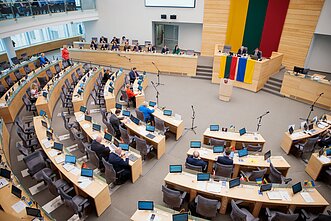
“We have to go back to the property tax, an issue that would also affect housing affordability,” says MP Mindaugas Lingė, who chairs the Budget and Finance Committee. “We have observed, and the Bank says it, that a large and increasing proportion of properties are being bought as an investment rather than as a primary residence.”
Meanwhile, Social Democratic MP Gintautas Paluckas argues that the Bank of Lithuania’s proposals are superficial and will not tackle the underlying problems.
“If we talk about real affordability, today the main obstacle is the down payment,” insists Paluckas. “The down payment could and should be lower, we need to ease the supply – the administrative burden on developers, builders, so that they can get housing on the market faster.”
Developers agree. Tomas Žiaugra, head of the development department at Eika Development and member of the Real Estate Development Association, says that bureaucracy is a serious burden.

“So far, all our good intentions have come to nought. We’ve been saying what is important for us, what would improve affordability, namely, cutting red tape, simplifying permission processes, but these are only getting longer, and that contributes to housing affordability because it falls on the cost line,” he argues.
Housing affordability in Lithuania is still worse than it was before the pandemic, but the outlook for the future is good.
An average buyer can now afford a maximum of 53 square metres, less than before. However, according to the Bank of Lithuania, as wages rise and interest rates fall, buyers will be able to take out bigger mortgages and, by the end of the year, afford 61 square metres on average.

Newsletter
Every Friday morning.