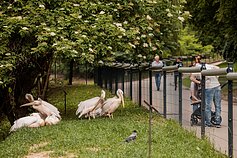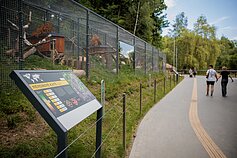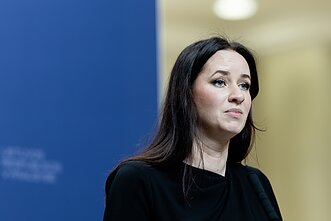














The Lithuanian Zoo in Kaunas is the biggest public zoo in the country. Its director recalls a poor state it was in before the recent reconstruction, but things have turned around and animals are now kept in decent conditions, she assures.
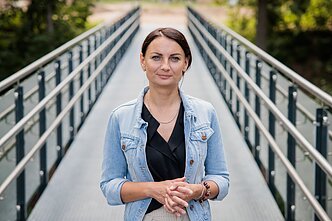
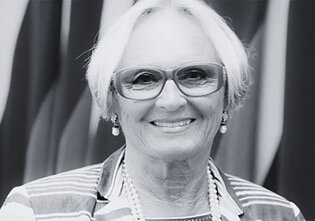
Director of a zoo sounds like a job from a children’s story. But for Gintarė Stankevičė, it is a daily routine which involves seeing more piles of documents than animals.
“Before I came here, I imagined how fun it would be to work in a zoo – full of people and animals. My favourite species is primates, so I thought I would spend a lot of time with them. At best, I go to see the animals once a week, and that’s pretty good,” she says.
Her typical working day starts with a cup of coffee and a chat about work with colleagues, followed by multitudes of administrative tasks.
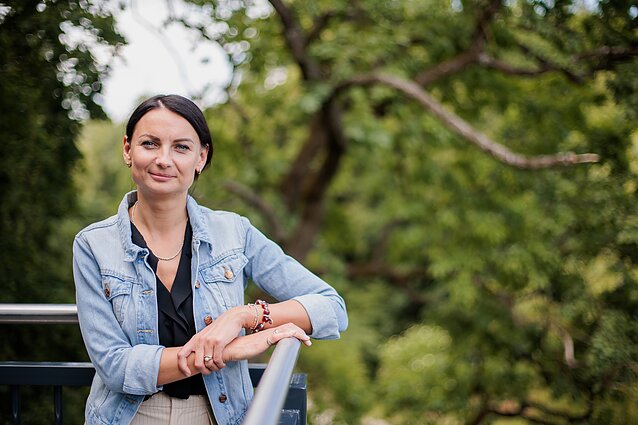
“We thought that maybe after the reconstruction we would have a break, we would be able to go out into the zoo more, we would have more free time and less workload, but after the reopening, we had an inspection, a visiting commission, mountains of documents,” says Stankevičė.
Next, she needs to prepare documents for the European Association of Zoos and Aquaria (EAZA). “Today we have a visitor from England who is assessing zoos, and I will meet with him immediately after the interview.
“We are also designing new buildings, and then there are changes in fees, structures, and staff. There is more work than you can imagine,” says Stankevičė.
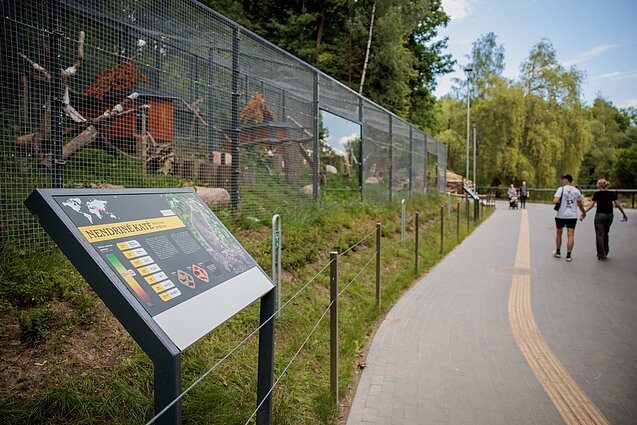
She is delighted that the Lithuanian Zoo, which reopened after a major reconstruction last November, has attracted so much interest from visitors.
“We have already made our first and second million [of visitors], which is unprecedented in the history of the zoo. We have set ourselves a target of 400,000 a year, and I was intimidated by that figure at first, but now I think we have set it too low,” she says.
‘Wow, my mum’s at the zoo!’
Asked what animal she would like to be reborn if given the choice, Stankevičė picks an owl: “They are so mysterious to me, different animals.”
Besides work, she has a husband and three kids. “My husband and I share the housework. And my children are more independent than the others, everyone notices that,” she says. “There are days when you return home completely exhausted, so maybe on those days there’s less attention for the kids.”

In fact, they were especially happy to hear that their mother would be working at a zoo. Stankevičė recalls that when her daughter told everyone at school about her mother’s new job, a teacher assumed she was fantasising.
“For the kids, at first it was wow, my mum’s at the zoo! Now, when I tell them we’re going to work, they ask why,” Stakevičė smiles.
She herself fell in love with the world of animals when she was a child. “Since I was a little girl, I’d bring home an injured crow or hedgehog. I don’t know where it came from, but the pull is still strong now.” The family keeps a bunch of pets: mice, birds, two dogs, and a hedgehog.
“Often, instead of watching a movie, we watch nature programmes and read books,” says Stankevičė. Of her three kids, one seems to share her love for animals, the other two have yet to manifest it. “I guess it all comes from the heart,” she says.
Turning the zoo around
“I liked animals and travelling since childhood [...]. I always visit zoos in Europe,” quips Stankevičė. When she started the job at the Lithuanian Zoo, her motivation was the desire to turn things around, “to pull it out of the hole”, as she puts it.
“If you come to the zoo and leave with tears in your eyes, it’s not good,” she recalls the state the zoo was in when she started.
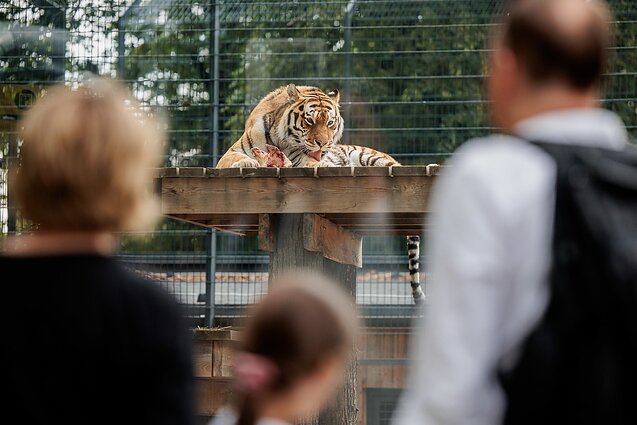
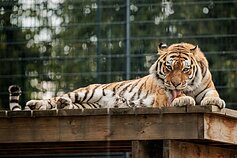
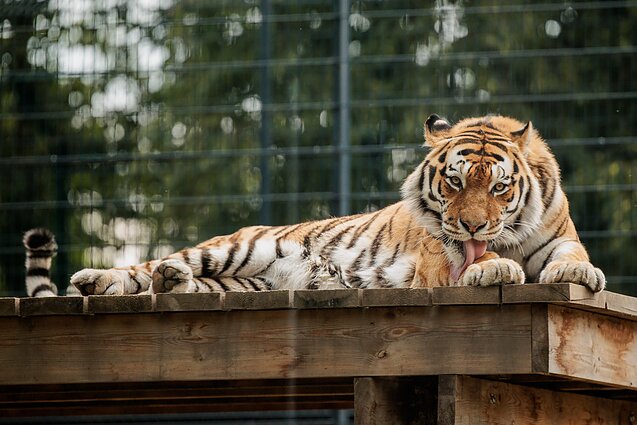
Similar impressions of the Lithuanian Zoo before the reconstruction were shared by users of TripAdvisor. “The worst zoo I’ve ever seen in my life”, “Animals are kept in tiny enclosures like prisoners”, “Animals are tortured every day”, “I cried when I saw a tiger” – these are just some of the old comments that Stankevičė recalls.
Things are completely different now, she adds.
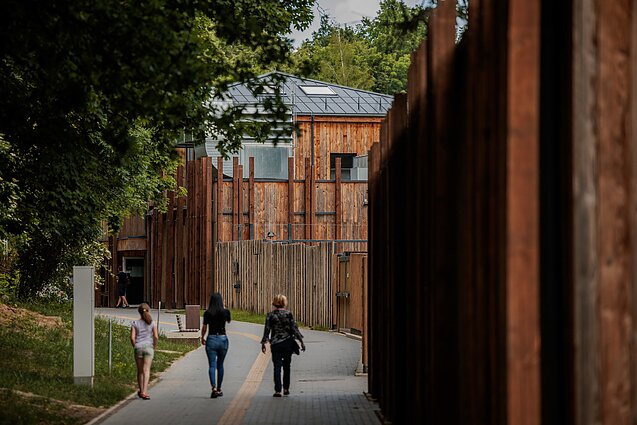
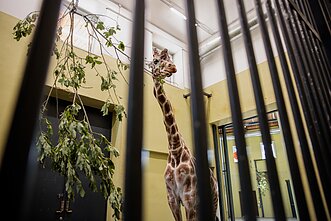
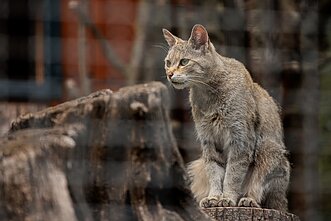
“Starting with the animals, there are fewer of them, so there’s more space. Now we get some visitor reviews complaining: I came and I didn’t see anything because the animals can be either indoors or outdoors, whatever they want. A visitor may not even see all the animals.”
Moreover, some visitors often rush in and cross the zoo without stopping – and you need patience to see some animals, Stankevičė notes.
The old zoo did not meet the EAZA requirements and was therefore expelled from the organisation. The zoo is now working to rejoin and, according to Stankevičė, has already received a green light.
As long as there are endangered species, there will be zoos
“Making entertainment out of an animal is not my goal or my approach,” says the director of the Lithuanian Zoo, stressing that the most important mission is protecting endangered species.
According to her, the zoo contributes to the conservation efforts of local species, such as the pond turtle, the fire-bellied toad, and the Eurasian eagle owl. It also participates in various international projects, such as efforts to restore the population of the endangered European roller. In Lithuania, she explained, only a few breeding pairs of these birds are known.
Moreover, the zoo contributes to the conservation of the gene pool of certain species.
Stankevičė says that her goal is to have the Lithuanian Zoo only keep endangered animals.
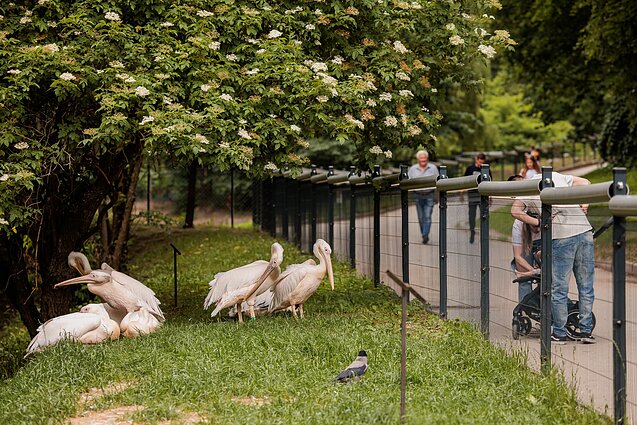
She is aware of calls by some animal rights activists to do away with zoos altogether. However, while some countries have banned animal circuses, Stankevičė does not believe that zoos will disappear any time soon.
“Only if deforestation, habitat destruction and climate change stop, but that’s not realistic. I think there must be zoos. How else would you train a zoologist, a biologist?” she asks.
According to Stankevičė, the Lithuanian Zoo is not an entertainment venue and animals are not forced to “entertain” visitors, although those born in captivity do not shy away from human contact. “They will go to people if they want. If they don’t want to, you won’t see them. [...] Our lions, for example, like [attention], they are used to it, even though they can go anywhere, they come to the glass and roar.”
Public education is equally important, which is why the zoo also offers educational activities.

Newsletter
Every Friday morning.