









Lithuania is marking Day of Mourning and Hope on Saturday, commemorating the victims of Soviet deportations that began on June 14, 1941. Over the following 11 years, the Soviet authorities deported more than 130,000 people from Lithuania and imprisoned around 150,000. As part of the commemorations, LRT English is sharing an interview with one of the last partisans who took up arms in the shadow of the deportations.
There are only two partisans left in Lithuania who took part in the armed resistance against the Soviet occupiers. What can they tell about waging a fight against all odds to the young generation of Lithuanians today?
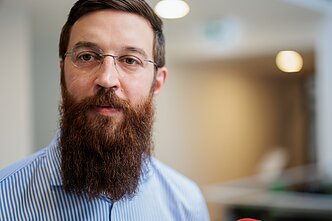
When his family was deported in 1948, Jonas Kadžionis decided to join the Forest Brothers already at the “twilight of the partisan struggle”. There were no thoughts of victory over the Soviet occupiers, the main motivation was survival – “We knew that our situation was not too bad because we had weapons and could resist.”
Everyone feared deportations to Siberia more than death. “My mother wrote to me: Child, die in Lithuania, don’t go to die in Siberia,” recalls Kadžionis, now aged 97.
Were you not afraid to join the partisans? As you said, the armed struggle was already fading.
I wasn't afraid, my dream was to join the partisans, I respected them very much, the word “partisan” had magic power. And not only for me. It was enough to pull lovers out of each other's embrace and lead them to death. Many women also chose to be partisans, families kept partisan bunkers in their homes. You have to understand how great the sacrifice was. People chose this sacrifice both out of patriotic feelings and out of humanity because we all knew each other, we went to school, parties and dances together.
We were like relatives, but there were also actual relatives. People respected the partisans because they had made a decision at the great crossroads of life. They knew what would happen to them and their families if they joined the partisans.
I remember my mother just asking, pleading with my brother: boys, maybe you should sacrifice yourselves for the sake of our large family and enlist in the Soviet Army, maybe you wouldn’t be killed. One brother had almost agreed, but the second brother said: no, I will not die under the Red Flag.
Then the brother persuaded the second brother to do the same, saying that if one of them is in the forest [with the partisans] and the other is in the Red Army, it will not save the family.

What was the mood like among the partisans?
Good, [but] I felt that I would die at the first opportunity. I didn't announce my premonition to anyone, but I was sure of it. When the family was deported to Krasnoyarsk Krai [in Siberia], the letters started to arrive [to] my sister who was still in Lithuania because her husband had been killed at the front so they didn't oppress her. My mother wrote to me: “Child, die in Lithuania, don't go to Siberia to die” because there was a famine.
[...] I stayed in the forest for five years, and then I was caught by these partisans who were taken alive and turned [against their own]. There were about 250 of them in Lithuania, they were called hitmen because they were more brutal than the Russians themselves. They took oaths [to Lithuania] in the forest but then went over to the enemy side, they were terrible people. In 1953, I fell into their hands and that's how I ended up in a forced labour camp.
They tied my hands, I thought, that's it – if I don't hold out [during interrogation], I will betray many people. Because you wouldn't be able to survive five years in the forest without help, so many people sacrificed themselves for the cause. Meanwhile, there were about 7,000 stribai [Soviet collaborators] across the country, there were also Soviet army garrisons after the war, which the army used to blockade the forests. They would not comb through them but wait for a few weeks. If they didn't spot any partisans, they would move elsewhere.
Tell us about the five years you were in the forest – what did you see, what did you do?
Everybody wanted to live, so all kinds of hiding places were built – various bunkers, hideouts in houses between two walls, between the ceiling and the attic, in water wells. But because there was already a large network of spies, it was very difficult not to fall into their orbit.
They controlled everything. They would divide big forests into blocks and wherever they suspected that partisans might be there, they would bring their spy there and leave him there. The spy would then have to go and report every few days to the NKVD. If he didn't show up, he would be declared missing and the Soviets would then surround that part of the forest. They would line up soldiers next to one another and then comb through the forest – not even a rabbit could escape. And so the partisans died one after the other.
We knew that we were going to die, so our only goal was to be shot immediately. That's the only way to avoid torture, and the dead don't know anything,
We also knew we were living our last days. I used to imagine myself lying dead on the street, which made me feel sorry for my wife. I didn't say it out loud, but I felt that the end was approaching. But you see, life is a gift from God, we still wanted to live; we were young.

How did it feel to be in a fight which you knew you wouldn’t win?
At that time the people feared Siberia more than death. Nobody had returned from Siberia – maybe some had, but we in the village didn't know. Nobody in Siberia even buried the corpses anymore, they would be stacked in heaps and buried only in spring when the ground softened and the bulldozer could dig a hole.
My mother advised me not to go. We knew that our situation was not too bad because we had weapons and could resist. We were good at hiding our bunkers so not even a mark on the ground would show. If you wanted to live, you had to work hard. The Soviets would not have been able to find our bunkers without reports [from collaborators].
Were there still battles going on at the time in 1948?
No. To be fair, I was in the Ąžuolas Platoon, the next unit from us was the Žaibo Platoon. They used to go out in winter and in summer, ride around with horses and do ambushes. They used to say: “You're going to end up with a shovel in the stomach either way, so you at least have to fight.”
But our platoon leader, Ąžuolas, was of the opinion that you cannot shoot them all and you will only harm your families. Once you do an ambush, they gather huge forces and then they comb the forest. They don't forgive such things.
If you don't do anything, the Soviets would only wait for someone to file a report, maybe for someone to report seeing partisans.

How did you feel when Russia's full-scale invasion of Ukraine began in 2022?
I thought that it was a good thing that the Ukrainians were resisting. After all, the Russians kept their troops massed on the border, and the US president kept saying, do not touch Ukraine, we will impose sanctions. But the invaders did not care about sanctions, meaning it was the same as saying beat the Ukrainians as much as you want. They are certainly in a difficult situation, but they are innocent, they have been attacked. It is very important that the moral side wins. All empires fell, this one will fall too.
Do you think that war could reach Lithuania again?
It can. America has already sold us out once. When the [Second World] war was over, we, the nations of Central [and Eastern] Europe, fell under “Stalin's protection”. We were betrayed by both England and America, it was a terrible betrayal. Everyone believed [that the West would come to their aid]. It was not only an empty belief because there was the Atlantic Charter, which clearly stated that all the nations would be independent after the end of the war. They said one thing but did another.
If they had not talked like that, the Lithuanians would not have died so much. It was not only men who became partisans but also women and girls. I don't know what the percentage was, but in Anykščiai alone, 32 women were killed.
[...] And now it is very important not to doubt victory. Now I'm very happy that the Ukrainians are fighting back. Ukraine is not Lithuania, it is not only three million people, and the territory is different, so the Russians are now stuck.

What should Lithuanians today learn from the partisan struggle?
It is important for Lithuanians to educate the new generation [...] to be honest and hard-working and not to doubt the victory of truth. The partisans were able to fight for ten years because there were people who supported them – as long as there were partisans, there were supporters.
The most important thing is not to give up – I say this from my own experience.
I had already accepted that there was no way out, and here I am, still alive, aged 97. I am a happy person because all my dreams and more have come true. I say more because I witnessed Lithuania regain independence, which I thought I would never see.

Newsletter
Every Friday morning.