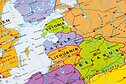














The largest number of resident foreigners in Lithuania come from Ukraine, although it is decreasing. Meanwhile, migration from Central Asia has grown several-fold in recent years.
The data was published by the Migration Department in March.
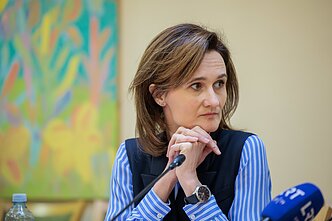
Refugees from Ukraine had to reapply for residence permits in early March, says Migration Department director Evelina Gudzinskaitė. Updated statistics show that the number of Ukrainians in Lithuania has decreased.
“In April, we will know that the number of Ukrainian citizens has decreased, because some of them did not come to renew their permits, they have physically left Lithuania,” Gudzinskaitė said.
There were over 86,000 Ukrainians in Lithuania in January, according to her, but just over 74,000 remain as of late March.
“Belarusians are in second place, and their number is still growing, although at a slower rate in recent months. This is due to the intensified checks we are carrying out and the fact that employers are refocusing to other countries,” Gudzisnkaitė said.
At the end of March, there were almost 63,000 Belarusians with a residence permit in Lithuania, up by 29 percent since January 2023.
The number of Russian citizens in Lithuania remains stable at just over 15,000.

“The restrictive measures, which make it virtually impossible for new migrants from Russia to enter Lithuania, have really stopped the number of Russian citizens from growing. Otherwise, there would be more of them,” Gudzinskaitė said.
According to the director of the Migration Department, Lithuanian companies looking for migrant workforce have refocused from Belarus and Ukraine to Central Asia and India.
“Uzbekistan, Kyrgyzstan, Tajikistan, Azerbaijan, and Kazakhstan are the new countries from which employers are bringing their workforce,” said Gudzinskaitė.
At the end of March, there were 9,700 Uzbeks in Lithuania, compared to only 1,800 in early 2023. The number of Kyrgyz nationals was 6,600 (up from 2,000), and Indians, 5,200 (up from 1,200).
However, according to Gudzinskaitė, a significant share of Indian residence permit holders are students rather than workers.

Newsletter
Every Friday morning.