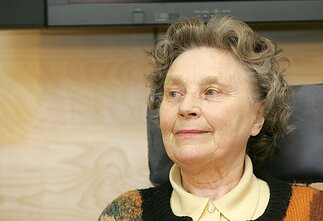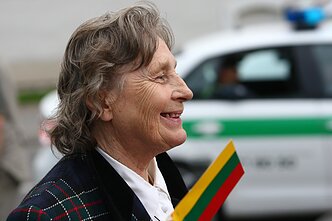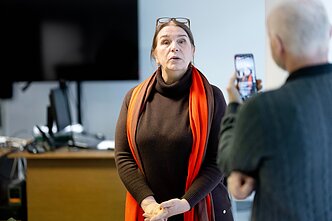












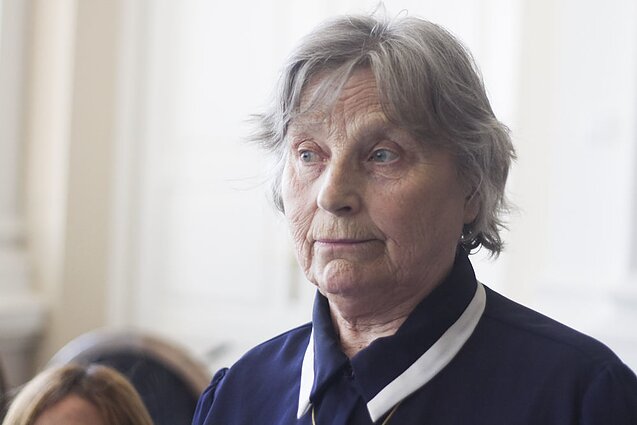
The Soviet-era dissident, nun Nijolė Sadūnaitė passed away at the age of 85 on Sunday. Prosecuted and imprisoned for her activism and distribution of Catholic periodicals, she has been a symbol of Lithuania’s resistance to Soviet occupation.
Bernardinai.lt was the first to report about Sadūnaitė’s passing.
Sadūnaitė was born in Kaunas in 1938, graduated from the Jonas Biliūnas secondary school in Anykščiai, and completed a course of nursing in Vilnius in 1970.
Sadūnaitė, an anti-Soviet activist, was convicted by the communist authorities in 1975 for the reproduction and distribution of the Chronicle of the Catholic Church in Lithuania, an underground publication.
The woman was sentenced to three years in a high-security correctional labour colony, followed by another three years of exile.
Upon her return to Lithuania, Sadūnaitė again became involved in the publication of the Chronicle of the Catholic Church in Lithuania, which led to further persecution by Soviet security.

On August 23, 1987, together with Antanas Terleckas, Vytautas Bogušis, and Petras Cidzikas, she organised a rally at the Adam Mickiewicz Monument in Vilnius to commemorate the Ribbentrop-Molotov Pact. This was the first rally directed against the Soviet regime since Mikhail Gorbachev loosened censorship under his Glastnost policy. The rally included a public singing of the Lithuanian national anthem after decades of oppression.
In 2018, Sadūnaitė was awarded the Freedom Prize, established by the Lithuanian parliament, Seimas, for people who have contributed to freedom, democracy, and human rights.
In an interview with BNS after the award, Sadūnaitė wondered if she was really worthy of the honours.
“I am 100-percent sure that the good God has not found a more ignorant, weak person in Lithuania, so He gave me the strength and sent me to do this work,” said Sadūnaitė.
Sadūnaitė served in the convent of the Congregation of the Servants of the Blessed Immaculate Virgin Mary.
Condolences from top political leaders
A number of Lithuanian political leaders expressed condolences over Sadūnaitė’s passing
“It is highly symbolic that we lost Sadūnaitė on Easter. Even in the darkest days of the Soviet era, she believed that Lithuania would rise and be free,” Seimas Speaker Viktorija Čmilytė-Nielsen said in her message on Sunday. “My sincere condolences to her relatives, comrades, and all the people of Lithuania.”
President Gitanas Nausėda said Sadūnaitė was a living symbol of Lithuania under Soviet occupation.
“Her wonderful heroic personality surprised and fascinated the entire free world. Her bright struggle will be a source of inspiration for generations of Lithuanians committed to freedom,” Nausėda said.
“Her courageous self-sacrifice, her heroic struggle without arms against the occupiers, against the whole system of violence of the terrorist evil empire, did not prevent her from being modest and simple, did not prevent her from radiating cheerfulness and joy of life, even in the face of her persecutors,” he continued. “Sister Nijolė behaved like a free person in occupied Lithuania, she fought against evil without any hatred.”
Prime Minister Ingrida Šimonytė said that Sadūnaitė’s dissident activities were a crucial moral support for the resistance against the Soviet occupation.
“Even the persecution she suffered at the hands of the Soviet repressive structures did not diminish her faith in humanity and did not undermine her determination to strive for freedom in Lithuania. I express my condolences to all of Sadūnaitė’s relatives and comrades,” the prime minister said.

Newsletter
Every Friday morning.