















Belarus said on Thursday it was blocking some imports from Lithuania in retaliation for Lithuania’s closure of two more border checkpoints, the AFP news agency reported.
At the beginning of March, Lithuania closed two border checkpoints – at Lavoriškės and Raigardas – on its border with Belarus. As a result, only two border checkpoints – at Medininkai and Šalčininkai – remain open on the Lithuanian-Belarusian border. Two checkpoints – at Šumskas and Tverečius – were closed last summer.
Belarus said the new import ban applies to a wide range of goods, including food and alcohol, clothing, household appliances, car parts, and construction equipment.
The move “is in response to Lithuania’s decision to stop the flow of goods, transport, and people at two border checkpoints”, a government statement said.
Lithuanian institutions say the closures of border checkpoints are aimed at tackling problems of national security, smuggling, and violations of international sanctions.
Further reading
Sanctioning itself
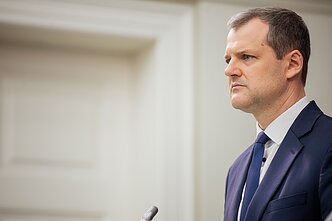
Commenting on Belarus’ decision to block some Lithuanian imports, Foreign Minister Gabrielius Landsbergis said that the country sanctioned itself.
“They have imposed sanctions on themselves. [...] This is a sanctioning of its own people,” he told BNS on Friday.
“They have decided to give up the products they probably need the most. The quantities from Lithuania are not very large, but prices will still rise for them and there will be even fewer of those products,” the minister added.

According to Landsbergis, this decision will force Lithuanian businesses that used to export their products to Belarus to move elsewhere.
“It is a small measure for our economy but it is a diversification measure. In other words, even those small groups of goods that used to reach Belarus will be diverted elsewhere,” he said.
According to Žygimantas Pavilionis, chair of the parliamentary Committee on Foreign Affairs, this decision by Belarus will also have an impact on the Russian market because it was through Belarus that the EU sanctions against Russia have often been evaded.
“Belarus has been a place through which Russia has circumvented sanctions. We have repeatedly raised the need to tighten sanctions against Belarus to prevent Russia from circumventing those sanctions,” he said.
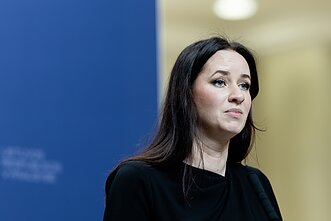
Marius Dubnikovas, vice president of the Lithuanian Business Confederation, expects that the impact on the Lithuanian economy will be minimal as its trade relations with Belarus have “cooled to a minimum”.
“Some [companies] will be affected. There are still people trying to do business with Belarus and Russia. They will certainly be affected. But overall, it will not affect Lithuania’s economy,” Dubnikovas told BNS on Friday.
“Lithuania’s logistics and transport industry has long been oriented towards the West,” he added.
Lithuania’s official statistics show that 594 Lithuanian companies exported to Belarus in January this year. Goods worth 87.6 million euros were exported from Lithuania to Belarus, 1.5 percent of which were of Lithuanian origin. Exports to Belarus accounted for 2.8 percent of the country’s total exports.

Newsletter
Every Friday morning.