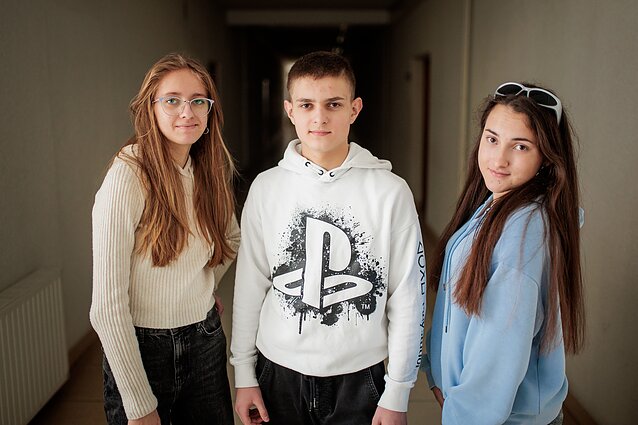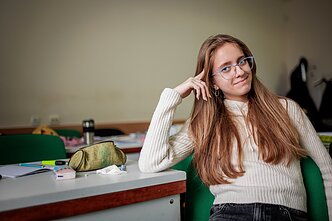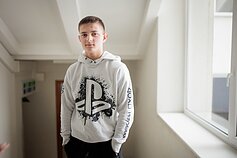






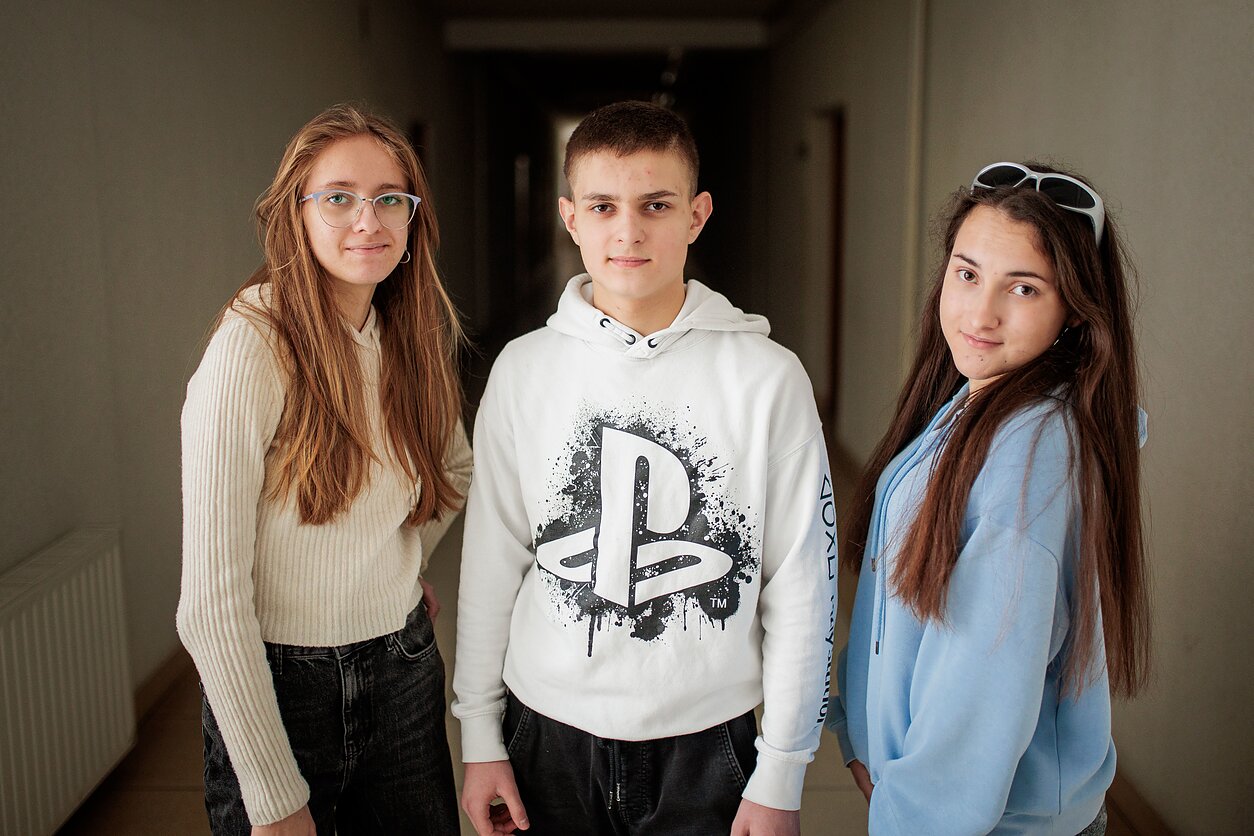
Nikita, Mila, Masha, and Pavel are just four of 11,000 Ukrainian children who have found a safe haven from the Russia-launched large-scale invasion in Lithuania. Here, they go to school, learn Lithuanian, and dream about the future.
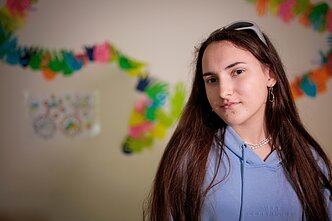
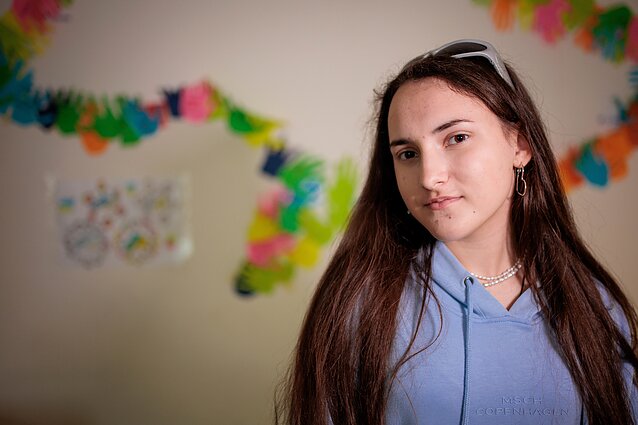
Mila Tymchenko, 14, comes from Irpin, just outside of Bucha, a town that was subject to unimaginable Russian brutality at the very beginning of the war in Ukraine.
“It was very scary. I had the very terrible thought that I could die, that everything could end on the very first day of the war. It was terrible. Everybody was going somewhere, everybody was scared, restless. Everyone wants to go back to their homes and live the way they did before the war,” Mila, who was 12 years old at the beginning of the war, describes her experience.
Masha Shapovalova, a 16-year-old from Dnipro, still shivers when she talks about the war with her friends and family or when she reads news about what is going on in Ukraine on the internet.
“I was very scared, I heard my mother telling my sister that the war had started, that we have to do something. I wondered what I should do because I need to go to school,” she says about the first days of war.
Mila, Masha, and Pavel are now studying at Gravitas Schola in Vilnius, while Nikita is both studying and doing sports in Lithuania’s fifth-largest city of Panevėžys.
Leaving alone
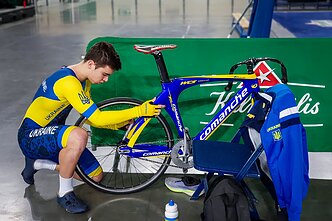
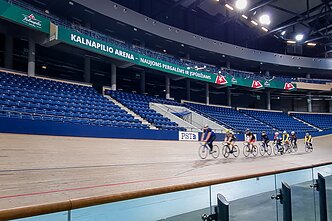
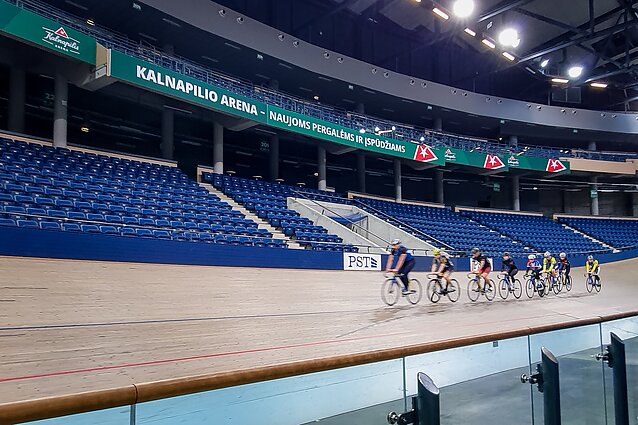
Nikita Nefedov, 16, has been living in Panevėžys for almost two years. He came to Lithuania at the age of 14, escaping the turmoil of war with a team of cyclists. He is now studying at the Panevėžys Raimundas Sargūnas Sport Gymnasium.
“In Ukraine, I lived in a village 30 kilometres outside of Kyiv. My village is near Irpin and Bucha. It was dangerous there,” Nikita explains his parents’ decision to allow him to go to Lithuania alone. “It was very difficult for everyone in Ukraine because of the situation. It’s a war. It was very scary.”
After arriving in Panevėžys, Nikita initially continued studies at his Ukrainian high school online. Soon, he became a student at two schools – in Ukraine and Panevėžys.
“I used to wake up at 7:00 and go to classes here from 8:00. Then, I studied online with the Ukrainian teachers. After that, I did my homework. Around 22:00 or 23:00, I went to bed. It was very hard to study in two places at once,” Nikita says.
After a while, he made up his mind that he would continue his studies only at the Panevėžys gymnasium. At first, he studied in a special class to learn Lithuanian.
“I feel like I have a lot of opportunities here in Lithuania,” Nikita says, adding that he started thinking about the future only after his fear and anxiety subsided.
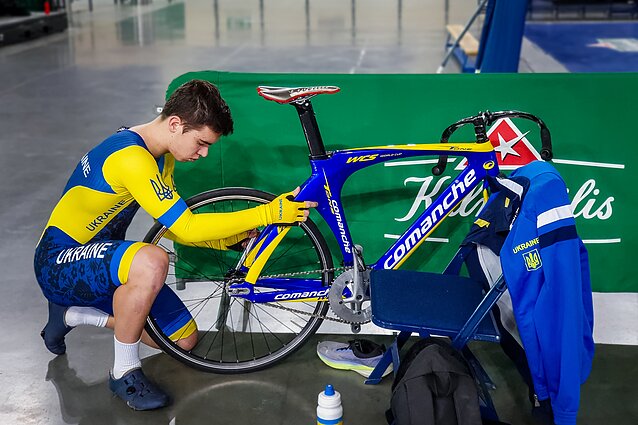
“My mum and dad are in Ukraine, and I’m here. I can call them every day and tell them how I’m doing. My parents first moved to a safer place in Ukraine, but they later came back home. My mother called and said: ‘It’s OK, don’t worry.’ And I cannot not be worried because there is a war going on. But I’m calmer now,” he says.
According to Nikita, he first thought that he was only going to stay in Lithuania for three months.
“After those three months, the coach said we needed to stay for another three months. In August, she said again that we would stay here for another three months. Then I realised that I was not going to stay here for three months, not for five months, not even for a year. It’s been two years now,” he says.
Nikita would like to continue his education in Lithuania while the war is still going on. He is also already thinking about higher education and says he would like to study rehabilitation or coaching at the Lithuanian Sports University in Kaunas.
“I also want to go to Italy or Belgium, to countries where cycling is well-developed. I want to link my life and my career to cycling. My goal is to be an Olympic champion,” he shares.
One of the biggest challenges in Lithuania was the language, he admits.
“I want to speak Lithuanian fluently. If I am in Lithuania, I must know Lithuanian. I thank Lithuania for my home, education, food, training. It is a second home for me. And if this is my home, that means I have to speak Lithuanian,” the Ukrainian boy says.
Difficult language
Pavel Shevchuk, 16, recalls the first days of Russia’s invasion when he was uprooted from Ukraine and had to get used to a new life in Lithuania. He says that his new friends motivate him to learn Lithuanian.
“I need to talk to my friends. I play sports, I need to understand what the coach is saying. When I came to Lithuania, it was very hard because I didn’t understand anything. It was difficult to learn Lithuanian because it’s a difficult language,” Pavel says.
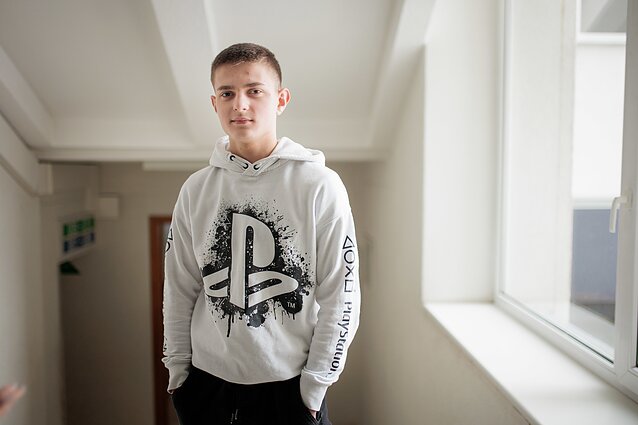
He can already boast that he speaks Lithuanian and is continuing his studies. He is also planning his future in Lithuania. Pavel would like to study aviation in Riga and later return to Lithuania and work as a pilot.
Masha Shapovalova first went to school in Lithuania’s Utena, where not many people could understand her, so she also had to learn Lithuanian quickly. According to her, learning Lithuanian, especially spelling and grammar, is difficult.
“I’m learning Lithuanian because I think I need it. I’m in the 11th grade now and I really want to study here in Vilnius because I like the atmosphere here. I have friends here, my family is here,” she says.
Masha is planning to study pedagogy and would like to become a maths teacher
Mila Tymchenko also studies at the Ukrainian school Gravitas Schola in Vilnius, attends a theatre studio, and sings.
“At the very beginning, when I first came to Lithuania, I went to my acting studio, heard Lithuanian, and thought: oh my God, how am I going to learn this language?” she says.

It is important for her to learn Lithuanian because of the friends she has made in Lithuania, she noted.
“I can read Lithuanian, watch TV. I remember I once watched an interview with my favourite Lithuanian singer DJ Nevykėlė on LRT and I understood almost everything,” Mila smiles.
Her dream is to go to Oxford to study psychology after finishing school in Lithuania.

Newsletter
Every Friday morning.