













The Baltic countries would like the next NATO secretary general to be someone from the alliance’s eastern flank. Observers say, however, this is becoming less probable. The Dutch prime minister is now seen as the favourite to replace Jens Stoltenberg – but we will not know until the NATO summit in Washington in July.
Jens Stoltenberg, who has been NATO secretary general for a decade, has had his term of office extended four times. He took the office in 2014, the same year that Russia attacked Ukraine in the Donbas, and was last asked to stay on after the February 24, 2022, invasion of Ukraine by Russia.
However, Stoltenberg has repeatedly reiterated his determination to give the post once a new leader is found, which needs to be unanimously endorsed by all the 31 members. The new generally secretary is expected to take the helm in October.
The Baltic states: it’s time for us
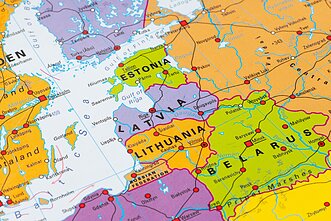
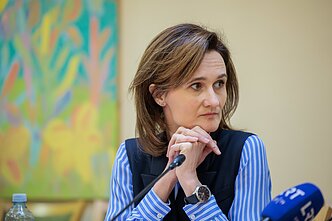
The Baltic countries have been saying for years that the time has come for a leader from NATO’s eastern flank to take the helm. And there is no shortage of candidates from the Baltics themselves: Latvia’s Foreign Minister Krišjānis Kariņš has expressed interest in being considered, Lithuania would like to see its Prime Minister Ingrida Šimonytė, but perhaps the strongest candidate has been Estonia’s Prime Minister, Kaja Kallas.

She has hinted her interest in the position several times and last November, at a conference organised by Politico, Kallas poked fun at the Dutch Prime Minister Mark Rutte, who is currently considered the most realistic candidate for NATO secretary general.
“There was a joke I heard the other day – the next secretary general should be from a new member state – ‘new’ being 20 years in NATO – it should definitely be from a country that has spent two percent of its GDP on defence and it would be nice if it were a woman,” she said. “So logically, it’s Mark Rutte.”
Jamie Shea, a professor and expert at the Brussels-based thinktank Friends of Europe, says that Eastern Europeans have good arguments that are being heard in the alliance.
“They are among the new members, but they are not new to NATO – they have been in the alliance for 20 years. And they have an important role to play, especially when it comes to defence spending. It is the countries of the Eastern flank that are now putting a lot of emphasis on collective defence, they are making a lot of effort and this is visible and audible,” Shea tells LRT.lt “But let’s be honest, there is another very strong candidate, Mr Rutte.”

Ian Lesser, vice-president of the German Marshall Fund, says that the Baltic candidate is seen by some alliance members as too much of a challenge because of their confrontational stance towards Russia, which he says could hinder compromises.
“Yes, there are opinions that it should be someone from the Baltic countries, which are on the front lines – closest to the current conflict. However, there is a lot of concern that a leader from the Baltics could be too provocative, it could be difficult to find compromises, and it is already difficult to reach an agreement on arms for Ukraine and other issues,” he tells LRT.lt.
Convenient for all
Lesser says that for the time being, it is Dutch Prime Minister Rutte who seems to be the most realistic candidate to replace Stoltenberg.
“I think there is already a consensus that Mr Rutte is the best candidate and probably an informal decision has already been made on that,” he says.
Rutte seems to be a “comfortable” option for many in the allies because of his experience, contacts, good relations with many countries, Lesser says. He is most similar to the current leader, Stoltenberg, who has even been called “indispensable” for his diplomatic skills.

Stoltenberg has managed to normalise relations with the United States after Donald Trump attacked other NATO countries for spending too little on defence, and to control the situation after French President Emmanuel Macron said that NATO was “brain-dead”.
“In this election, America’s position matters. It is the Biden administration that will decide on the nominee, and it seems to be happy with this option. I think they want to have someone who can get along with whoever is in the White House,” says Lesser.
Rutte is happy to have a good relationship with Donald Trump, which could be another argument in his favour. Shea also points out that it is most often a prime minister who becomes NATO secretary general.
“And the Netherlands traditionally ticks a lot of boxes when it comes to these posts – Mr Rutte is from an EU country that is close to an important alliance partner, the United Kingdom, he is also close to the Scandinavians and has always been very close to the United States. It is therefore not surprising that a politician from the Netherlands has been much more likely to take up this important position, and we have already had three secretaries from the Netherlands in the history of the alliance. Mr Rutte would be the fourth, and he has been prime minister for a very long time, so he has a lot of experience. And it is no secret that the Dutch are working hard behind the scenes on his candidacy,” according to Shea.

Never led by a woman
While the member states are seeking to agree on the next alliance leader before the European Parliament elections in June, the name is expected to be officially announced at the NATO summit in Washington in July. The behind-the-scenes battle is still going on, as there is another strong camp in favour of a woman to lead the alliance.
“I think the Americans would have liked to see Ursula von der Leyen because they have worked closely with her on trade, the Middle East and have a lot of common experience. But she is making it quite clear that she wants to stay on as president of the European Commission for another five years, and will probably announce it herself soon,” says Shea.
Danish Prime Minister Mette Frederiksen had been widely tipped as a candidate, but after a visit to the White House, she disappeared from the list of candidates.
“I cannot explain it, I do not know why it happened. There were a number of people whose names were mentioned but disappeared, such as [former British Defence Secretary Ben] Wallace. Some of them may not have been very interested in taking the post. Some of them may not have been very interested in doing it. [...]
“In general, it is a very strange struggle, because there are no rules, no procedures on how a new leader should be chosen, it depends on the diplomatic skills of the countries. And those efforts have been visible from some countries for some time. They have to do it well before the summit in Washington,” says Lesser.

Newsletter
Every Friday morning.