












“What is your race”, “Do you have polygamous relationships”, “Are you an anarchist” – these were among the questions Europeans had to answer when they decided to look for a better life in the US a century ago. Extra attention was paid to migrants from the East: Poles, Ukrainians and Lithuanians.
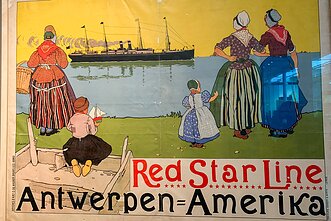
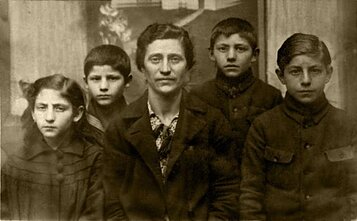
In the late 19th and early 20th centuries, around two million people left the port of Antwerp in Belgium on Red Star Line ferries with a one-way ticket to the US. At least several thousand Lithuanians may have been among them. These were mainly economic migrants but also those fleeing religious persecution or Russian oppression.
From the beginning of the 20th century, the more affluent scientist, writers, and other intellectuals started travelling to the US on the Red Star Line ferries, most of them Jews, who were fleeing Nazi persecution.
Selling everything
Promises of a better life and a stable job in the US often reached Europe from relatives already settled across the Atlantic.
“At the time, the economies of Canada and the US were booming, and after the abolition of slavery, there was a great need for cheap labour. The US itself encouraged Europeans to come and had quotas on how many people from each European country could be admitted,” explains Lieve Van der Velden, a guide at the Red Star Line Museum in Antwerp.
Ferry companies took advantage of the situation. For example, Red Star Line had offices all over Europe at that time, two of which were located on the territory of Lithuania – in Vilnius and Kaunas.
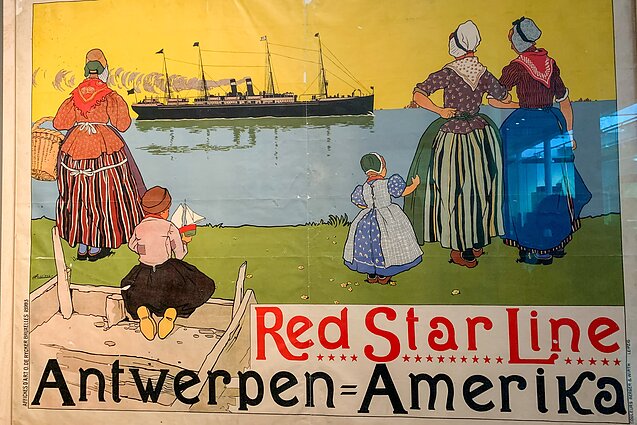
Posters were displayed in the cities inviting people to take the company’s ferries to the US or Canada, even though most Lithuanians could not leave legally at that time.
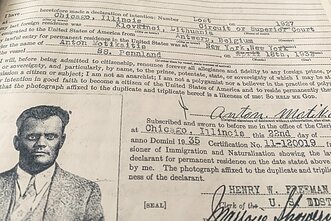
“They were fleeing Russian oppression. There are surviving records of Lithuanians explaining, for example, that they wanted to become US citizens because they ‘especially’ did not want to be loyal to the Russian Emperor Nicholas II. They used to emphasise the word ‘especially’,” says Van der Velden, showing the request of Eugene Sachs.
The documents state that he was born in 1884 in Wilkomir, Russia, which is now Lithuania’s Ukmergė. He was known as Judel Sass until he left for the US, where he changed his name. The files contain details of the date, the name of the ship on which he arrived, his height, weight, and hair and eye colour.
However, there is no precise data on the number of Lithuanians who left the port of Antwerp for the US, as many of them were listed as Russians on the surviving passenger lists. Still, a number of Lithuanian names, such as Motiejus Lankaitis, Ignas Budris, Petras Budris, Petras Lankaitis, Silvestras Maitikaitis, and others, are found on these lists.
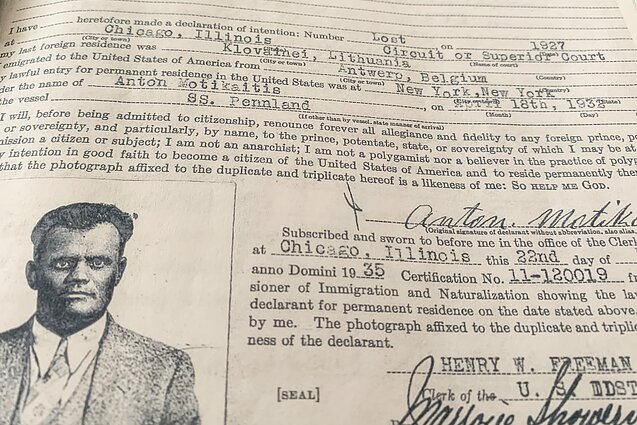
Van der Velden says, there could have been thousands of them. Often, they had to sell everything to afford the journey across the Atlantic.
“Tickets were expensive. Today, it would be equal to around 1,000 euros. That meant 75 days of work for poorer people, and they were often travelling as families, so they had to give up everything, sell their possessions,” the guide says.
Dirty and primitive
Since many Lithuanians left the Russian Empire illegally, even getting to the Antwerp was a challenge. Often, after paying generous sums to smugglers, they would spend days or even weeks working their way across Europe, hiding in train carriages without food or showers.
“At that time, Antwerp was a melting pot of nations, and there were many migrants from the East on the streets, with locals pointing fingers at them. [...] Eastern Europeans were even seen as dirty and primitive. But imagine, after a few days on a train, hiding in a carriage and not having a shower – it’s not surprising,” says Van der Velden.
The surviving health check documents also list Czechoslovakia, Poland, Ukraine, Romania, Hungary, Lithuania, Yugoslavia, Austria, and Russia as “infected districts”.
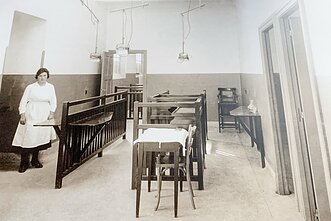
Upon reaching the port, their clothes and belongings were disinfected, and people had to stand under a hot shower of at least 38 degrees for an hour.
“Someone remembered that after such a shower, their skin looked as if it had doubled in size,” the guide says.
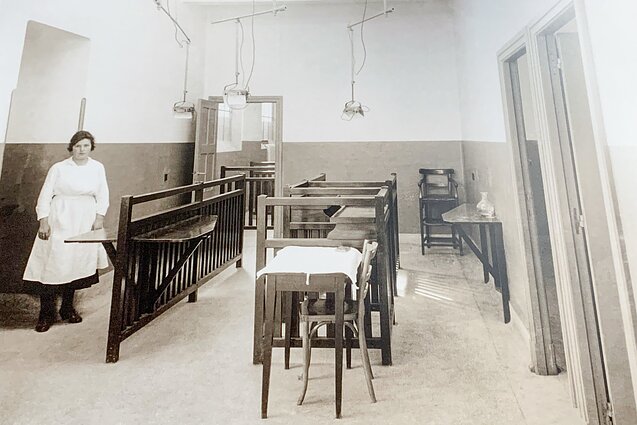
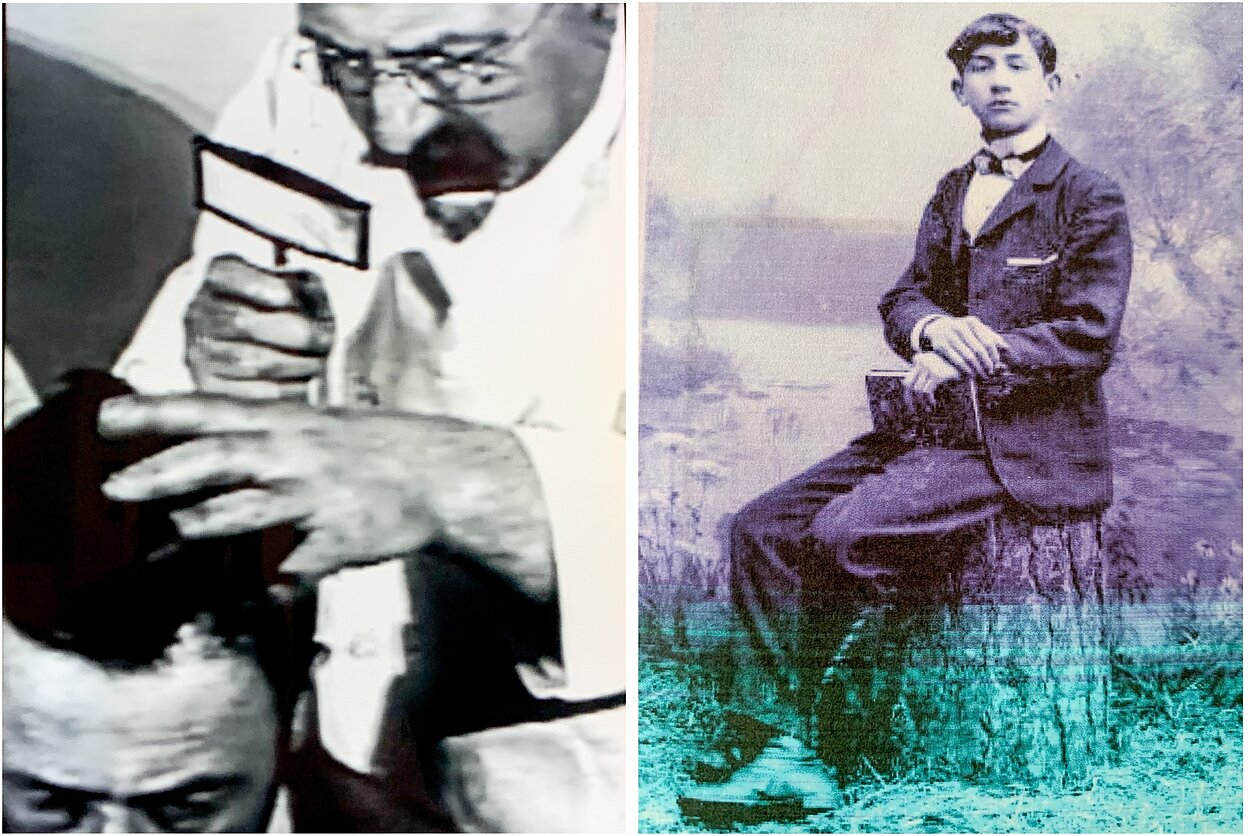
This was followed by a thorough medical examination by at least three doctors: a local doctor hired by the Belgian immigration services, an American doctor, and a doctor hired by the ferry company.
“The checks were rigorous because the Americans would send the infected people back, and the ferry company would have to pay for the return of the passenger,” Van der Velden explains.
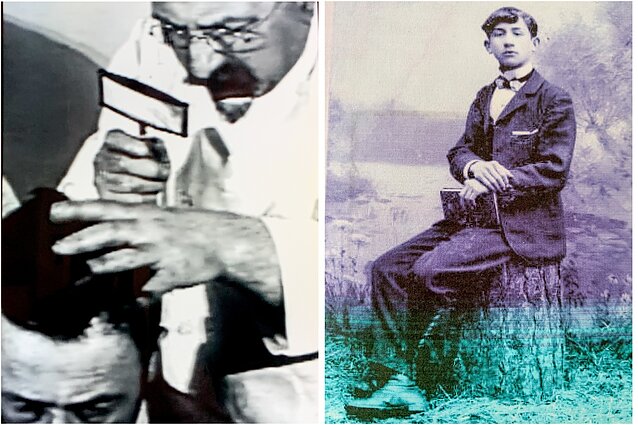
The passengers were screened for lice and venereal disease, which sometimes made women cry because they found the procedure unpleasant and humiliating. Particular attention was paid to the eyes, as the infectious disease trachoma was rampant at the time.
Unthinkable questions
It was trachoma that was one of the biggest obstacles to reaching the shores of the US. If left untreated, it could lead to blindness, so even a successful departure from Europe did not mean a smooth start in the US.
Migrants had to go through the paperwork and health checks again on Ellis Island, near New York, where they were registered. If they were found to have any diseases, they were sent back to Europe.
One of the most notable cases is that of Chaja Moel, a Jewish woman who fled the Russian Empire with her four children. The father was already waiting for the family in the US, but the mother with four children was unable to leave because of an eye infection contracted by the daughter Ita Moel.
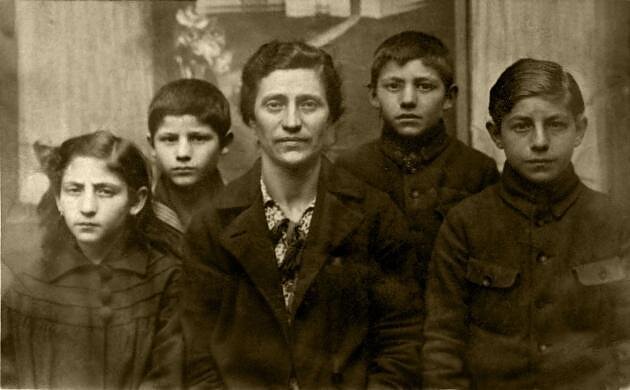
When they finally managed to leave Europe and arrived in the US, the mother had to make a devastating decision: after American doctors on Ellis Island diagnosed Ita with trachoma, the nine-year-old girl was sent back to Europe alone.
“And this happened twice. On her return to Antwerp, the girl was taken in by a Jewish aid organisation. Over the years, she learned Dutch, French, and English, and made friends with other children who were also waiting to return to their families. After a while, Ita went back to the US alone and was deported once again. It took her five years before she was able to return to the US,” Van der Velden says.
The sick had to be quarantined by the ferry companies. In addition to the numerous document checks, the passengers had to go through a whole session of questions – from the usual ones about their profession, what they wanted to do in the US, whether they had relatives there, to the more unpleasant ones – whether they had many sexual partners or whether they identified as anarchists.
“Such questions are simply unthinkable in today’s context,” says Van der Velden.
The wealthy travellers avoided the health and disinfection procedures. They also enjoyed luxury on board, while the poor slept cramped in small rooms. The 10-day trip across the Atlantic was described by most third-class passengers as arduous and unpleasant.
“Many were seasick. [...] But gradually, the conditions on board became better for the lower classes too,” the guide assures.

Newsletter
Every Friday morning.