















Lithuanian cinemas have refused to the Japanese director Hayao Miyazaki’s last film because of the distributors’ links with Russia. The bigger problem is that film rights are often packaged regionally, lumping the Baltic states together with Russia.
The new Japanese film The Boy and the Heron, by the legendary filmmaker Hayao Miyazaki, is among the contenders for next year’s Oscars.
Artgene, a company founded in Estonia by two Russian expatriates, has purchased distribution rights for the Baltic states and approached Lithuania’s cinemas about screening the film.
However, all the theatres in the country have turned down the offer.
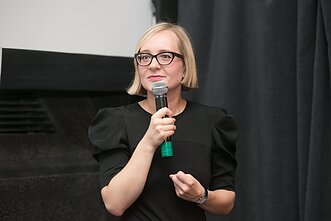
“One of the entities involved in this particular chain was a company with very direct links to Russia,” says Vilma Levickaitė, director of the Skalvija film theatre in Vilnius.
Further reading
The company in question is Silver Box, a UK-based company that sold the Baltic distribution rights to Artgene. According to Levickaitė, Silver Box is an offshore subsidiary of the Russian film distribution company Russkiy Reportazh.
The Russian media reported back in June that it was Ruskiy Reportazh that had acquired the distribution rights for Miyzaki’s film in Russia and the Baltics from a French company. This company and Silver Box are also linked by the same persons.
The Estonian company Artgene initially denied any contact with the Russian companies. Later, it admitted the link to LRT TV.
“We have only recently learnt that Russkiy Reportazh buys films through Silver Box as an agent for screening in Russia,” Artgene said in a written comment.
However, the Estonian company insists that the screening fees will not go to Russia, as Lithuanian cinemas fear: “The money received from the deal for the rights in the Baltic countries cannot, according to all the agreements in the legal chain, in any way go to Russia.”
Lithuanian cinemas are not convinced. Meanwhile, The Boy and the Heron will be shown in Latvia and Estonia. Anton Dolin, a film critic who moved from Russia to Latvia, is also surprised by the Lithuanian decision.
“It seems like pure voluntarism: we suspect that Russian money is behind you, so we won’t be showing your film. This is, of course, their right and shows their attitude towards the audience that will not be able to see the film,” he said.
According to Laimonas Ubavičius, director of the Lithuanian Film Centre, “it was more of an ethical and value-based approach of the distributors and exhibitors”.
However, such an approach is not without its challenges. Algirdas Ramaška, head of the Vilnius International Film Festival, points out that “most French sales agents sell films on a territorial basis” and group all former Soviet countries together, so Russian companies can buy the rights to show films in the Baltic states.
“At the moment such a region is not only very politically incorrect but also dangerous for us,” says Levickaitė, director of the Skalvija theatre.

With many American companies refusing to sell film rights to Russia, Russian distributors have become very active.
“Not all companies sell them films, so they [Russian distributors] spend a lot of money because they need content,” explains Ramaška.
This distorts the market, he says, preventing local Baltic distributors from acquiring rights directly.
The model is used even for European productions, so Lithuanian industry insiders suggest that the EU could introduce some rules to regulate the film market, at least for European-made films.
According to exhibitors, no films currently screened in Lithuania were acquired through Russian companies.

Newsletter
Every Friday morning.