















Around 30 percent of the Lithuanian population is ready to defend their country with arms, while 60 percent would contribute in other ways, suggests a study by Vilnius University researchers. What is worrying, however, is that political polarisation seems to affect the results.
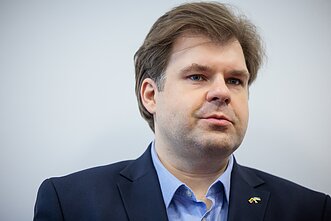
“The idea of universal defence is ingrained in the consciousness of the Lithuanian people, and the majority are ready to contribute to the defence, whether by arms or not,” says Ainė Ramonaitė, lecturer at Vilnius University’s Institute of International Relations and Political Science (VU TSPMI) and one of the authors of the study.
Presenting the results, Ramonaitė said the researchers looked at several measures.
“First, there is the general will, whether people in general support military resistance. Given that the country is small and losses would be significant, it is important to know if there is a will for resistance. We asked whether, if Lithuania were attacked, we should take up arms, regardless of who the attacker is.”
Second is the personal will to join in the fight. “We distinguished between armed and unarmed defence – how likely are people to go defend Lithuania with arms or in other ways,” explained Ramonaitė.

Last year, when Russia invaded Ukraine, Lithuanians were even more determined to defend their country, but the effect of the war has already diminished.
“In a way, we have returned to the pre-war level, but the determination to defend the country is higher compared to 2017,” Ramonaitė noted.
Cleavages along party politics
The study looked at whether results vary according to political divisions. The results suggest that indeed voters of some parties are more likely to support armed defence than others. The salience of this factor has grown since 2017.
“This is a bit worrying,” Ramonaitė said.
Willingness to defend the country has increased among supporters of the conservative Homeland Union (TS-LKD), which is currently in government, but not among others.

“This could be a consequence of political polarisation,” according to the researcher.
“This political cleavage scares me a little – national defence should not depend on what party is in power. If some people feel alienated from the state because they are alienated from the government, that is a bad thing. Politicising the issue from both sides is very harmful,” said Ramonaitė.
Only 19 percent of the respondents said they’d consider leaving the country in case of war.
The results in Lithuania are similar to those in Latvia, Ramonaitė said, although Latvians’ determination to defend their country is several points higher. The results are also very similar in Taiwan.
Gender and ethnicity
Aurelija Tylaitė, a researcher at VU TSPMI, pointed out that both men and women believe that Lithuanians should defend themselves regardless of who attacks them. However, women’s personal will to participate in defence is almost 20 points lower than men’s.
“This could be at least partly explained by the prejudice that defence should be armed, while women are either unwilling to join in or consider themselves incapable of doing so,” Tylaitė said.

According to the survey, 17 percent of women and 44 percent of men would be willing to defend their country with arms. Meanwhile, when it comes to other forms of defence, the gender difference is much narrower, 56 percent of women and 62 percent of men.
Variation is also marked according to ethnicity. Fifty-two percent of Russian-speaking respondents said they would not defend Lithuania, as did 34.5 percent of Polish-speaking respondents.
Overall, said Tylaitė, the most likely group to say they’d participate in defence are Lithuanian-speaking men under 30 with higher education and higher income. Military training is also a significant factor.
Ramonaitė also noted that people’s willingness to defend the country correlates with how they perceive the functioning of democracy – the more satisfied a person is with democracy, the more determined he or she is to defend Lithuania.
“The state would be better defended by those who feel competent, by those who feel they have a say in decisions, by those who are satisfied with the functioning of democracy,” said Ramonaitė. “We need to rethink the whole relationship of our state, we need to look at Scandinavia, where there is much more trust in government, much more involvement of the people in decision-making. Then the will to defend is on a completely different level.”

‘Good resistance package’
Deividas Šlekys, associate professor at VU TSPMI, stressed that the study results show a good foundation for building “a good resistance package”. In any war, at least four people are working to support each soldier, providing services and producing food and other products.
The study also showed public support for universal conscription. Eighty-one percent of respondents supported universal military service for men.
“The support is there, politicians could be bolder,” Šlekys commented.
However, almost a two-thirds majority were sceptical about compulsory service for women.
“If we want to have more people with weapons, we need to ask what we are doing about the inclusion of women. We need a serious socio-cultural dialogue on how we share the work or how we fight and resist, if necessary,” Šlekys stressed.
He also pointed out that almost 40 percent of the respondents were in favour of a longer period of compulsory military service – 12 months.

Newsletter
Every Friday morning.