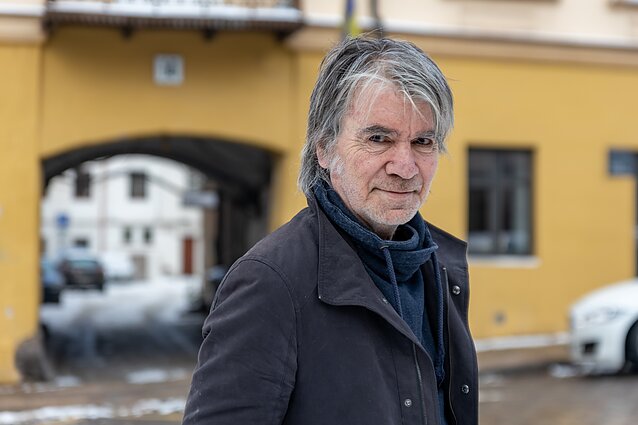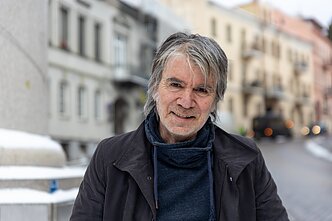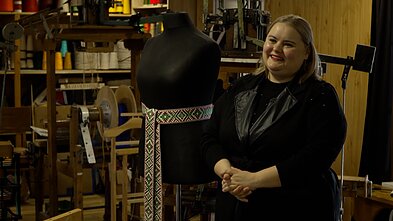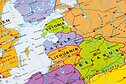
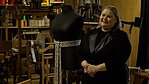











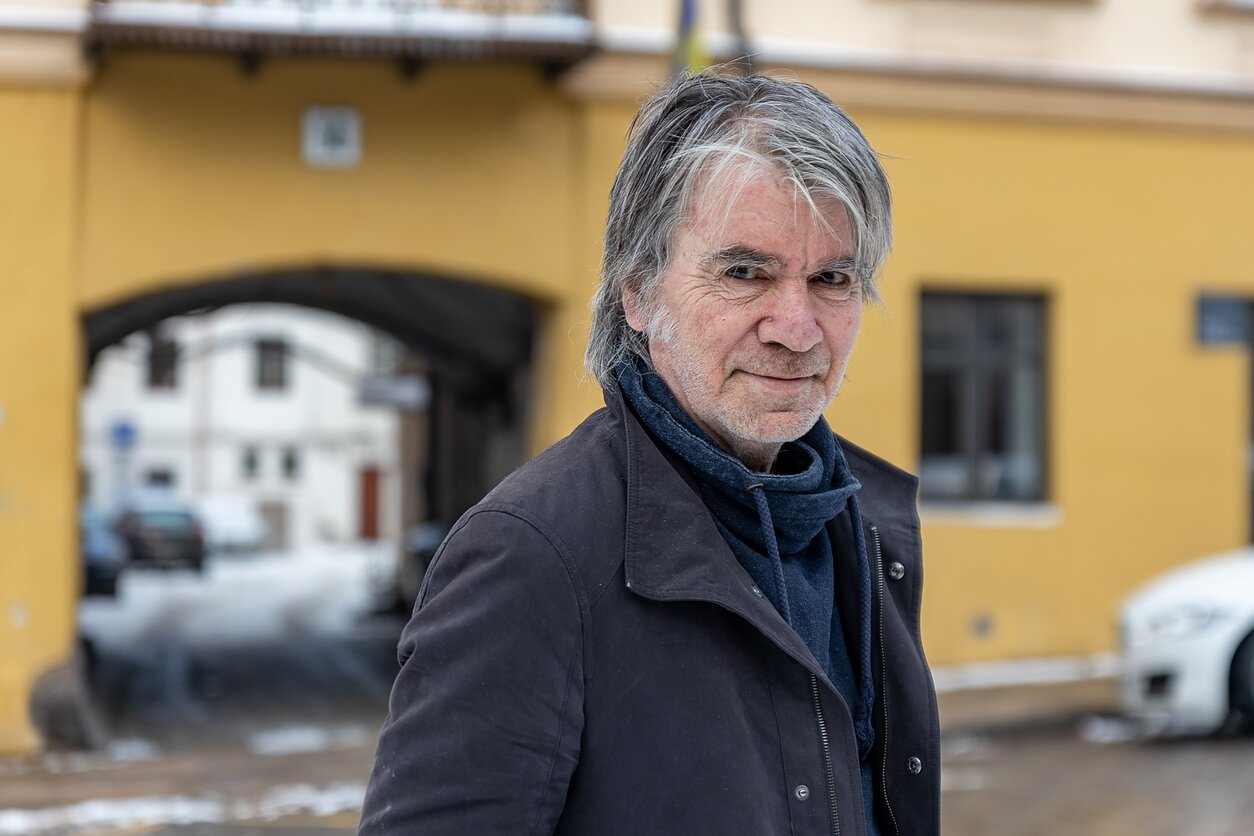
“It was the love for a woman that brought me here. Now, it’s the love for the country, the people, the history that keeps me here,” says Ulrich Beck from Germany, who has been living in Lithuania for 12 years.
Ulrich’s story is not unusual in the sense that he moved to Lithuania after falling in love with a Lithuanian woman. The rest of it, however, sounds anything but ordinary.
“Normally, you move to another country when you’re in your 20s or 30s. I was 51 when I came here,” he smiles.
Fateful meeting
Ulrich says he had little knowledge about his future home country while growing up or later on in life.
“I am from Western Germany. I never learned anything about Lithuania in school. It was the Soviet Union, and Lithuania was like Kazakhstan or Uzbekistan, all part of the same Eastern Bloc,” the man explains.
His first real contact with Lithuania and other Baltic countries was around 2005 when he worked as a jazz club manager in Germany’s Dortmund. At that time, the Baltic Weeks festival was taking place in the city, and Ulrich’s club hosted several concerts of Lithuanian artists.
Thanks to the festival, Ulrich became acquainted with a Lithuanian woman, who was among the organisers.
“Three years later, I went to a bar near home, and I met this woman again. She had to leave ten minutes later but asked if I could take care of her friend from Lithuania. This was J,” he recalls.
According to Ulrich, he almost didn’t go to that bar that night, but “my decision changed my life forever”. He and J started dating and after two years of long-distance relationship, they decided to live together. J had a daughter who needed special medical care, so they decided it would be best if Ulrich came to Lithuania.
First winter
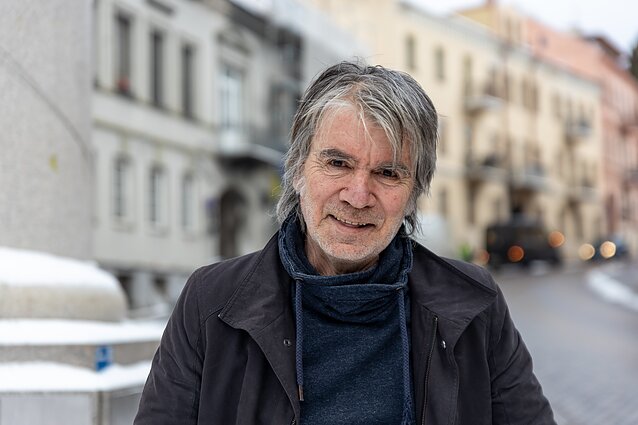
Ulrich moved to Lithuania in October 2011, which was unusually warm for the season, he recalls. He, J, and her daughter first lived in a remote Vilnius neighbourhood of Pylimėliai, which even locals rarely know exists, the German man says.
It was close to the special kindergarten, attended by J’s daughter, so they rented a small house heated by wood in the area. Ulrich says he had to wake up at 6:00 every morning to heat up the house and had to chop up wood every other day.
“And it was a ‘real nice winter’ that year. It was a lot of snow, and for weeks, it was minus 20-25 degrees,” he smiles.
J, however, left him after half a year and went back to living with her mother and sister. Ulrich stayed in Pylimėliai alone, even though all his friends urged him to return to Germany.
“But I didn’t want to go back. I gave up my job, my apartment, everything to come here,” Ulrich shares. “Frank Sinatra in his song New York, New York sings ‘If I can make it there, I’ll make it anywhere’. That was what I was thinking, and it was like an adventure.”
Dream come true
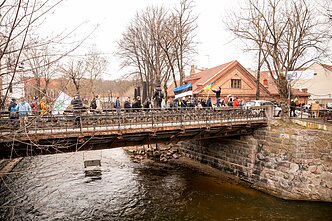
Ulrich also stayed in Lithuania for another reason. Ever since visiting Vilnius for the first time and walking alongside the river Vilnelė in the bohemian neighbourhood of Užupis, he felt that this was where he wanted to live.
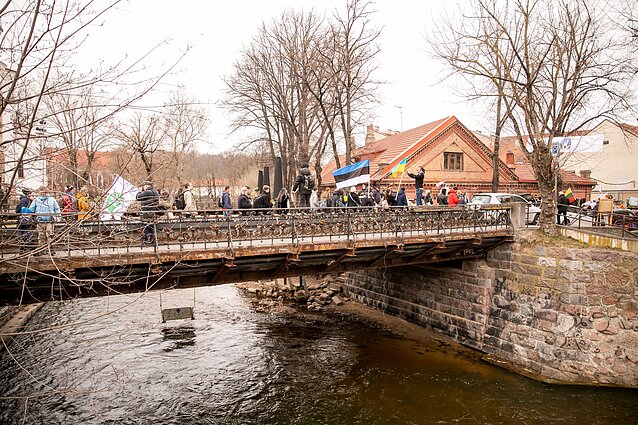
It took nine years for Ulrich’s dream to come true. After Pylimėliai, he lived in Vilnius’ Naujininkai and Naujamiestis before finally moving to Užupis three years ago.
Asked what makes this area so special, Ulrich answers in one word – “atmosphere”. The self-declared Užupis Republic is home to numerous artist studios and galleries where the German man finds inspiration for his own art of making collages.
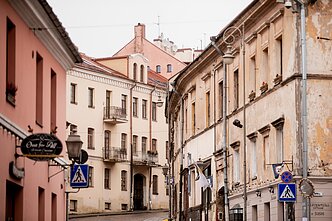
The old architecture which is not yet too touched by renovation and gentrification also adds to this atmosphere, which he calls “shabby chic”.
According to Ulrich, he is a “city person” and likes Vilnius more than the Lithuanian countryside.
“I grew up in a village in Germany. For studying, I went for the first time to a bigger city, which had a population of 300,000 people. I lived there for 19 years and then I moved to Dortmund,” he explains. “I need this feeling that I can go out and meet people and not cows or horses.”
In Vilnius, he is most impressed by the old town and Užupis because his previous hometown, Dortmund, was 85 percent destroyed during the Second World War and most of its historic heritage did not survive the bombings.
Books and Language
When he moved to Lithuania, Ulrich did not speak a word of Lithuanian. Thus he soon realised that he, a media designer by training, wouldn’t be able to find a job in Lithuania without speaking the language.
“So, I looked on the internet for a job I could do at home. I found some German platforms that offered writing jobs. I took it. I developed my writing, and today, after nearly 12 years, I’m established,” Ulrich says.

“I found my way to make money. In Lithuania, the internet is fantastic, and I’m free, I can do it anywhere and at any time, so it works for me,” he adds.
Now that he “made it” in Lithuania as the Sinatra song goes, Ulrich says he has no plans to live anywhere else.
“I feel good here. [...] In Germany, I lost many contacts after being gone for so long. Now, I have a lot of friends here,” he shares.
“I like the people here. Most people are friendly. In the beginning, 12 years ago, people had more fear. I guess it was the legacy of the Sovie times, but the young people are more open,” the Garman man adds.
In Germany, he says, he mostly misses his two grown-up sons, who live in Berlin and whom he visits sometimes, as well as the ability to buy German books.
“Before I left Germany, I had around 2,500 books, and I had to give most of them away. It was the worst,” he smiles.
Now, he also tries to read more Lithuanian books, as he is hoping to improve his language skills.
“For nine years, I couldn’t really speak Lithuanian. All the people I met here spoke English, and as a lazy guy, I took it. Today, my Lithuanian is not perfect, but I can speak enough to feel secure here,” he says.

Newsletter
Every Friday morning.