









Most people in Lithuania first heard about the so-called sovereigns’ movement this summer, when the parents kidnapped their children and tried to flee to Belarus. The LRT Investigation Team has found out that there are several sovereign organisations in Lithuania, most of which have links to actors in Russia and Belarus and resemble a financial fraud scheme.
“There was, I think, a video posted. It said that if you join the organisation, you’ll receive 2,000 euros a month in fixed income. Plus, you’ll get money if you need it for a car, a house, or furniture. You just get it. If you’re a member, you’ll get a mountain of gold. You don’t have to give anything, you just have to sign up,” Aleksandras (not his real name) tells the LRT Investigation Team about joining one of the sovereign organisations in Lithuania.
Most of the sovereign organisations operating in Lithuania, who call themselves “living people”, are based on a theory coming from Russia. Some groups argue that the Soviet Union never collapsed, so the documents issued at the time are still valid. Moreover, they claim that each person is given a check for 630,000 euros at birth, but this information is supposedly hidden. Once you have declared yourself a “living person”, they say you can expect a monthly payment, ranging from 2,000 to 2,500 euros, depending on the group.
As far as Lithuanian sovereigns are concerned, the Gaudija Vaishnava community, led by Žilvinas Užkuraitis, is best known in public. However, data collected by the LRT Investigation Team show that there are at least five active “living people” groups in the country, most of which are in contact with the self-proclaimed leaders of the sovereign world in Russia and Belarus.
Mysterious lecturer from Russia
“I have to confess – I had people from Russia come to me and offer to be a representative. They drew economic models of how it would be possible to earn money from sovereign certificates, they offered mountains of gold. But I said, 'Come on, guys, stop it, this is suicide. [...] I realised that this was a serious project to destroy and create the state within a state,” Vaidas Žemaitis Lekstutis, who is mentioned in the State Security Department (VSD) reports for disseminating pro-Russian propaganda, said in one of his broadcasts three months ago.
Lekstutis did not agree to speak to journalists about this meeting. However, one name stood out when analysing the available information. Rasa Šimkevičė, who has contacts in Russia and Germany and represents the movement proposing the restoration of the USSR, began to gather supporters in Lithuania before the COVID-19 pandemic.
Užkuraitis, head of the Gaudija Vaishnava community, confirmed to the LRT Investigation Team that Šimkevičė is the pioneer of the sovereign movement in Lithuania.
“It was around 2019, maybe 2020. An ad for a lecture on sovereigns appeared on Facebook. I thought it was interesting because we have a community of Gaudija Vaishnava. We are sovereigns because Krishna is sovereign,” Užkuraitis said.
It seems that Šimkevičė has been trying to avoid publicity, as it is impossible to find photos of her online. But she has been actively travelling around Lithuania and inviting people to her lectures.
Easy money
“First of all, I would like you to start writing down what the word ‘sovereign’ means,” dictates Šimkevičė in a lecture on April 19, 2020.
The LRT Investigation Team has obtained an audio recording of this lecture. In it, Šimkevičė explains that every child becomes a commodity after birth, that people are slaves to the system, and that the solution is to become a sovereign. She says she is an international registrar of sovereigns and asks for copies of personal documents from those who want to join the movement.
Šimkevičė invited people to the lectures entitled “How to become a sovereign” both before and during the quarantine. They were organised in Vilnius and Kaunas.
As it turned out, Šimkevičė represented the association ISKR-SSSR (International Quality Improvement System). This is the project of Alexander Schmidt, who was born in Russia’s Chelyabinsk but has been living in Germany for a long time. He set up the Drimex.de company in Hannover to coordinate the project. The ISKR mainly operates in the post-Soviet countries, in particular, Russia, Ukraine, and Kazakhstan. In Lithuania, 126 people are said to be members.
Schmidt presents himself as the president of the sovereigns of the world. To his followers, he speaks of “good globalisation” and predicts a revival of the Soviet Union as the “union of full and fair development”. The movement promises that those who join the ISKR and declare themselves sovereigns will receive 2,500 euros per month.
"In our economic system, we will pay an unconditional basic income (UBI). The UBI will be paid to all ISKR participants without exception, from the first to the last breath,” its promotional video says.

The LRT Investigation Team has collected testimonies of six people in Lithuania, who fell victim to the ISKR’s promises of easy money.
Lost money and stolen data
Drimex-Baltic is a public body, which was registered in Vilnius in August 2020. Its founder is Šimkevičė, and a retired 80-year-old woman, who asked to remain anonymous, was named its director. The woman said her data was used to register the company without her consent.
According to the LRT sources, Šimkevičė actively recruited seniors to the ISKR. However, young people were also among the victims.
Mykolas (not his real name) from Vilnius said he became interested in the sovereign movement during the pandemic.
“A friend showed it to me. We’re the kind of people who were interested in conspiracy theories, such as flat earth, 5G, and so on. We’re not advocates, but both sides are interesting. That’s how we discovered this thing. I messaged her, and we started talking on the phone,” the young man explained.
Together with the friend, they transferred 1,400 euros to Šimkevičė’s foreign account as a contribution to the coordination group. The money was never recovered.
Aleksandras (not his real name) was also seduced by the promises of a monthly handout of 2,000 euros. The ISKR members were encouraged to write “business projects”, and Aleksandras drew up one of them. He invested 1,000 euros in an online business, which he did not want to disclose. He was promised he would recover the money, but he never did.
Meanwhile, Renata (not her real name) had her personal data stolen. Providing a copy of one’s passport, driving licence, declaration of residence, and children’s data is a prerequisite for joining the ISKR. After giving these to Šimkevičė, Renata saw in her online health register a record of a visit to the emergency department of the Telšiai Regional Hospital, even though she was working in Klaipėda on that day. In March 2021, the Telšiai County Police opened a pre-trial investigation into the falsification and use of documents.
‘Who should pay? Me?’
There is no recent information on Šimkevičė’s activities in Lithuania. She does not answer phone calls, but the LRT Investigation Team managed to contact ISKR leader Schmidt. According to him, Šimkevičė is currently in “quarantine”, ie communication with her is suspended.
“She said that she is not interested and that she is busy with other things. We took this as a statement of departure and quarantined her. We’re waiting for her to wake up and ask to be admitted back. We would then update all her algorithms in our system,” Schmidt said.
He rejected accusations that the ISKR’s activities resemble a financial fraud scheme. According to him, people are provided with knowledge and in return, they are asked not to pay but to provide a loan.
“But according to the agreement, this loan is only repaid when there is a real profit from our real projects, which we are all working on together,” Schmidt said.
When asked about people being disappointed about not receiving the money they were promised, Schmidt was surprised: “And who should pay? Me? They have to implement the projects themselves!”
As one of the profitable business projects on the Drimex website, he mentioned the “positronic water” production line, which is said to cure many diseases.
Communicate with kings
Šimkevičė’s activities in Lithuania have encouraged other “living people” movements. Currently, the best known is the Gaudija Vaishnava religious community. Its founder Užkuraitis says he got interested in the sovereign movement thanks to Šimkevičė. However, he never joined the ISKR.
“We were very suspicious because we needed to provide copies of so many documents: a passport, a declaration of residence, a birth certificate. [...] So, we abstained. But because we paid for Rasa’s lecture, the energy was already there,” Užkuraitis said.
His supporters also differ from the other sovereign groups in that they do not refuse documents issued by the state. According to Užkuraitis, they are “the key to the system”. He says sovereigns who refuse documents are “anarchists”.
However, Užkuraitis also produces documents for his followers – the “Sovereign Certificate” and the “Human Passport”. During the pandemic, it was announced that such a passport, which supposedly grants freedom from restrictions, costs 65 euros for an adult and 14 euros for a child. There is also a 50-euros joining fee and monthly dues. The cost for non-members to attend the Sovereign Congresses organised by Gaudija Vaishnava is similar.

Demonstrating that the “documents” he produces are recognised, Užkuraitis sends the list of members to state institutions, embassies, and even claims to have sent them to Buckingham Palace in London.
As proof of recognition, Užkuraitis provides automatic replies by the institutions that an email has been received and forwarded to responsible authorities.
“We inform the president, ministries, prosecutors, embassies, kings that we are people, we are sovereign. […] The dialogue is excellent. We, as sovereigns, use the system. It is foolish to throw away the keys to the apartment, to the car, and to start creating our own system,” the sovereign leader said.
Leader of sovereign world
Although Užkuraits was introduced to the idea of sovereigns by Šimkevičė, he has also established a close relationship with Belarusian Nikolay Burov, who presents himself as the leader of the sovereign world. So far, Burov has not been sanctioned by the Lukashenko regime, although many other Belarusian sovereigns have been detained.
A decade ago, in Gomel, Burov organised training sessions for men and women on how to seduce a potential partner, and now he proclaims to have created a world of sovereigns, with his own representatives and a cryptocurrency, which is only available to people who have publicly expressed their “free will” and sent him a copy of their official documents.
Burov also sells sovereign documents: a sovereign e-company costs 300 euros, a passport for a sovereign citizen of the world – 150 euros, a driving licence – 31.5 euros. Another source of income is subscriptions to his YouTube channel that cost between 3.99 and 99.99 euros per month.
Burov also advertises his book “Expression of Will on Self-Identification and Self-Determination”. The book costs 90 euros or 370 euros if bought together with the “Expression of Will” course.
In an experiment, journalists from the LRT Investigations Team contacted Burov via Telegram, introducing themselves as a family which had recently returned to Lithuania and was looking to establish contacts with sovereigns.
Burov replied in five minutes. He wrote that he would be in Lithuania in a couple of months, but the meeting should be planned in advance. He also said that we would first need to gain knowledge and could do so by reading his book.
“One book in Russian and Lithuanian is enough for two of you to study. You will also be given access to the training course for two people for the price of one because you will be together,” he wrote.
According to him, “the book will cost 222 euros for your couple, while the normal price would be 450 euros”. Burov also mentioned cryptocurrencies as an option to transfer money.
Two days after this correspondence, we received another message from Burov, asking if we had been able to sort out cryptocurrencies, ie to transfer money. He also said he would be able to introduce us to other sovereigns when he comes to Lithuania.
Served by three groups
According to the information available to the LRT Investigation Team, at least three “living people” groups in Lithuania have been linked to Burov at one time or another.
Užkuraitis said he learned about Burov from the internet and started producing passports of sovereigns based on his broadcasts. He confirmed that Gaudija Vaishnava invited Burov to Lithuania and organised his tour in various cities. But the leader of the sovereign world visited Lithuania more than once.
A map of the world of sovereigns can be found on the website created by Burov. It also mentions the Lithuanian representation but notes that on June 4, 2021, cooperation with it was suspended.
The head of the representation at the time was named Stefa Tiara – Stefanija Kondrotienė. She translated Burov’s book into Lithuanian but publicly questioned his motives.
At the same time, she offered her own “real” training, which is taught on her podcasts and website Sovereign Lithuania. The website states that those who wish to become members of the community must prove that they are “living” by submitting a diagnostic of their aura, a photo of their hands “which shows the level of evolution of the human being”, a CV, and pay a 50-euro entrance fee and a 15-euro monthly membership fee.
Declared departure
Kondrotienė publicly identified Sarmatų Ainius as the only other movement properly preparing sovereign documents. Dainius Babonas, a songwriter and singer, is identified as the leader of this group. His followers refuse official documents and use self-made car licence plates.
Babonas refused to talk to LRT journalists, saying that the “natural person” we contacted had “declared a departure from Lithuania” and the “living person” called Dainius was living in the country. He said he would only be willing to talk to us if we had an agreement in advance.
According to data available to the LRT Investigation team, Babonas officially declared his departure from Lithuania at the end of 2020. In a document he showed in a public broadcast, he stated that he was leaving for the United Arab Emirates.
In October 2020, he also contacted Burov via VKontakte.
“I’m from a group of sovereigns from Lithuania. We wanted to ask about some things regarding the creation of our sovereign state. We can invite you to visit us in Lithuania. We will pay for the trip and the hotel; we will meet you at the border,” he wrote.
Burov took up the invitation. In the autumn of 2021, he organised an extensive lecture tour in Lithuania. The last time Burov visited Lithuania was in February this year.
Security brigade
The sovereigns organised by Alfonsas Norvaišas operate somewhat differently from the aforementioned organisations.
Norvaišas organises video broadcasts and presents himself as the president of the sovereign independent state of Lithuania in exile. He claims to be filming from Switzerland. According to the publicly available information, he moved there to escape legal persecution after being tried in Klaipėda earlier this year for financial scams.
“I didn’t run away. God brought me to Switzerland so that they couldn’t arrest me easily. I’m not hiding. […] I’m just protecting myself temporarily until we organise our security brigade. Then we’ll show up in Lithuania, there’ll be nothing to fear,” Norvaišas told the LRT Investigation Team.
The security brigade Norvaišas refers to is a “force” organised by him.
“We need security staff. Salary from 2,000 euros net. In addition, you will receive free living space and a company car, which you could also use for personal purposes,” he said in his broadcasts.
Norvaišas also makes no secret of his attitude towards Russia. “People, remember, we are not at war with Russia. If the Russians invade the territory of the Lithuanian state at the behest of the US, I ask those of you who want a truly independent Lithuanian state not to take up arms against Russia and the Russians. On the contrary, help them to catch all the cronies of the US and Western masters,” he said in a broadcast at the end of October.

Headache to institutions
This summer, the VSD described the sovereign movement as an “anti-state extremist ideology that denies the legitimacy of the state”.
The movement is also a major headache for the Lithuanian authorities.
“The Migration Department’s customer service units receive up to five visits per month from individuals who may be suspected of being sovereigns. On average, between five and ten requests, appeals, and petitions are received from such persons by electronic correspondence every month,” said Rokas Pukinskas, the chief adviser of the Migration Department.
The Centre of Registers also said it receives around five requests to delete sovereign people’s data every week, although their activity has recently decreased.
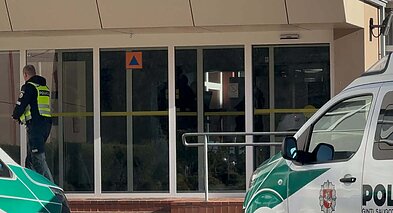
The Lithuanian police do not distinguish cases of violations committed by sovereigns in their statistics, although they occur, according to Jorūnė Liutkienė, chief specialist of the Communications Division at the Police Department.
“The most frequent cases are when people refuse to provide documents, provide damaged documents, or drive cars with self-made license plates,” she said.

Newsletter
Every Friday morning.