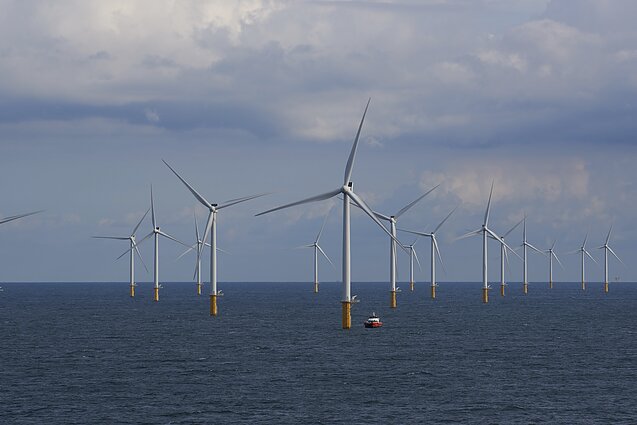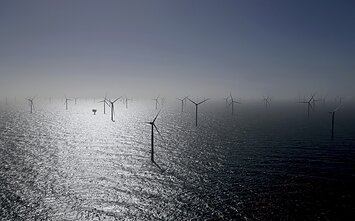













The Energy Ministry and industry representatives expect that Lithuania’s tender for a second 700 megawatt (MW) offshore wind farm in the Baltic Sea will attract more bidders than the first one held in the summer.
The second tender will offer the opportunity to claim state support.
Denmark’s renewable energy developer European Energy has already announced plans to bid in the second tender jointly with Norway’s offshore wind company Vargronn.
According to information available to BNS, Germany’s RWE, Poland’s largest oil group Orlen, and Enefit Green, a renewable energy subsidiary of Estonia’s energy group Eesti Energia, have also shown interest in Lithuania’s offshore wind market and regulatory framework. However, Enefit Green’s management has reservations about participating in the tender.
Also, it was announced last week that a delegation of 20 Dutch companies had visited Klaipėda.
The delegation included Van Oord, which had previously considered taking part in Lithuania’s Baltic Sea wind farm tenders, the Netherlands’ wind energy association, seabed exploration companies, and underwater power plant construction firms.
The German, Dutch, and Polish companies would not comment on their potential participation in the tender.
Linas Sabaliauskas, head of the Lithuanian Wind Power Association, expects the second tender to attract at least three bidders.
“Enough time has been given for preparation. [Plans to hold the tender were] announced two years ago, and anyone interested could familiarise themselves with the rules,” he told BNS.
However, the exact date of the tender remains unclear as Vilnius and Brussels are still coordinating the state support scheme.
The Energy Ministry says the tender should be announced by the end of this year, with the specific timing to be discussed with market participants.
According to the tender conditions, it must be announced at least two months after the ministry obtains the European Commission’s approval for the state incentive scheme.
The ministry had initially aimed for this to happen in the summer, and then by the end of September or earlier, but the process is still ongoing.
Market participants, associations’ leaders, and the Energy Ministry all agree that the terms and conditions of the second tender are more attractive for potential developers.
Market participants say, however, that potential developers’ interest could be dampened by the planned wind farms’ low capacity and Lithuania’s different state support model compared to that of other countries.
Some companies have already announced that they will not bid in the second tender or have withdrawn from the Baltic countries altogether.
The Energy Ministry says that developers’ actions and the course of the tenders are determined by the changed situation in the electricity market.
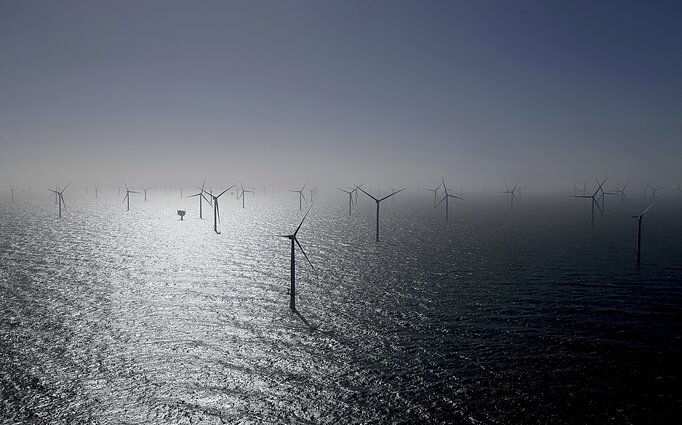
The two offshore wind farms, which would provide around half of Lithuania’s current electricity needs, are planned to be built in the Baltic Sea by 2028.
Further reading

Newsletter
Every Friday morning.