
















The lives of executioners were grim, well-paid, and largely isolated. Looking at them also gives us a glimpse into Lithuanian society at the time, according to historian and professor Aivas Ragauskas.
Executioner Andrius Vrublevskis (1657-1671) worked in Vilnius for almost 15 years. What sources reveal the existence of this person?
The question of sources is one of the most important in the study of the legal and social history of old Vilnius, as well as in the study of the past of a specific professional group – executioners. Unfortunately, the old city archives kept in the Vilnius City Hall were lost during the Muscovite occupation in the mid-17th century. These include the documentation dating back to the end of the 15th century (more than 100 volumes), the books of council acts, as well as registers of income-expenditure and other books.
As a result, it is only possible to analyse many aspects of the history of our capital city in more detail from the mid-17th century onwards. This huge gap in research [...] significantly distorts the picture of the history of Vilnius in the first half of the 16th-17th centuries and even of the history of Lithuania. We will probably never be able to ‘establish’ a closer and more varied contact with the citizens of that era.
We learn about the city executioner Andrius Vrublevskis first of all from the aforementioned registers of the city's revenue expenditures (which have been preserved since 1655) and the books of acts of the benchers' court and the council, whose systematic records have also been preserved, starting mainly in 1657.
We do not rely on any executioner diaries, letters or similar narrative sources (in other countries, such sources have survived). The records of the executioners are mainly records of rewards and activities, and we have been able to find detailed accounts of the funeral expenses of the last executioner of Vilnius, Mesterházy, who died in 1797.
The executioner is not so much famous as important, primarily in the context of an integral social history. If we want to know the past as comprehensively as possible, and not only through (un)conscious selective sampling of political and other events, personalities and processes, then we have to look back to the most diverse social groups in terms of class, profession, gender, religion, age, national identity and other aspects. I dare say that in this context we are so far [...] at the very beginning of our knowledge of Lithuanian history.
For example, we have so far hardly investigated contextually and integrally many of the components of the old well-being (quality of life) of Vilnius and Lithuania, so we cannot actually say how people lived, what the differences were in income, food consumption, health services, etc.
Often we are limited to some kind of enchantments of the nobility, as if they explain everything. Of course, these studies are complicated by gaps in the sources and other reasons.
Returning to the executioner, it should be noted that his character is a kind of window into a very small, specific but vital professional group connected with the old justice, specifically criminal Magdeburg Law. Without this official, many criminal proceedings, executions and other punishments could not be carried out.
In a self-governing Magdeburg city, the absence of the executioner posed major challenges: the prison overflowed, suspected criminals were not interrogated, and the ‘theatre’ of death – public executions – did not take place.
The city's criminal law of the time recognised torture as a means of gathering evidence and spared the death penalty for many crimes. By the second half of the 18th century, Magdeburg criminal law had effectively become obsolete. In one letter, the Vilnius citizens even demanded the abolition of the German Magdeburg Law.
There was a reason for this: while the noble courts increasingly commuted death sentences to life sentences, the city courts continued to impose death sentences for similar crimes under Magdeburg Law. Being a burgher also became riskier than being a nobleman in this respect.
Contrary to the Lithuanian Statute, the noble castle courts in Lithuania (Vilnius and others) did not have their own executioners. Except in rare cases, they used the services of city executioners, both in criminal proceedings and in the execution of sentences.
One document from 1785, interpreted by the great legal historian Adamas Stankevičius, shows that the judges of the Lithuanian High Tribunal even demanded that the execution of the nobility they had sentenced to death should be carried out with the funds of the magistrate of Vilnius that has “a foundation for the maintenance of an executioner".
The argument is strange – there was no "foundation", the executioner was expensively maintained by the city budget. Thus, the profession was vital for society and the state in general. The executioner's trade is inhuman but unavoidable.
Was the office of executioner compulsory in Vilnius? For how long did it exist?
The office of executioner was not compulsory. Maintaining a qualified executioner, ie one who could carry out torture in a properly proportionate manner (without killing and for a long time) and do executions efficiently (with a single stroke), was very expensive. In Lithuania, only the largest self-governing cities – Vilnius, Mogilev, Kaunas, Grodno, Kėdainiai, etc. – had them, as they were privileged by their rulers to have self-government (separate administration, court, finances, territory).
The salary of the Vilnius executioner was 300 gold coins a year, not counting many other allowances, such as material for clothing, grain for baking bread and making porridge, additional remuneration for various tortures, executions, and the purchase and sharpening of the necessary tools for his work, such as the axe, sword, and knife.
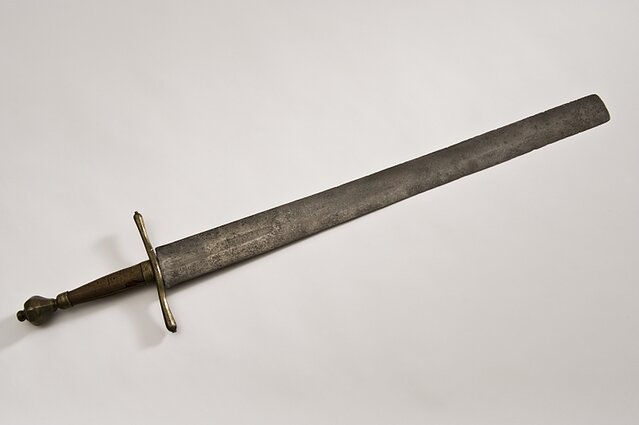
The salary of the burgomaster of Vilnius was 250 gold coins, and that of the councillor was 100 gold coins. Many smaller towns did not have their own executioner, but borrowed from larger ones. There were cases when even Vilnius did not have its own executioner and borrowed one for a short time from Kaunas, Königsberg, Kėdainiai, Lida, Grodno and other cities.
In the case of the smaller cities, it was logical not to have an executioner, as there were fewer criminal cases and convictions due to their smaller population. As mentioned above, this was also the case for the noble criminal courts of the castle, as well as for the Supreme Tribunal of Lithuania [in criminal cases].
For example, witches were tortured in the courts of the nobleman's manor by hired executioners from the nearest town to the court. This hiring was also expensive. Non-executioners could not torture the accused in criminal trials; it was illegal.
In Vilnius, the office of executioner existed from the end of the 14th century. Vilnius was granted Magdeburg self-government rights in 1387. A privilege of the year 1432 mentions the right of the court of the bailiff to punish criminals with death by hanging on the stake, etc. Torture is mentioned in Casimir's law book of 1465.
The last executioner of Vilnius seems to have been Mesterhazi, who died in 1797, and was apparently of German nationality. In Russia, the executioners disappeared in the 19th century, so their functions in Vilnius were taken over by the state authorities, who were now alone in deciding how to carry out executions.
Why was a non-local person sought for such a post?
It was not a local or a visitor who was sought, but a qualified specialist. The executioners were those who had been sentenced to death and who already had the relevant skills, and who had been trained in practice afterwards. In mediaeval law, a death sentence could also be carried out by the prosecutor or a relative of the victim. If the accuser refused to execute, the death sentence could be turned against him.
The strongest traditions of practical training of executioners were found in the more distant and neighbouring German regions and towns. There were no executioner schools. As far as I have been able to establish, Vilnius executioners came from Holstein, Königsberg, Kraków, and probably other places.
Stefan Böhm (1741–1813), the executioner of the city of Warsaw, who also executed pro-Russian Lithuanian members of the Targowica Confederation, was once a servant of the Lithuanian nobleman Karolis Stanislovas Radvila. After being wounded in battle, he went to a town in Royal Prussia, where he learned his trade from a local executioner. When the executioner of the city of Warsaw, the brother of his ‘teacher’, died, he took up the post. His son, also a former military man, also became a town executioner. This reveals the very frequent occurrence of the sons of executioners becoming executioners. So there was also a subculture of executioners.
The executioner is, of course, a male profession. But were there any women?
We do not know of any women who are full-time executioners in cities. However, we have been able to identify at least one sensational fact: at the beginning of the 17th century, in the court of Vilnius Castle, the torture of a woman accused of witchcraft was not carried out by the executioner, but by his wife, who used her husband's tools for torture.
This unique Vilnius manifestation of ‘feminism’ is probably linked to the fact that women victims of sexual assault were usually examined by women on the instructions of the judges in court proceedings. Thus, according to the judges, the accused witch had done a "good job".
At the moment, I cannot say whether there have been more cases of such ‘feminism’ in the history of executioners in Vilnius, Lithuania and Europe. As I mentioned, the Vilnius sources are lost before the 17th century. In any case, there are plenty of known torturers of women, metaphorically 'executioners with skirts', as overseers in Nazi and Communist prisons, concentration camps and elsewhere.
It should be noted that the wives of urban executioners were often involved in buying stolen goods, healing and other semi-legal or illegal businesses. Both they and their children faced similar social rejection and had no chance to live like other ordinary city dwellers.
How could one outline the historical environment and context in which executioner Vrublevskis lived in Vilnius?
This was a terrible environment, at least at the beginning of the capture of Vilnius in August 1655, when the Vrublevskis was already at work. The invasion meant fires, massacres, robberies, rapes. Then a terrible plague epidemic, and finally the looting of the Upper Castle, the counter-insurgency, and again warfare and shelling. Cossacks and Muscovites were involved. Apparently, Vrublevskis managed to stay alive. The occupiers also needed the executioner.
All newcomers who wanted to become full-fledged citizens of Vilnius and members of one of the guilds had to take an oath at the town hall. Did Vrublevskis and the other members of his ‘guild’ also take it? Maybe it was not obligatory for the executioners?
In Vilnius, the executioners did not swear an oath as a citizen – at least I have no such data. In general, the executioners were "normal" people, mostly Evangelical Lutherans by denomination, but also Catholics. Like other Christians, they got married in church, baptised their children in church, and were buried there.
Adam Esterman from Königsberg (1679–1692) was married in Vilnius, and at his request, the magistrate gave 10 gold coins for the wedding. When the executioner Johann Rozovien died after being shot by someone else, the magistrate allocated 10 gold coins for his funeral.
The executioners were buried in a Christian cemetery. We know that the Vilnius city government gave a lot of money – almost 140 gold coins – for the burial of Mesterhazi, the aged executioner. It was spent on the coffin, candles, the coffin escort, coffin watchmen, psalm singers, masses at All Saints' Church of the Barefoot Carmelites, the burial place, the ringing of the bells and the erection of the catafalque, the bearers of the deceased's body, the pallbearers, the priests' fees for singing at the body's house, and other minor services.
But in general, the profession of executioner was distasteful, repulsive and ‘different’. He had to be physically fit, skilled, have an exceptional psychological resistance to pain and blood, and he had to burn people – men and women – all the time, breaking their bones, chopping off their heads, and so on.
The executioner was pushed aside in the church, in the tavern and everywhere else. Physical contact was avoided, no talking was allowed; the mug from which the executioner drank had to be broken, etc.
It happened that executioners were killed by their tormentors, their associates or relatives. There were also such cases in Vilnius. So the profession is also dangerous. The executioners usually married each other's widows and daughters. In some German towns, a woman who had been sentenced to death could marry an executioner and thus escape punishment.
Incidentally, the mediaeval executioner is the subject of a famous historical feature film, Magnificat [1993, directed by Pupi Avati]. It won five awards, including one at the Cannes Film Festival.

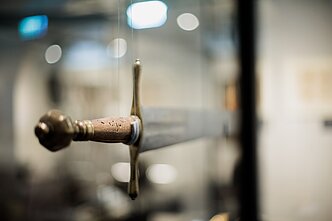
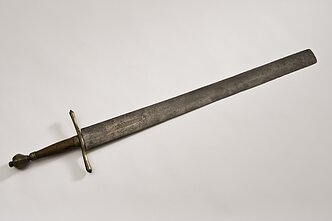
Did the sword, preserved and now on display at the Lithuanian National Museum’s House of History, really belong to the executioner? What makes us think so?
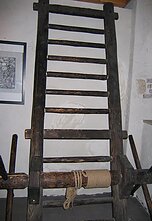
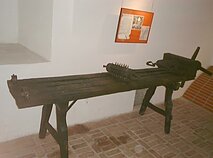
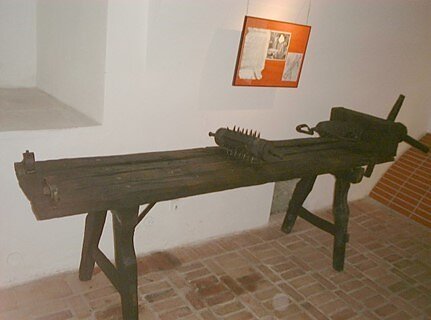
The Vilnius executioner used iron hooks to hang his victims, pliers to tear the flesh, and various wooden torture tools made by local craftsmen, ropes to drag the body, and candles to burn. Knives, double-edged swords and double-edged axes were also at hand.
The main instruments of execution at that time were the sword and the two-bladed axe, the barta. Data on the special cost of sharpening the sword have survived.
An inscription on the sword suggests that it belonged to the executioner. The sword, which has a large wooden hilt with a copper handle, bears the image of the goddess of justice, Themis, and is inscribed in German. On one side: "Venn ich das Schwert dann thu Auffheben, So wünnsch ich dem Sünder das ewige Leben” (When I raise the sword, I wish the sinner eternal life).
On the other side: "Venn dem Sünden wird abgesprochen das Leben, So wird er mir unter mein Hände gegeben" (When a sinner is punished by death, then he is delivered into my hands).
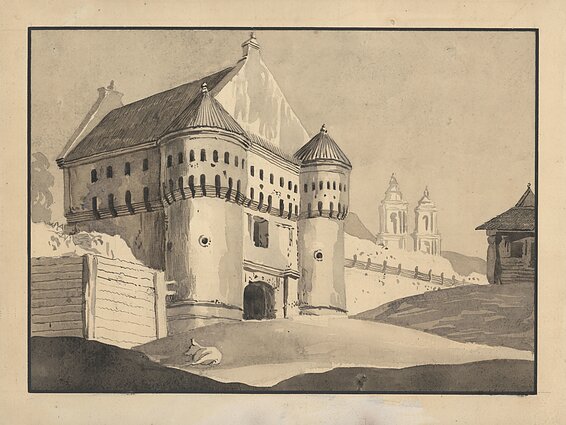
The executioners lived in the Subačius Gate, at the intersection of Subačius and Bokšto Streets. Why there?
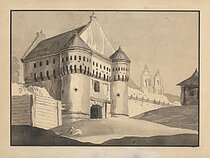
Tradition has it that this person usually lived in a room in the tower of the Subačius Gate, since when is unclear. According to one of the folk etymologies, the name of the Subačius Gate derives from the executioner's assistants, known as "šunininkais". They were supposedly supposed to catch stray dogs.
This, of course, is not true. It seems that in 1864, the city authorities even wanted to name it "Dog Street" (Собачья in Russian), but when the inhabitants objected, they renamed it Orphan Street after the orphanage of the Infant Jesus, which used to be located near the Subačiaus Gate.
The fact that the executioner was still living in Subačius Gate in the mid-18th century is evidenced by the entries in the city treasury's expense book of October 1755: "6 gold pieces [were paid] for repairing the windows in Subačius Gate for the executioner"; in November 1760, 5 gold pieces were paid for repairing the windows in Subačius Gate for the executioner, and 10 gold pieces were paid for the lock for the door.
However, the statement that the executioner lived in the dungeon under the gate is incorrect. At the very end of the 18th century, at least in 1797, the Subačius Gate was still used to house prisoners. In 1798, the accounts of the Vilnius City Treasury's income and expenditure show that four windows were installed in the Subačius Gate and a lock was bought to close the room at night.
The punishments for crime – beheading, hanging, flogging – seem self-evident. However, judging by the executioner's tools (pliers, hooks), the practice of mutilating the body and leaving the criminal alive was advocated. What was the gradation of crimes and punishments in Vrublevskis’ time?
The executioners tortured criminals during interrogation according to certain rules. It was forbidden to torture officials, pregnant women and people under 14. However, we know of cases where this limit was not respected – a young man from Vilnius was tortured on charges of jewel theft, and some noble judges sentenced underage girls and boys to be burned to death on witchcraft charges. The gravity of the crime against God and people also allowed the Lithuanian Statute to be disregarded.
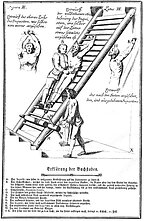
There were three stages of torture: primo, secundo and tertio. The executioner had to extract the truth and prepare the tortured person for trial and sentence. It seems that torture was usually carried out at night.
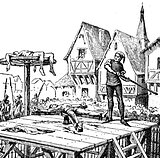
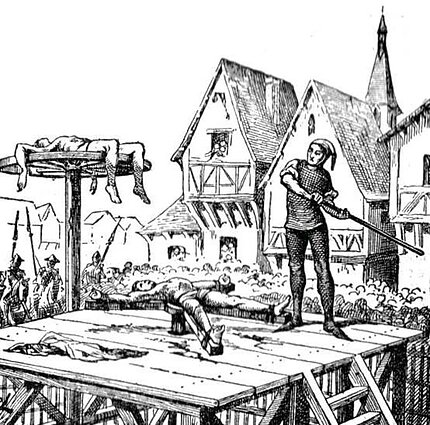
The executioner also whipped those punished for minor offences, like petty theft, in front of the pillar of shame in the Town Hall Square. They were tortured and executed by ripping them with red-hot pliers, chopping off their heads, quartering them, burning them, drowning them, burying them in the ground, and cutting off their ears.
The worst punishment is considered to be being drawn into a circle. The bones of the condemned person were broken, and then the body was stuffed into the spokes of a wheel and hoisted up on a long pole for all the people who had gathered to watch the execution to see.

Newsletter
Every Friday morning.