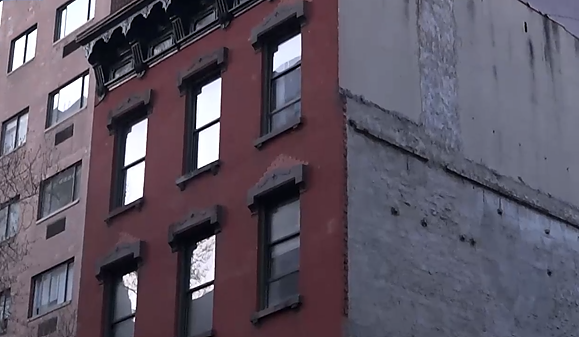















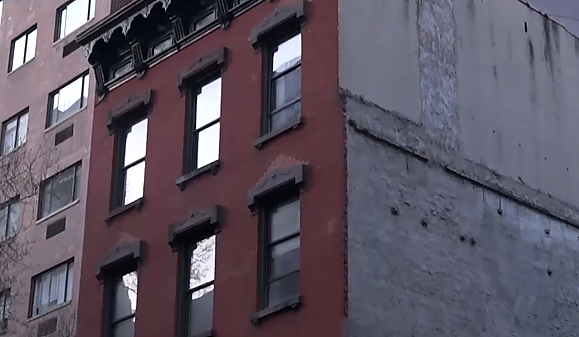
A building in New York’s Manhattan, belonging to the world’s oldest Lithuanian diaspora organisation, is facing destruction. However, the community has vowed to fight on.
The Lithuanian Alliance of America organisation has owned the four-storey building in central Manhattan for 113 years. It is now surrounded by skyscrapers in what has become one of the world’s hottest real estate markets.
"They bought everything but a couple of places near us," says Rimvydas Danius Glinskis, head of the organisation, which was created to help Lithuanians who came to the United States.
The house, as the seat for the organisation, was also instrumental in helping preserve Lithuanian identity, even before the country’s independence from the Russian Empire in 1916. Jonas Basanavičius, one of the founders of the country's national movement, also stood on the steps of this building in 1913.
But in the eyes of Manhattan real estate developers, the building is a gold mine.
"We have air above us, we have air to sell. You can have, say, a 12-storey house in this place. And now we [have] four floors," says Glinskis.
So the Lithuanian organisation regularly receives offers to sell the house, which has a market value of at least five million US dollars.
"We said never – this house is not for sale," he stresses.
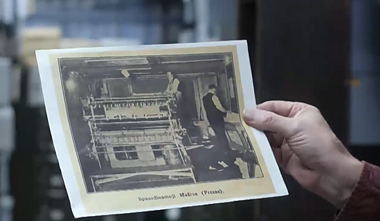
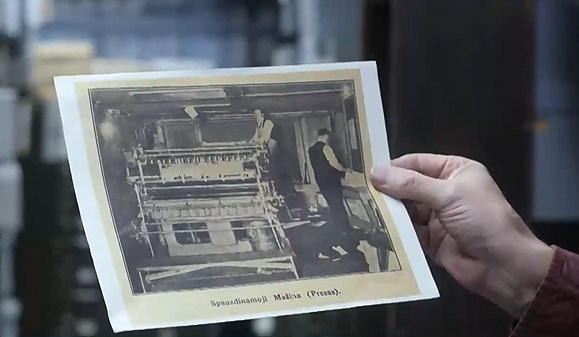
The basement was used to print books and newspapers, financed by the growing Lithuanian diaspora.
"The heyday was around 1930 when we had close to 100,000 members," says Glinskis.
The building’s location was chosen due to its proximity to Penn Station, as “all the immigrant Lithuanians used to come to New York” via the station.
But the redevelopment centred around the station may be the home’s undoing. Developers plan to expand the station, which would require some of the surrounding houses to be demolished.
"We are in one of the five blocks that are being demolished,” adds Glinskis.

However, the organisation is trying to save the building by gaining monument status.
"We made a plaque to hang on the building, and maybe we'll put up a flag, because the Lithuanian flag doesn't fly anywhere in New York," says Glinskis.
But even the status of a monument may not be enough – the fate of the station's project, and therefore of Lithuanian heritage, will be decided by the federal government in Washington.
The site would be handed over to the developers, which, he says, are a key factor in the project: “They want to build big houses.”
The Lithuanian community hopes the redevelopment project could take up to a decade to develop. For now, the focus remains on the building’s immediate future – the ceremonial hanging of the plaque announcing the building’s status as a monument.

Newsletter
Every Friday morning.