















While the minimum wage went up this year, income growth for many Lithuanian workers could not keep up with inflation. Still, the country’s central bank forecasts robust economic growth.
A recent poll commissioned by LRT suggests that most people in Lithuania have a pessimistic view about the situation in the country, particularly when it comes to their own financial situation.
“Nothing is ever better, everything is going down,” a man from Kaunas tells LRT TV.
“The situation is pushing one to economise, although I don’t like it,” says a woman.
A survey by the debt management company Easy Debt Service suggests that every other Lithuanian has been forced to cut expenses due to rising living costs. Borrowing is up by seven per cent.
“Interest rates have risen, the cost of basic goods has risen,” says the company’s head Rasa Butkuvienė. “Moreover, the geopolitical situation has made people think whether some of their expenses are really essential or whether they can be postponed.”
When consumers are tightening their purses, that usually means economic recession. However, the Bank of Lithuania is expecting the economy to grow.
The central bank’s forecast has Lithuania’s GDP grow 1.3 percent, while next year’s growth is estimated at 3.2 percent.
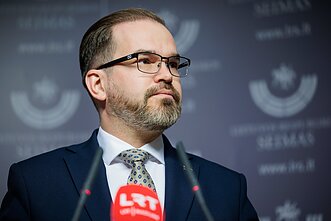
“Wage growth in Lithuania will outpace inflation and we will see the purchasing power of the population increasing again after a while,” says Gediminas Šimkus, chairman of the Bank of Lithuania.

Although Lithuania’s GDP is expected to grow less this year than in 2022, the central bank chief says 2023 will be a turning point for the economy.
Other economists, however, are less optimistic. They predict that Lithuania’s export markets will go into recession, while the European Central Bank’s tight monetary policy will further squeeze EU economies.
“Seeing the turmoil in the US, Switzerland, the eurozone banking system and the tightening of credit conditions in many countries, we cannot expect a very fast recovery in the second half of this year,” says Nerijus Mačiulis, chief economist at Swedbank. “We can see that in the first few months of this year, Lithuanian industrial volumes were shrinking.”
Nor will Lithuania benefit from “friendshoring” – the trend of European and US manufacturers moving bringing their supply chains closer to home, says Indrė Genytė-Pikčienė, chief economist at INVL Asset Management.
“Supply chains have been mended, transport costs have gone down several times and it is paying off nicely for our partners in Western Europe to import from East Asia again. Especially when China opens up,” she says.

In addition, rising interest rates are also a concern, as mortgages will weigh more heavily on disposable income. Some banks are already seeing falling demand for loans.
“The European Central Bank still wants to raise interest rates, convinced that the bigger problem is inflation, not maintaining stability in the financial system or [averting] a possible recession,” says Mačiulis of Swedbank. “[The ECB] is therefore likely to raise interest rates too much. And when bankruptcies begin, it will stop raising interest rates.”
The Lithuanian central bank’s chief disagrees, however.
“Raising interest rates is a bitter, painful, but necessary cure in order to get inflation under control,” says Šimkus.
According to the forecasts of the Bank of Lithuania, average wages will rise by some ten percent this year, while unemployment will remain low at 6.6 percent.

Newsletter
Every Friday morning.