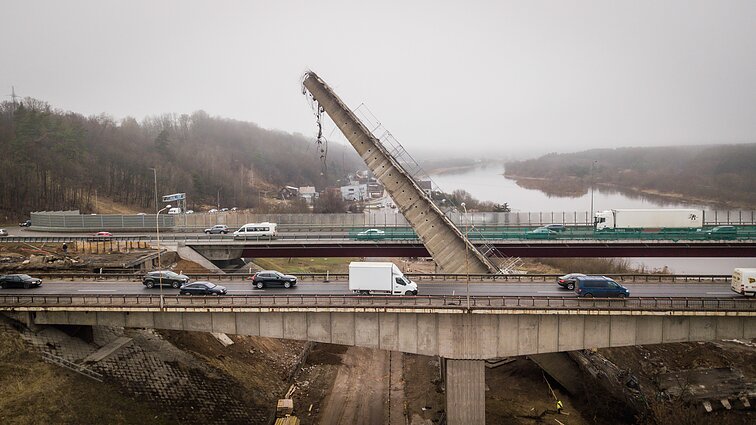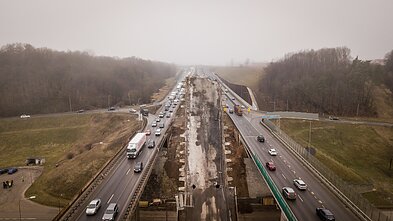

















The collapse of a motorway bridge over the Neris river last week has highlighted work safety violations at the demolition site. Elimination works may take time and disrupt traffic on one of the country’s main motorways.
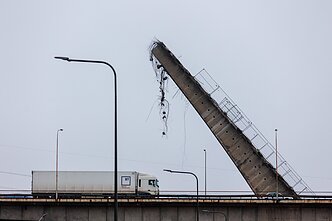
The motorway bridge near Kaunas was being demolished when a 400-tonne chunk of concrete separated from supports and leaned to one side. Luckily, no workers or equipment were harmed.
Read more: Bridge section collapses during demolition work on Lithuania’s main motorway
Although the incident did not impede traffic on the Vilnius-Kaunas motorway, which runs adjacent to the structure no longer in use, it has caused local jams as Panerių Street going under the bridge was closed.
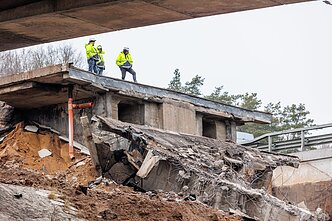
About 9,000 cubic metres of soil were poured around the collapsed support to avoid further incidents and reinforce the structure. The stability of the collapsed slab is being monitored by laser sensors.

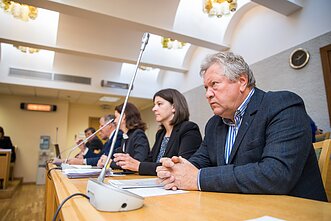
Immediately after the collapse, work was suspended on the bridge after the State Labour Inspectorate visited the site and reported safety violations.
“The workers were working in dangerous conditions, in dangerous zones, and no further clear actions were planned,” says Adas Baliukevičius, head of the Kaunas division of the State Labour Inspectorate.
After the identified safety violations were eliminated, work in non-hazardous zones around the structure were allowed to proceed.
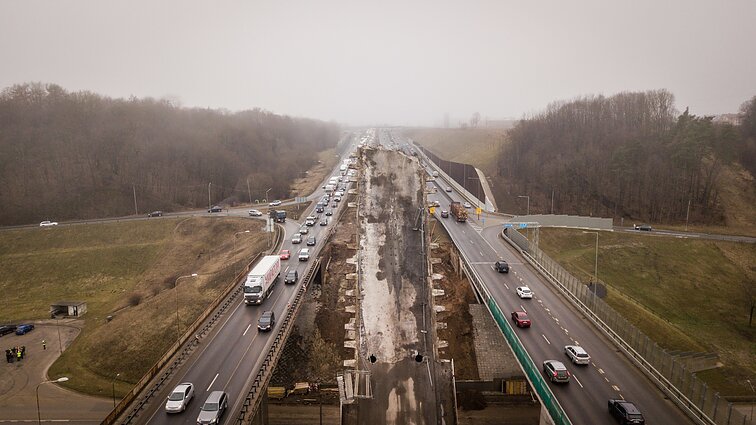
Kauno Tiltai, the company managing the demolition, says it has already prepared a technical project to dismantle the collapsed slab. They will start after a commission investigating the incident hands in its report. The commission is due to inspect the site this week and issue its conclusions within 10 working days.
“In our opinion, the safest and most optimal way to dismantle the structure [...] is to cut the protruding part from the top with long-arm machinery,” says Aldas Rusevičius, the CEO of Kauno Tiltai.
It is likely that the works will require closing part of the lanes on the motorway..
“All the demolition works would be carried out at night, so it is likely that [...] traffic would be diverted through the city,” says Paulius Keras, deputy director of the Kaunas municipal administration.


Newsletter
Every Friday morning.