














Lithuania’s commercial banks are making excessive profits due to interest rate hikes. The central bank governor says the windfall profits could be taxed away, while the finance minister proposes to spend the money on defence.
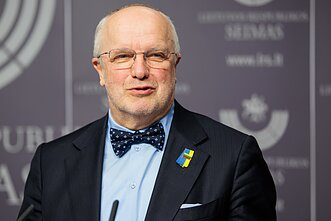
Due to the prevailing floating interest rates in Lithuania and the high liquidity of banks, financial institutions are making high profits, which could be three times higher this year and reach almost one billion euros, says Gediminas Šimkus, Governor of the Bank of Lithuania.
Lithuania currently reports the highest interest rates debtors pay on their mortgages among euro area countries: 4.1 percent (in November 2022) compared to the eurozone average of 2.8 percent.
According to Gediminas Šimkus, governor of the Bank of Lithuania, this is because most loans in Lithuania are issued at floating rates, so interest rate changes are passed on more quickly to consumers.
While interest rates on loans are rising fast in Lithuania, interest rates that banks pay on deposits are rising slowly.
“Thus, interest rate growth is quickly passed on to banks’ income, but slowly to expenses,” Šimkus says.

Lithuania’s banks currently have around 11 billion euros more in deposits than they’ve given out as loans, according to the central bank.
“In Lithuania, floating interest rates dominate, excess liquidity is accumulated, and this is reflected quite quickly on the income side of banks, whether it is funds held in the central bank or the loans portfolio. This creates exceptional circumstances in which individual banks, even if they do not plan for it, can earn higher returns than in normal times,” Šimkus says.
Swedbank reported net profits of 143 million euros last year, or 64 percent more than in 2021. Luminor’s profits were 124.7 million (up 67 percent), while SEB Bank made an unaudited net profit of 172.3 million euros (49 percent more than in 2021).
In 2023, bank profits may double again and reach almost 1 billion euros, says Šimkus.
“I would like to underline that this situation is shaped by an unusual environment. This is not a search for culprits,” he said.
Taking away windfall profits
In response, the Bank of Lithuania proposes several solutions. These include measures to promote competition in the banking sector, raising deposit insurance premiums, or urging banks to adjust their prising in a “socially responsible” way.
As one of the options the Bank of Lithuania also envisages taxing windfall profits away, particularly if they continue to surge this year.
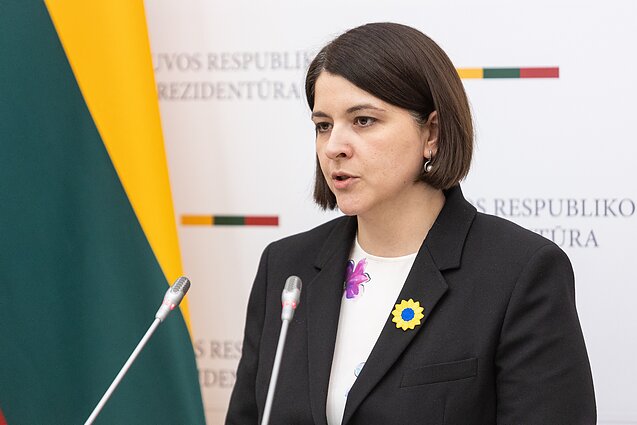
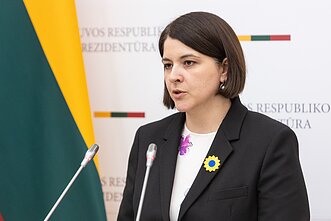
Finance Minister Gintarė Skaistė suggested on Monday that the government is considering the option.
“If the situation remains unchanged, it is likely that banks’ profits in 2023 may reach 1 billion euros, compared to around 300 million in normal times. Profits that may arise from war, pandemics and the response to these events may be unexpected and unplanned by the banks themselves, as such profits are not dependent on their business decisions. We are therefore monitoring the situation. If there is no change, we will assess the possibility of resolving these imbalances in banks’ earnings by fiscal measures,” Skaistė told reporters.
“It would have to be for a limited period of time, as long as these exceptional circumstances persist. I believe that we will certainly coordinate this possibility with the Bank of Lithuania to ensure that the decision does not affect the activities of banks or financial stability,” she added.
The additional tax revenue could be spent on defence, according to Skaistė.
“Since this situation has arisen due to a military invasion, and the government has additional unplanned and time-bound expenses in this area, [the money could be spent on] national defence, investments in defence, preparations for receiving the Allied Brigade,” the minister said.

Newsletter
Every Friday morning.