



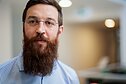




Officially, Russian oligarchs Sergey and Nikolai Sarkisov cut off their business ties with Lithuania in 2020. But traces of their money in the country have not yet disappeared, as a Lithuanian firm borrowed a significant amount from them to buy a palace in the Vilnius Old Town, LRT Investigation Team has found.
Sergey Sarkisov founded the private insurance company RESO-Garantia in 1991. The company is now one of the largest insurers in Russia. Sarkisov’s younger brother Nikolai is also involved in the business. Together the brothers own around 60 percent of the company. They were also on the 2019 Forbes list of Russia’s richest families, with a combined wealth of around 1.7 billion dollars.
The rest of RESO-Garantia is owned by the French insurance corporation AXA Group. In March 2022, the group withdrew its board members from the company in light of the sanctions against Russia over the invasion of Ukraine. The French then said that the company had no management control over the Russian company and stopped providing services in Russia.
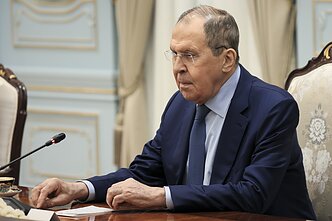
The Sarkisov brothers are not on any sanctions list. Moreover, they have Armenian citizenship and even held diplomatic posts in the country. Sergey Sarkisov was also a member of the council of the Moscow State Institute of International Relations in 2019-2020. For many years, the council has been chaired by Russian Foreign Minister Sergey Lavrov.
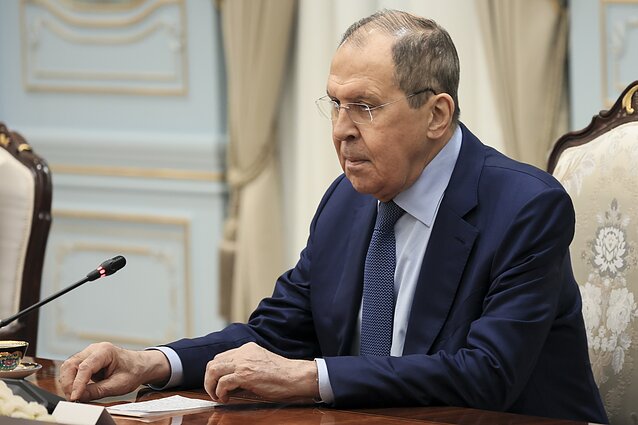
In addition to Lavrov and Sarkisov, the council members also included Vladimir Putin’s adviser, the Moscow governor, Russia’s culture minister, heads of Rostec and Rosneft, a representative of Gazprom, Russia’s richest oligarch Vladimir Potanin, and others.
According to Edward Lucas, vice president of the Centre for European Policy Analysis (CEPA), any tycoon with such connections should not expect a warm welcome in a country concerned about freedom and justice.
“If we theoretically imagined that there was some honest and honourable Russian businessman who somehow made money in Russia honestly and honourably and who hated the Putin regime and its imperialist and xenophobic views, he would certainly not be connected to these people,” Lucas told LRT.lt.
Millions of Sarkisov brothers’ euros have also landed in Lithuania, and the Russian oligarchs are still collecting proceeds from the country.
Buying a palace
Twenty years ago, Reso-Garantia acquired the Lithuanian insurance company Snoro Garantas from a now-defunct bank Snoras. The company was renamed RESO Europa, which now operates in Latvia, Poland, and Finland. In 2008, the Russians sold the Lithuanian company to the Norwegian insurance firm Gjensidige Baltic.
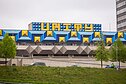
But RESO-Garantia never left Lithuania completely. The company continued to develop real estate projects through its subsidiary SNS, which owned the 31/1 Plaza business centre in the heart of the Vilnius Old Town. According to the Centre of Registers, the current average market value of the building is more than 6 million euros.

In 2020, Sergey and Nikolai Sarkisov officially left Lithuania. SNS was taken over by its former director Martynas Kačiulis through another company Fevista. But the Russian oligarchs continued to invest in Lithuania even after the takeover.
According to information available to the LRT Investigation Team, in 2021, Fevista borrowed 7 million euros from a company linked to the Sarkisov brothers to buy a building on Jogailos Street in Vilnius.
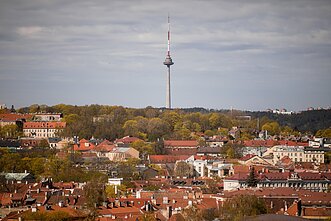
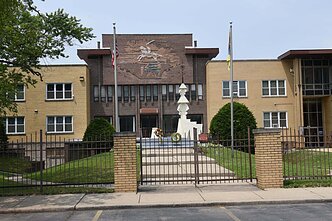
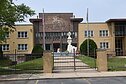
In November 2021, Fevista officially acquired this building of more than 3,000 square metres, located in the centre of Vilnius, near Gediminas Avenue. It is a palace built in 1900, which is part of the so-called Jadvyga Huten-Čapska House.
Lending scheme
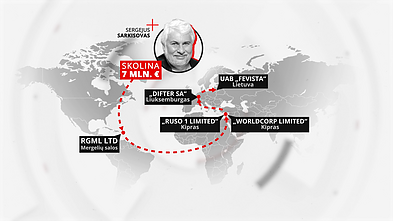
According to information available to LRT Investigation Team, Fevista borrowed from Difter SA, a company registered in Luxembourg. At least in 2016, it was owned by Worldcorp Limited, a Cypriot company, which in turn was owned by Sergey Sarkisov. It was Worldcorp that provided Difter SA with a loan of 7 million euros in November 2021, which it then on-lent to Fevista.
The gathered data shows that at least four companies registered in different countries and the Russian oligarch himself were involved in the lending scheme. In one day, 7 million euros travelled from Sarkisov’s pocket to the Virgin Islands company RGML LTD, then to Ruso 1 Limited, a Cypriot company owned by Sarkisov, then to Worldcorp limited, then to Difter SA, and finally to Fevista as a loan at more than 3 percent annual interest.

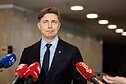
Martynas Kačiulis, the owner of Fevista, confirmed that the company took 7 million euros in loan from Difter SA to buy the building on Jogailos Street.
“You’re right. At the time I took the loan, the main beneficiary of this company was Sergey Sarkisov. However, I’ve checked the information and I can confirm that today he is no longer the main beneficiary of that company,” Kačiulis told LRT.lt, adding that he did not know of the money transfer scheme.
Mindaugas Petrauskas, a money laundering expert, believes that such a scheme was used to conceal the real lender.
“I call this scheme the tip of the iceberg method. [...] The principle is designed to avoid seeing where the money is coming from, who is lending it, and who the real names are,” he said.

Wouldn’t borrow now
The situation of Fevista’s debt remains ambiguous. Kačiulis admitted that he borrowed from a company related to Sarkisov because they had a good relationship. However, Fevista is officially indebted to a Luxembourg company Difter SA, the main beneficiaries of which have changed. Nevertheless, the money for the loan came from the Russian oligarch’s own pocket.
According to the Lithuanian businessman, a 12.5-million-euro loan used to buy out the shares of SNS was also taken from Difter SA at a time when Sergey Sarkisov was its main beneficiary. In total, Fevista owes 19.5 million euros, which will cost the company another 500,000 euros in interest, to Difter SA.
However, Kačiulis says that in the context of the war in Ukraine, he would neither buy the company nor borrow from Russians, as he is in favour of full support for Ukraine, and the companies he manages have no business relations in Russia.
“In 2020 and 2021, when I was doing these deals, like many Lithuanian companies or entrepreneurs, I couldn’t foresee the outbreak of war. We support Ukraine both financially and morally, but we have commitments made well before February 24, 2022,” he said.
The businessman noted that the original plan was to buy all of Reso’s assets in Lithuania, sell the illiquid part of the assets, and use the money to repay part of the loans, refinancing the balance through banks in Lithuania.
“It became difficult to refinance the loans. At the moment it is stuck, but I hope that there will be some kind of solution,” Kačiulis said.
The LRT Investigation Team contacted Sergey Sarkisov for comment. His answers will be added to the publication when received.

Newsletter
Every Friday morning.