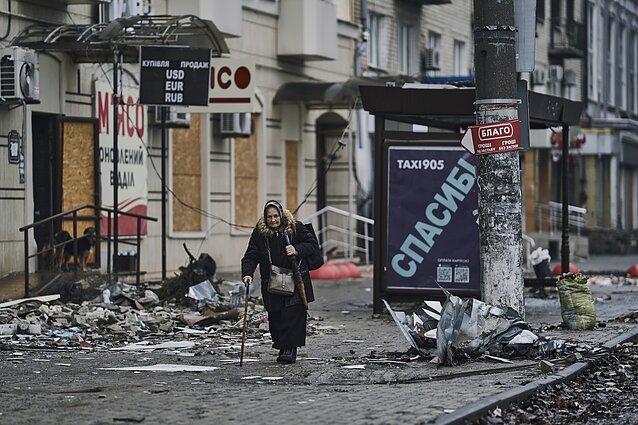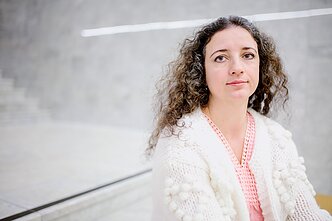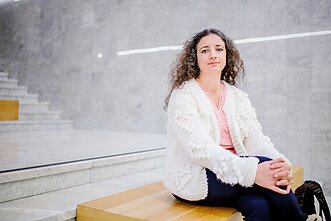
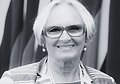







“I remember there was silence for the first several days. It was the most horrible feeling. Is it 1933 again? Are you going to be silent? Are you leaving us alone? Free world, please, say something!” Ukrainian historian Tetiana Boriak recalls the feeling on the first days of the Russian full-scale invasion of Ukraine.
When the war started, Tetiana and her family lived in Kyiv. Now, she is a refugee in Lithuania, working at Vilnius University. This war is rooted in Russia’s imperial thinking and its distortions of Ukrainian history, the historian says.
Why does the history of Ukraine matter?
Because this war is a post-colonial war led by the last empire in Europe. This war is for Ukraine’s future but for Russia, it is for its past. That is a very clear distinction because when you try to understand the reasons, you see that they are grounded in history.
History matters because unpunished evil returns. When we had crimes of Nazism, it was condemned, we had the Nurnberg tribunal. We then had a long process of denazification, and we see the results. If you look at Germany, you obviously see the results. While the second evil – Soviet totalitarianism, which has its roots in Russian imperialism – its crimes and regimes were not condemned either by the world or the Russians.

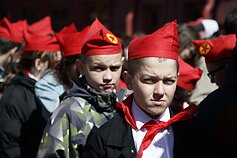
Russian society in the 1990s was trying to condemn the crimes, to understand the scope of evil, but they were not ready to do this, they still wanted to be the empire which conquers other lands. That is what gives them the feeling of “greatness”, which is actually called Russian chauvinism. When you treat your past this way, when you don’t want to refuse your imperial roots, when you militarise your society, starting from the kindergartens, that is the logical result.
When you understand how they treat Ukrainian and Russian history, you see why this war was inevitable. And it’s also important to understand that this is not about Ukraine, it’s about Europe, the world, and the ways to dominate. This is a civilisational clash between the last empire, which wants to remain as such, and other modern countries that just want to live their lives.
Why was war inevitable?
In 2008, they [Russians] declared that the dissolution of the Soviet Union was the greatest catastrophe and that became one of the markers that they are stuck in their imperial thinking. [...]
Imperial thinking is present in Russian society. When you hear the narrative that this is Putin’s war and these poor Russians cannot object, you know that they actually want this war. They are accomplices of this imperial thinking, which is present in their culture and literature. It was always there, starting from the creation of the Russian empire.
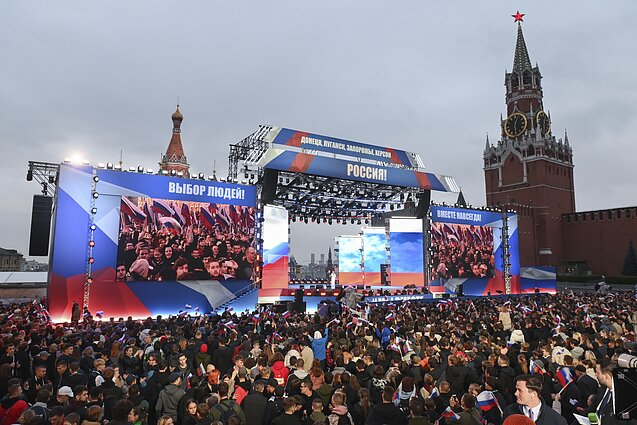
I think that many Ukrainians think that they [Russians] would have loved this war already in the 1990s, but they had economic troubles because of Chechnya, Georgia. Then, they proclaimed the concept of “Ruskij mir” (“Russian world”) – if you try to explore it, you see that they equalise the Russian language to the Russian state, culture, and identity. They think in terms of “greatness” or this feeling of superiority and interiority of, i.e., Ukrainians, Lithuanians, and other nations. [...]
As long as they are stuck with that sort of identity and have this imperial outlook, I don’t know how to make the world – and first of all Europe – a safe place again.
Historian emphasises that Russia uses everything as a weapon. From language and culture to energy, food, propaganda, and fear. And history is no exception. As we dive more into Russian lies about the history of Ukraine, she notes that the propaganda machine has been working against her country for centuries.
What are the main myths created by Russia?
The main myth – as I call it the theft of the millennium – is when the Russian state stole the title “Rus” for their own state. When the ancient Rus or Kyivan Rus existed, the main centre was in Kyiv [...]. When the Russian empire appeared at the beginning of the 18th century, it took this term to say that those areas are theirs.
This term helps them to say that Ukrainian statehood doesn’t have roots. This was the theft of the millennium because it became a powerful instrument for the Russian state to say that since we are called Russia, Kyiv must be part of our state.

Another is the concept that Moscow is the third Rome. This concept was invented in the 15th century by a monk, who said that the first Rome – Roman empire – collapsed, the second – Byzantium empire – also collapsed, so the third Rome will come and stand forever. This concept was very convenient for the imperial nation-building project. The Russians implemented this idea into their philosophy, their literature. This idea of Moscow as the third Rome became a powerful foundation that helped form their outlook. [...]
Another important instrument is the Ukrainian patriarchate. The Russian state understood that religion was a very powerful instrument, so it kind of illegally created its own patriarchate. And when at the end of the 16th century the ambassador from an ecumenical patriarch was travelling through the Moscow lands, he was detained and kept until he agreed to recognise the right of the Russian church to appoint a Ukrainian patriarch. The result was that the Ukrainian church became secondary to Russian although the Ukrainian one was the first to exist. [...]
The historian explains that in the 20th century, the Soviet regime organised three famines in Ukraine – in 1921-1923, 1932-1933, and 1946-1947. It is estimated that at least 4.5 million Ukrainians died during the famine of 1932-1933, also known as the Holodomor. Boriak’s research focuses on oral testimonies of those who lived through this famine.
What effects Holodomor had on the Ukrainian psyche?
In testimonies, what is striking is that even the Second World War was not mentioned as much as the famine. There are many estimates by people when, say, five people from their village died in the Soviet army, while 100 passed away during the famine.
As a parent you saw your kids dying, you had to make a decision on giving your kid to an orphanage, as it was probably the only option. If you had a newborn baby, you probably would have wanted to save your older children because they had a better chance of survival. It was a horrible challenge every day to survive. And in the 20th century, almost in the centre of Europe, there were cases of cannibalism and suicides of the whole family, when they realised that no food is left and there is no way to get it.
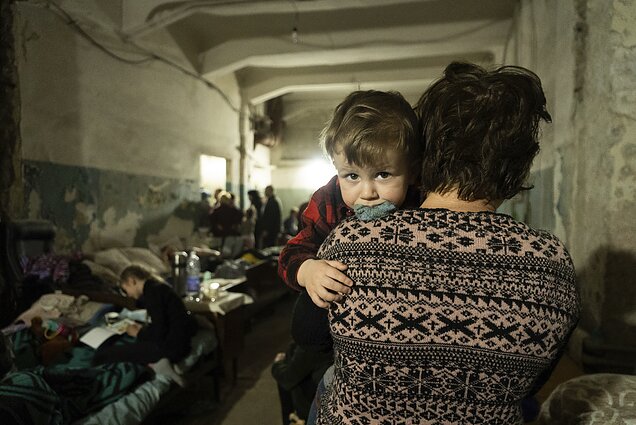
Trauma is generational. What consequences does it have for Ukrainian society?
The most important consequence is the feeling of Russian superiority that was imposed by the empire for 300 years. It became obvious to many Ukrainians that if they speak Ukrainian, they might be punished, so they would rather switch to the Russian language and accept Russian culture to secure themselves.
Another problem is disbelief in the authorities. Ukrainians were suspicious about ideas, policies, and projects by the state because they know that the state can kill – very easily and successfully. And this hostility is an obstacle to our state and nation-building.
Also, another important consequence – but I hope we’re overcoming it – is the feeling that the state authorities are dominating, that we’re not as powerful. But already in 2004, we had our second Maidan, the second revolution, and we had our third Maidan in 2014. It shows that the younger generation is becoming more open and is not afraid of the state. And this fear is very present in Russian society. [...]
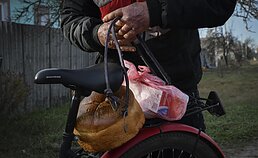
Historians and psychologists have also noticed that Ukrainians are afraid of being left without food. So, usually, if you come to a Ukrainian home, you will find a lot of food reserves even if there is a grocery store on the first floor. The first generation who witnessed and survived the famine had a very special relation with bread – they honoured it, could not throw it away [...].
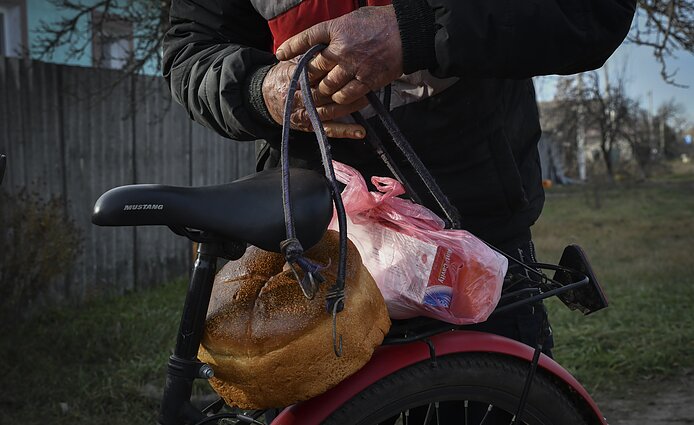
Moreover, research shows that Ukrainians have a high level of anxiety and misunderstanding of themselves, and they don’t have the bravery to open up to the world. They were suppressed and learned to be quiet. But there is hope that the new generation will help.
After nine months of the Russian invasion, what changes do you see in Ukrainians and the world?
When the war began, many Ukrainian journalists were reflecting that there is nothing new – in 1933, they were killing us with famine and now they are killing us with missiles. They are engaging in the same politics of genocide. It was a discovery for many Ukrainians that the empire is still here, and it wants to kill us because we’re Ukrainians and we have Ukrainian identity. [...]
Before the war, I was very sceptical about this notion of genetic memory. I viewed it as a construct that cannot be proved. But when the war began, I saw that it really exists. Because when you see a teenager and a 70-year-old man throwing Molotov cocktails, you see that this intergenerational tie, this memory of repressions – it came up from the inside, and Ukrainians became so furious. [...] It was something that proved that Ukraine is not an artificial construct because if it was, you wouldn’t see this unanimity.
This is the war for identity. And you must delete the markers of the empire because if you leave them, the empire comes and says: “Oh, this street is called after Catherine the Great. That is our territory”. It marked this territory, and now you must demark it. What was a turning point for many Ukrainians is that they finally realised that this “greatness” of Russian culture, language, literature, ballet, and theatre is used as a weapon, and it must be deleted. [...]
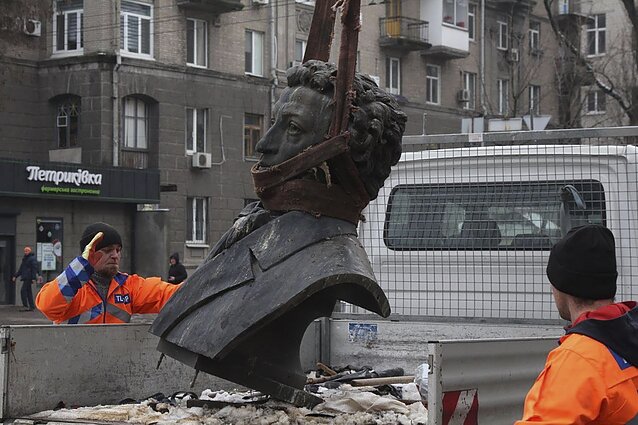
For the world, the changes are also tectonic because the situation that we are in right now is very similar to the famine of 1932-1933. But then the world decided that nothing happened. Now, finally, the world has understood that we must stop this here, otherwise a lot of European states will be involved.
The world has realised the crimes of the Soviet regime – Germany, Romania, and even Moldova recognised the Holodomor as genocide. You hear this change in rhetoric that European leaders see more ties between contemporary crimes of the Russian state and Soviet crimes.
According to the foreign intelligence reports, Ukraine [had to] fall in three days. I remember there was silence for the first several days. It was the most horrible feeling. Is it 1933 again? Are you going to be silent? Are you leaving us alone? Free world, please, say something! But there was this complete silence.
And in those conditions, with that complete silence, the Ukrainian people and the army went to fight. Gradually, the world has changed from “we don’t know what to do with this” to “we must win because the evil must be punished”. Unpunished evil returns on a much bigger scale. This notion [consolidated] that Ukraine must win, this will be the way to secure our planet. [...]
Again, by understanding Ukrainian narratives and history, you will be able to understand this war and that negotiations would lead to nothing because imperial thinking is there and it will not disappear after talks. So, we must have a military victory and then we will see.

Newsletter
Every Friday morning.