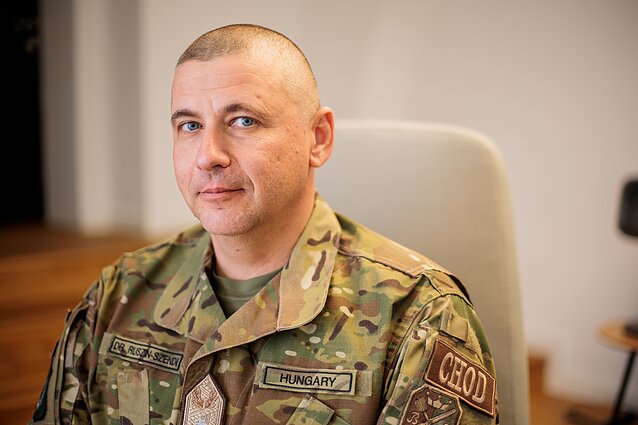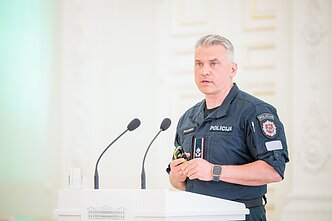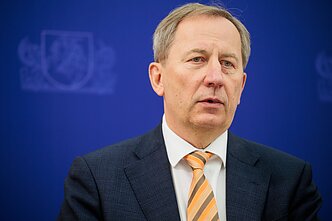











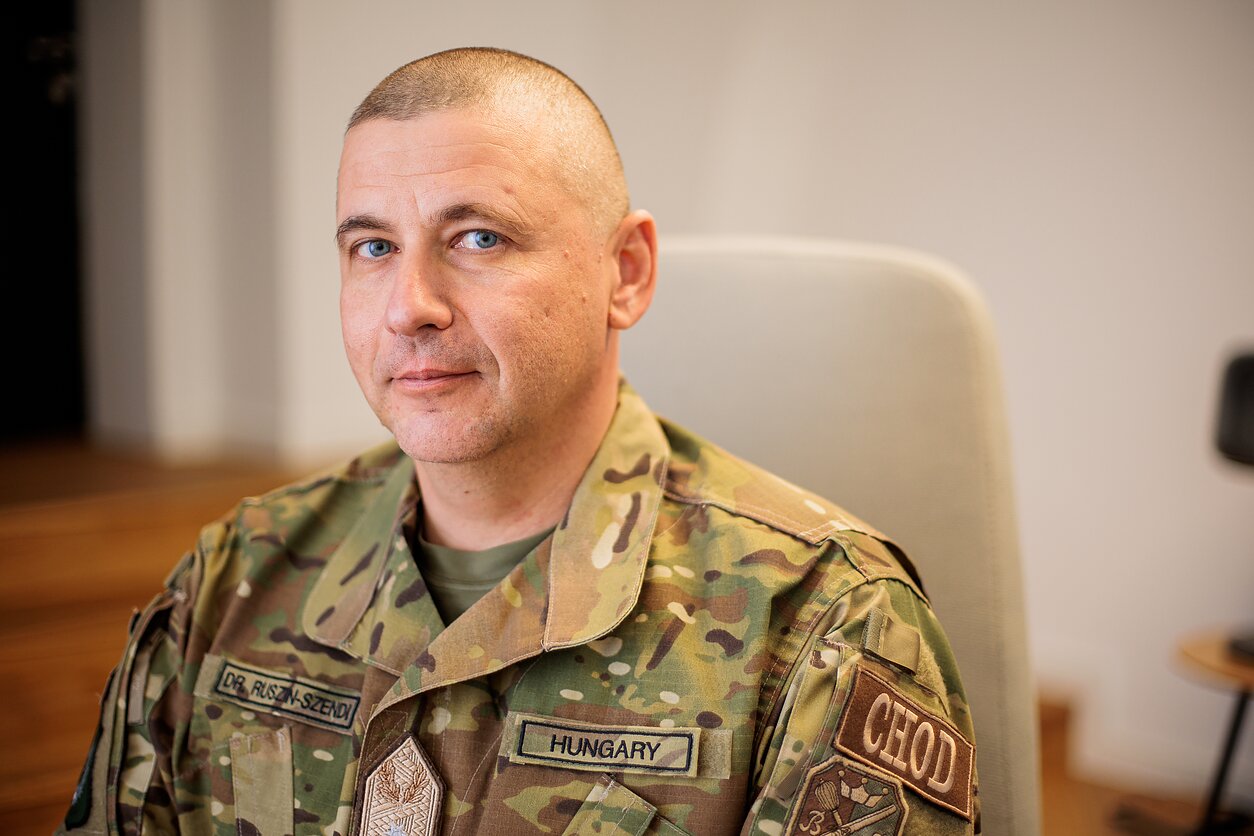
It‘s "stupid" to say Hungary supports Russia, as the facts and not the “complex and divergent statements by political groups" show the real picture, chief of the country‘s armed forces, Lieutenant General Romulusz Ruszin-Szendi, told LRT.lt in an exclusive interview.
I’d like to start with Ukraine. How do you assess what’s happening in the country, including the counter-offensive?
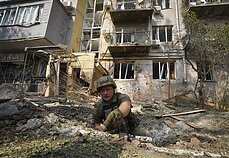
It’s a difficult question because it's a Russian-Ukrainian war, but I have seen the capability of Ukraine’s soldiers, they are more than excellent. So, it was only a matter of time before they would start the counter-attack. It’s too early to measure how successful it will be.
Of course, [the war] is like a wave, breaking, going up and down, but the most important thing is that the armed forces are ready to launch an attack. It is a tactical one right now, and let’s see the result.
[But] we don’t have to underestimate the Russian bear. [Russia] is still strong, but Ukraine, supported by the democratic world, will continue their fight.
Do you think it’s still too early to say the tide is turning?
Absolutely, it’s too early.
Do you think the Russians still have some capabilities that they could use?
Of course, both sides have the capability. The tactical and operational situation is changing very fast. Therefore, I’m sure it’s too early to evaluate this counterattack.
Hungary has not provided any military aid to Ukraine. Why?
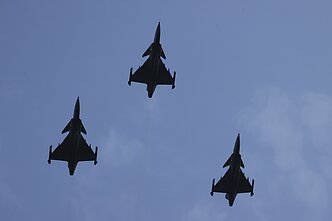
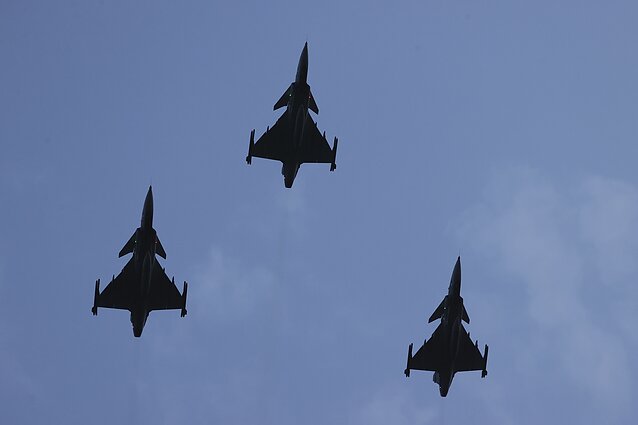
We are always accused that we support Russia, which is a stupid thing. I can tell you some facts – for example, we hear in the Baltic area that [they] are frontline countries, but so are the other [states] that are in NATO’s eastern flank. So, [Hungary] is dealing with deterrence, we prepare our own army in parallel, we are the only frontline country that provides air support for the others.
I don’t think there is a question about Hungary’s position. Of course, we have political guidance. We do not give lethal weapons to Ukraine because Hungary supports peace, not war.
Another important fact is that over 150,000 [ethnic] Hungarians live in Ukraine, which is the Hungarian minority. If somebody accuses Hungary of not taking part in this war, [I can say there are] more than 100 [ethnic] Hungarians that have already died for Ukraine.
They are living in Ukraine, they are Ukrainian citizens, therefore, they have to fight for Ukraine, but they are Hungarians as well.

And there are some countries that do not give any lethal weapons to Ukraine as well. But they are not as loud as we are because we are always telling what we are doing.
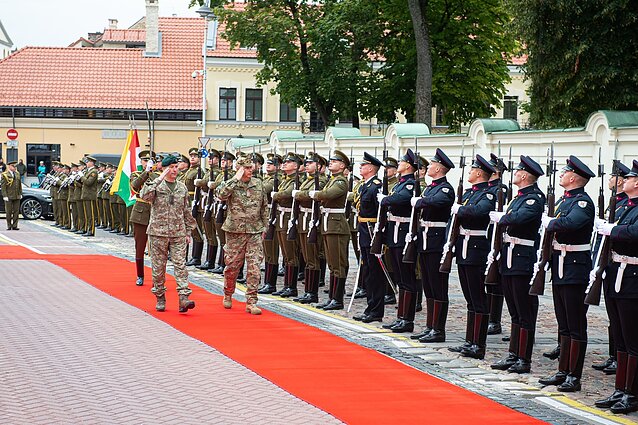
When the war started, Hungary was the first to offer to lead a NATO battlegroup. [...] At the end of this month, we will show the world that this battlegroup has already reached its full operational capability.
I’m sure nobody can question the commitment of Hungary to the unity and effort of NATO. [...] Please, just evaluate the facts and what we have done so far and what we will do.
How has Hungary’s security situation changed after the Russian invasion of Ukraine?
Not only for Hungary, but the whole Euro-Atlantic region, it changed security perceptions because now we have a war next to us.
We still strongly support the view of 360 degrees because [...] we have serious threats coming from the east, but we still have a serious test coming from the south.
Besides the war in Ukraine, migration [issues] have returned to Hungary’s southern border. There is a lot of tension in the western Balkan area. [...] Two-thirds of my soldiers are deployed somewhere abroad.
For example, NATO’s biggest land mission currently is now commanded by a Hungarian two-star general. So it again shows our commitment, how we have to stand together with our NATO friends.
But [due to the war in Ukraine], we have to increase our capability development. [...] We need more well-trained, deployable competence and this is what we are doing.
Do you see the threat from Russia decreasing in the future, or do you think NATO needs to be prepared for a long-term commitment to increase its security in the east?
NATO needs to be prepared and almost every country has raised the defence budget closer to the accepted 2 percent of the GDP. Hungary has done it.
NATO needs to react not only to eastern threats but also the global threats – NATO has to be stronger.
The good news is that NATO has never been as strong as nowadays. [...] I’m sure the whole world can see the unity and the real effort of NATO.
Do you think Europeans should do more for their own security?
Of course, [...] we do not have to wait for somebody to come to save us. We, as countries and as Europeans, have to do more. And almost everybody has started [doing more].
Previously, Hungary was opposed to starting talks on Ukraine’s NATO membership. In your opinion, is it realistic that Ukraine might join NATO in the future, and would that increase the security of the alliance?
Sometime in the future – why not. But, as we see right now, I don’t think it’s going to happen in the short term. It’s not the opinion of Hungary, it’s the opinion of NATO.
We have to make a decision together and, right now, I cannot see any initiative taking place to invite Ukraine to join NATO. Everybody knows Sweden and Finland are already partner nations. I’m sure it’s going to happen and, therefore, NATO will be stronger than before. And there are other applications. Let’s see – it‘s more a political than a military question.
This interview was edited and condensed for clarity.

Newsletter
Every Friday morning.