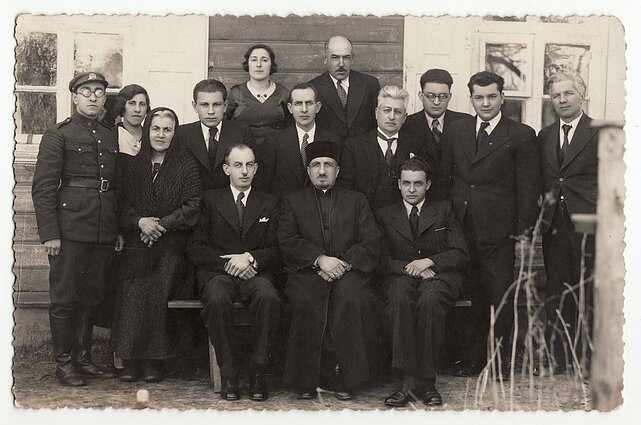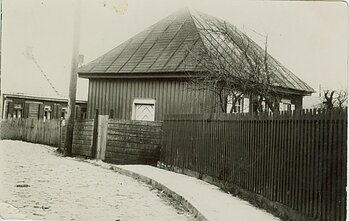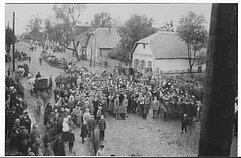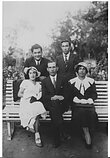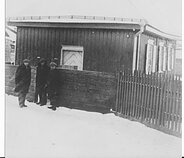












The Crimean Karaites or simply Karaims have lived in Lithuania for over 600 years. Here, they have preserved their unique language and culture. During the interwar period, the Karaim community flourished in Panevėžys, Lithuania’s fifth largest city.
Panevėžys Karaim community is researched by history and geography teacher Saulius Kurnickas, who is also writing a book about it.
According to him, he wants to “record the history of a small community of Panevėžys Karaims and the stories of their families”.
“Everyone knows the legend, spread and popularised by the famous Karaite historian Abraham Firkovich, that the Karaims were invited to Lithuania by Vytautas the Great,” Kurnickas says. “Their qualities of soldiering, gardening, and border protection impressed the grand duke.”
“But the most interesting thing is how the Karaims came to live in northern Lithuania – in Panevėžys and Naujamiestis in the Panevėžys district. I spent a couple of decades researching this topic, collecting historical sources,” he adds.

The historian admits that there are very few sources of information about the Panevėžys Karaim community.
“I had to find information in fragments in the Lithuanian Central State Archive, the Historical Archive, and the Vrublevskis’ Library. I was collecting bits and pieces and trying to build a mosaic. Finally, the story is coming to life,” Kurnickas says
According to him, a large part of the Panevėžys Karaim community moved to Vilnius during the Soviet era.
“There are not many Karaims left in Panevėžys, but a large part of them have left for Vilnius, where young people went to study during the Soviet era and stayed there to work and live,” Kurnickas says.
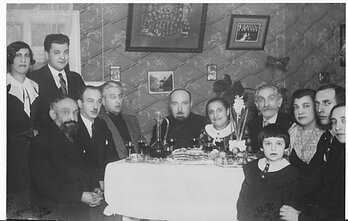
The historian interviews these Karaims in Vilnius and collects their photographs.

Asked why he chose to research the Karaim community of Panevėžys, Kurnickas notes that he is himself from this city.
“I knew from my childhood that the Karaims lived in Penevėžys. [...] I always wondered how and why they arrived here,” he says
The heyday of the Panevėžys Karaim community was during the interval period, according to the historian.
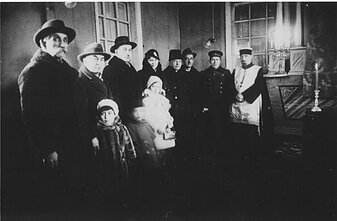
“Although it was a small community, it was very noticeable. They were very bright, honest people who had houses of worship and community. In the latter, various lectures and dance events were organised. The drama group was also very active,” Kurnickas explains.

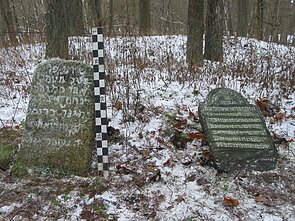
In his words, it is amazing that Karaims in Lithuania have managed to preserve their language, as well as the old Karaite cemetery in Naujamiestis.
“The size of the community can be gauged from the Karaite cemetery. The cemetery in Naujamiestis is quite big. I compared it with the old Karaite cemetery in Trakai, which had the largest Karaim community in Lithuania. These cemeteries are similar in size,” the historian says.

Newsletter
Every Friday morning.