



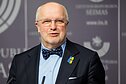






The West’s weak response to Russia’s invasions of Georgia in 2008 and Ukraine in 2014 sent a message to Vladimir Putin that he can seize the territories of his neighbours at little to no cost, former NATO Secretary General Anders Fogh Rasmussen has said.
If Putin succeeds in Ukraine, he will not stop there, Rasmussen said.
“The next goal would be Moldova, then Georgia, and finally the Baltic states,” he said in an interview with The Atlantic.
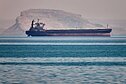
“But that project has now been made much more complicated for him because, after the accession of Finland and Sweden to NATO, the Baltic Sea will now be a NATO sea,” he added. “So, the defence of the three Baltic states will be much easier and much more efficient now, and if we wish, we can block all entry and exit to Russia through St. Petersburg.”
In his words, Putin provoking Finland and Sweden into joining NATO is a “strategic defeat” for Russia.
Talking about the war in Ukraine, Rasmussen, who led NATO in 2009-2014, said that Ukraine’s security can only be ensured by a strong army, and the allies must help build it.

He also said French President Emmanuel Macron’s statements about the need to avoid humiliating Putin and his telephone diplomacy with the Russian president were “unsuccessful”.
“Macron’s statement is disastrous. It suggests that we are approaching a new world order where it’s not the rule of law that matters but the rule of the strongest. If Putin can get away with taking land from Ukraine, that’s horrendous because what next?“ Rasmussen said.
“We shouldn’t offer Putin an off-ramp. We should send him a new message: If you want to get out of this mess, get out of Ukraine,” he added.
The former NATO secretary general also referred to the “Economic Article 5” that he and former US Ambassador to NATO Ivo Daalder proposed to help the allies withstand the economic pressure.
“Certain democracies, such as Australia and Lithuania, have faced Chinese economic coercion. Our proposal is that we should consider such a use of economic force as an attack on all of us,” Rasmussen said.
„My long-term vision is to establish a common market of democracies because the world’s democracies represent about 60 percent of the global economy. That is a formidable force if we can unite. A new world order is emerging that will involve less economic interaction between autocracies and democracies. Globalisation is entering a new phase,” he added.

Newsletter
Every Friday morning.