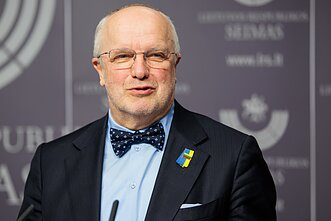




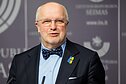









Honest journalism is currently outlawed in Russia, says journalist Maikl Naki who has left the country and settled in Lithuania following Moscow’s invasion of Ukraine and the accompanying crackdown on the media and expressions of dissent.
Naki, who used to work at the radio station Ekho Moskvy, now has a YouTube channel with some 780,000 subscribers.
He has been running the socio-political video blog since 2019 and, together with former Ekho Moskvy radio station colleague Alexander Plyushchev, hosted streams guests such as Alexei Navalny, Mikhail Khodorkovsky, and others.
In mid-March, the Russian Interior Ministry opened a criminal case against Naki under an article on discrediting the Russian army and put him on the wanted list.
In an interview with LRT.lt, Naki discussed the forms of protests that are left available to Russians opposed to the war in Ukraine, the “cancellation” of Russian culture abroad, and how Vladimir Putin forced the world to move backwards.
I would like to talk about the protest movement in Russia. Right now, it is mostly solitary pickets, although some prominent figures have declared their stance on the war, exposing themselves to risks. Some have left Russia. Is there a possibility of mass protests breaking out in Russia?
The Russian authorities shut down almost any possibility after February 24, when large numbers of people took to the streets – there were 8,000 detentions in one week alone.
Repressive laws have been passed that criminalise almost any act, even speech. This was done on purpose so that there’d be no statements or acts [against the war]. So in that sense it is difficult to imagine that there will be any legal way out in the foreseeable future.
On the other hand, in parallel, when you criminalise legal ways of expressing dissent, then you start to have more radical illegal ways.
If you can get 10 years in prison for saying the word “war” and the same 10 years for burning down a military recruiting office, then you may make more radical decisions.

This is why we are seeing a wave of all sorts of near-sabotage, about two dozen cases of arson in military enlistment offices all over Russia.
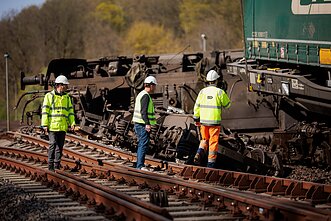
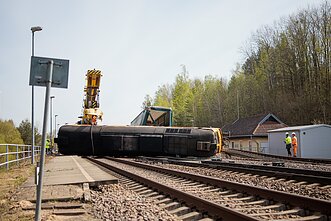
We see railway sabotage. We see individual posters, graffiti and everything else. So there are quite a few people in Russia who oppose the war. But the repressive regime is trying by all means to prevent this from happening.
People are even detained for a combination of colours in their clothes or boxes on their balcony. There have been arrests for wearing blue and yellow trainers.
So there is a large enough number of people in Russia who are against the war, including some ready for radical actions, such as burning down military enlistment offices and so on. Recently, for example, they burnt down the museum of Valentina Tereshkova.
But when it comes to an organised political movement, it’s hard to imagine anything like that, because anyone who expresses a political position and says something is persecuted under the law.
What about opposition media? Most – Dozhd, Ekho Moskvy, Novaya Gazeta – have been shut down and a lot of journalists have left. But perhaps some are still working?
Russian journalism exists, but not in Russia. It’s impossible to do journalism in Russia right now because any journalism that is more or less honest would immediately fall under various articles of the Criminal Code. Therefore most Russian journalists are now abroad.
In Russia, they started experimenting with formats [like YouTube] quite a long time ago, from the moment when widespread repressions against journalists began.
There are quite a lot of independent publications which live on donations. Mediazona, the magazine Kholod, Agenstvo, Vazhnaya Istoriya. These are such mini-media outlets, although many people work there, some have 50 people and some have 15, but nevertheless they are not anything like the large classical media.

They have been developing for a long time and are quite decent alternative sources of information. There are those like Meduza which has its own background and its own audience.
And, of course, there are people who are trying to build something similar to mass media in their individual capacities, their own YouTube channels. [...] But there is nothing left of the classic media in Russia, it’s all been destroyed and the profession has effectively been criminalised.
Your own YouTube channel has 780,000 subscribers. Who are you broadcasting to, do your stories reach Russian viewers?
Yes, of course they do. I should say that there is a problem with YouTube statistics because many people in Russia use VPN in order to view content and browse the Internet.
A topic that you have raised in broadcasts has been the “cancellation” of Russian culture. You made an interesting point that Russian culture gets cancelled by the Russian state itself which, for example, is calling off concerts by musicians who speak out against the war in Ukraine. In Lithuania, there are discussions to rename the Russian Drama Theatre. What do you think about it?
Honestly speaking, I don’t think anything, it doesn’t bother me. I am not surprised that a large number of people want to distance themselves from the aggressor country.
Do I want to live in a world of pink balloon ponies, where everyone loves each other, holds hands and sings? Of course I do. But it’s obvious that today’s world is different and that Vladimir Putin and the Russian Federation have done everything in their power to become the equivalent of Nazi Germany in the twenty-first century. And we can’t expect that this will have no effect on the perception of the country.

At the same time, I must note that I haven’t encountered any so-called Russophobia. There are a huge number of Russian-speaking people in Lithuania, and I have not seen any problems with it. [...] On the whole, I haven’t seen any manifestations of intolerance.
Even though Russian propaganda is actively trying to spin the story that in Europe you could almost be crucified in the street. I have many acquaintances all over Europe and I monitor information on the subject. I have not been able to find any specific cases where a person has been harassed for simply being Russian. There are cases where a person shouts “Glory to Putin” or wears the letter Z and people do not react well to that – which is understandable.
In one of your interviews, you said that what is happening now in Russia is a battle between the past and the future. Which do you think will win in the end?
Time, at least as we know it, is linear, so the future will win in any case. The question is what it will be like.
This is not a story that concerns only Russia. We see that all over the world different decisions being made that roll back previous achievements.
The global story is about what Vladimir Putin is doing, that he is pursuing the politics of the 20th century in the 21st century. Wars of conquest, scramble for territory, the value of territory as such – these things are all deeply in the past, because modern countries are focused on other things, economic well-being, standards of living and GDP.
In that sense, of course, Putin’s politics is certainly one of the past. How successful it will be is hard to predict because Putin’s actions are encouraging other countries to return to the politics of the past, to build up weapons again, to form military blocs.

Ten years ago, NATO’s existence was in question and NATO member states used to say: why are we spending so much money on this?
This is why Putin has done more for the NATO bloc than anyone else in the world, making it one of the most important structures that determines so many things on this planet.
It is important to stress that this war is an endless horror that is going on in Ukraine. But beyond that, Putin is forcing all developed humanity to take a few steps backwards. Many countries – Germany, the United States and others – are going to increase military production, which means cutting spending on social welfare, since that money has to come from somewhere. We are, unfortunately, taking several steps backwards and will have to do this until all these threats go away.
In short, the future is hazy. It is difficult to say what it will be, because it does not just happen, it is a result of what people do.
This interview, conducted in Russian, was condensed and edited for clarity.

Newsletter
Every Friday morning.