













Katerina has lived and worked in Mariupol for 20 years. While trying to escape the destroyed city, she and her family were forcibly taken to Russia. At the Taganrog railway station, the family realised that they could be deported deep into the occupiers’ country and dared to flee.
Katerina, what is your story of survival? When did you leave Mariupol?
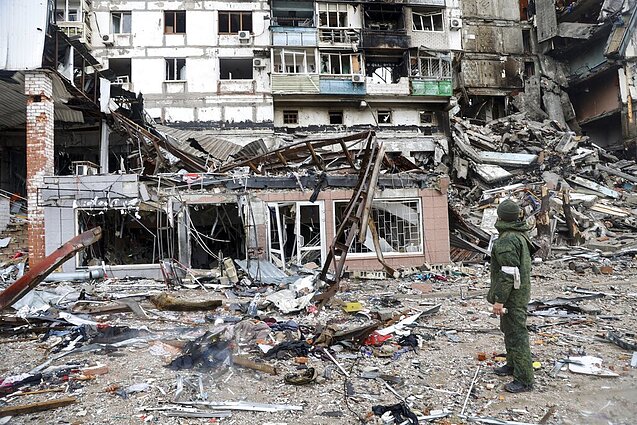
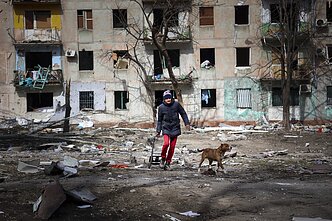
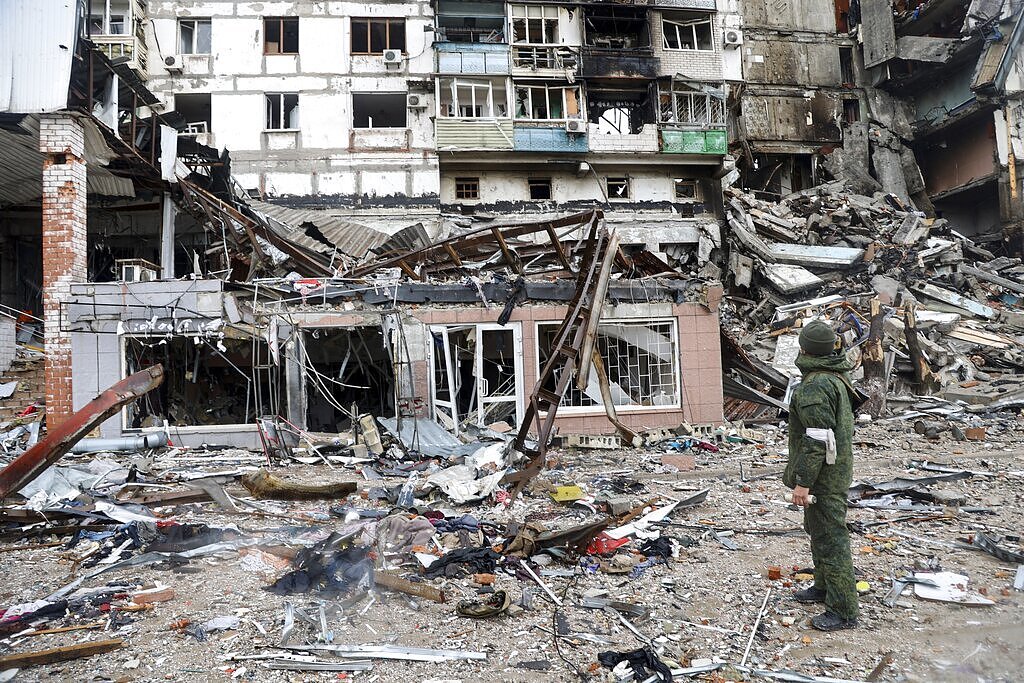
My family and I lived in Mariupol. From the beginning of hostilities until March 23, we stayed in the besieged city. We left our house and hid in the basement. We could not stay there because the shelling started, the basement caught fire, and we had to flee to the shelter of the neighbouring house. We survived the fires, injuries, and destruction of all our property, including our house and documents. We survived despite running out of food supplies, drinking water, no medical and humanitarian aid, and no green corridors.
We were forced to leave the city at the risk of our health and lives because of the continued shelling and airstrikes by the Russian aggressor. Under that barrage of fire, we made our way on foot to the neighbouring village of Nikolskoye, where, according to the information we received from other residents of Mariupol, there were volunteers, food, and water.
We went up there. My family of five was illegally taken away against our will by people wearing military uniforms. This happened between 23 and 25 of March. We were put on a bus. We did not know where they were taking us. We thought we were being taken to Ukrainian territory. We thought it was going to be Zaporizhia. We drove for about 20 hours.

We were dropped off with other people on the platform of a railway station. This was in Russia, in the town of Taganrog. As we understood, we were dropped off here for further deportation to the far reaches of Russia. We tried to get out of there. We escaped from this station and moved by random cars, trucks, electric trains, and on foot to the checkpoint at Burachki on the Russian-Latvian border. On the night of April 6, we managed to leave the aggressor’s country. We entered Latvia and later Lithuania. We are in Vilnius now.
Were other people from Mariupol in a hurry to leave the city, or did they not expect the occupiers to behave so cruelly?
Most of the people stayed and still live there. My family and I didn’t expect that the situation would turn out this way. We thought until the very last moment that things would calm down soon, that there will be an agreement. We didn’t think that we would have to flee Mariupol. Most people stayed there. I’m convinced that they cannot leave the city.
Are there relatives and friends of yours left in Mariupol? What is their fate?
To my great regret, yes. My aunt and my grandmother stayed in Mariupol. We have no contact with them. There is still no electricity, gas, or water [...]. People, who manage to connect to the internet, tell us that my grandmother and my aunt are alive. Thank God. They are in hiding. They are still somehow trying to survive in those inhuman conditions. I also have friends and colleagues left there, some of whom we cannot find. Some colleagues and acquaintances have died, and others we simply cannot find.

Do you have any hope of returning to the liberated city?
There is always hope. We were very hopeful that the war would end soon. We also hoped that we would escape and stay alive, which, thank God, we did. That is why I sincerely hope that all this madness will end soon and that I and my family will be able to return. I very much hope so. We want the whole world to somehow influence the end of the war and start the reconstruction of the city as soon as possible.
You hope to return to the home that is destroyed...
Unfortunately, this is not possible today. The house I used to live in is half-destroyed. My parents’ house burnt down. Now, it is difficult to imagine us coming back. But in the future, when the war is over, we have hope that Mariupol will be reconstructed.
Yes, we will return to Mariupol. Yes, we will return to our hometown.

Newsletter
Every Friday morning.