
















After the Economy Ministry said Lithuania would welcome tech workers relocating from Russia and Belarus, some security experts have raised concerns about possible foreign agents among them. Others, however, dismiss the claims as scaremongering.
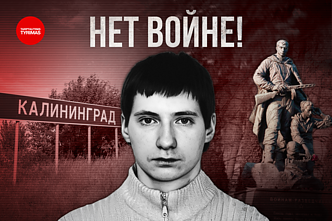
Ivan Tyutrin, a long-time opponent of the Kremlin government, left Russia and settled in Lithuania a decade ago. With the Russian exodus sparked by the Ukraine war picking pace, he is now receiving enquiries from fellow Russians about possibilities to do the same.
Read more: Lithuania looks to attract IT workers fleeing Russia and Belarus
Tyutrin, who has been a co-organiser of the Free Russia Forum, says he has doubts about the motivation some of them may have.
“In my view, some people who want to leave Russia now are doing it simply because they’ve realised that sanctions will bring a huge economic and social crisis in Russia. They can’t travel, struggle to get Schengen visas,” Tyutrin tells LRT TV. “Russia is sinking and they want to get off this Titanic.”
Lithuania’s Economy Minister Aušrinė Armonaitė sees it as an opportunity, however. She has suggested that Lithuania could accommodate IT firms and tech workers fleeing the increasingly oppressive environment in Russia and Belarus.
But not everyone is convinced it to be a good idea. The president’s national security adviser Kęstutis Budrys says the plan can have negative implications for national security.
Read more: Eastern European IT specialists caught in crossfire of war

“To be frank, we in the intelligence community have had much scepticism about strategic sectors operating in Russia – and IT is one of those sectors, because they are controlled by their security, the FSB,” he tells LRT TV. “We do not have many illusions that companies can operate freely there without being overseen by security and working on their tasks.”
Political analyst Marius Laurinavičius has suggested that Russians and Belarusians willing to come to Lithuania should prove their opposition to their respective governments.
“These are people who have been living in mafia states for years, did not resist and were part of the system,” Laurinavičius tells LRT TV. “By inviting them we are essentially importing the mafia system.”
Armonaitė has countered that such concerns are unfounded since Lithuania would be welcoming international IT companies that had operations in Russia or Belarus but are now leaving due to the war.
“We are working with companies that have previously fled the Lukashenko regime [in Belarus] to Lithuania, that are leaving now and are Western capital firms,” according to the economy minister. “Lithuania is not working with Russian capital firms and won’t do it.”

The State Security Department says that to prevent foreign intelligence infiltration, Russian and Belarusian nationals are issued visas only in exceptional cases and in consultations with Lithuania’s intelligence.
However, the department’s former head Gediminas Grina cautions that checking people’s backgrounds is difficult, especially when they come in large numbers.
“What can we do when 100 or 1,000 people come at the same time? They’ll submit their polished biographies and who is going to check? I can’t imagine what resources we’d need to do it,” Grina says.
Meanwhile, political scientist Vytis Jurkonis of Vilnius University, who has been working with Russian and Belarusian opposition, says it is absurd to assume that everyone is a Kremlin agent.

“Shouting that everyone who comes here is an agent is neither productive nor fair. And it is an insult to those who are trying [to fight these regimes] – independent journalists, human rights advocates who have done more for the free world than some of the loudmouths in Lithuania,” says Jurkonis.
Since the start of Russia’s invasion of Ukraine on February 24, Lithuania’s Migration Department received residency applications from 1,650 Belarusian nationals and 280 Russians.

Newsletter
Every Friday morning.