









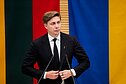



Russia’s invasion of Ukraine has prompted considerable soul-searching among Lithuania’s theatre community, with many artists having nurtured close ties with Russia’s celebrated theatre scene. The dilemma of whether to cut all ties or maintain a cultural lifeline with Russia’s public is a very real one, says playwright and stage director Marius Ivaškevičius.
Rimas Tuminas, the founder and artistic director of the Vilnius Small Theatre, was fired last week, after Culture Minister Simonas Kairys demanded him sacked for keeping professional engagements in Russia.
Tuminas responded with a statement condemning Vladimir Putin’s invasion of Ukraine and specifying that he was no longer the artistic director of the Vakhtangov Theatre in Moscow, the purported reason of his firing.
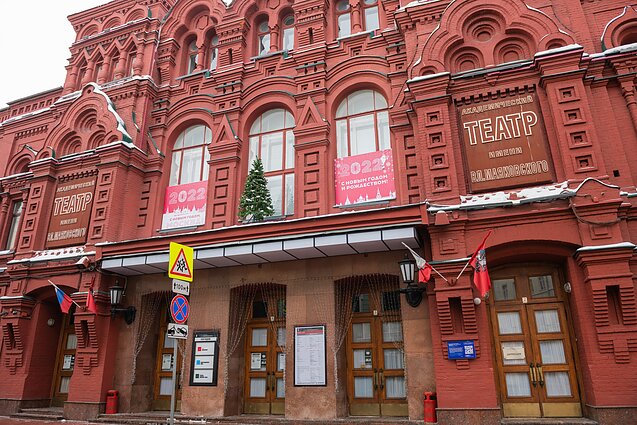
Another theatre director, Oskaras Koršunovas, has attracted criticism after saying that this production of Elizaveta Bam (by the Russian avant-garde playwright Daniil Kharms) at the Tovstonogov Bolshoi Drama Theater in Saint Petersburg should go on, as it spoke to the current moment.
Koršunovas was subsequently asked by the head of the National Drama Theatre to resign as its artistic director, although the given reason was his alleged intoxication during a live radio interview. Koršunovas denied he was drunk, but said he would agree to resign.

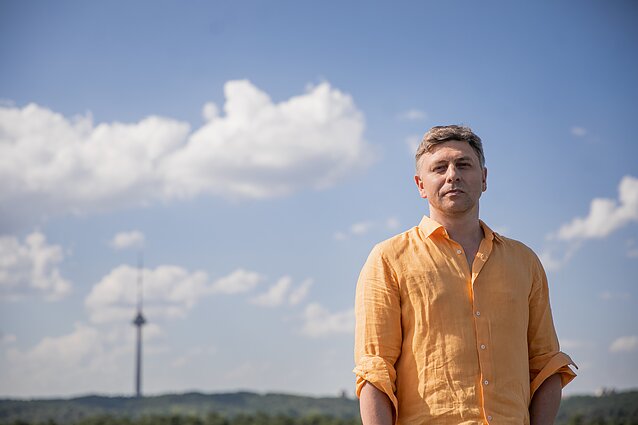
Playwright and theatre director Marius Ivaškevičius, who has also worked and produced plays in Russia, says artists, both Russian and foreign, are facing a real dilemma what to do. On the one hand, amid Moscow’s invasion of Ukraine, not taking sides means condoning the aggressor. On the other hand, says Ivaškevičius, cutting all ties would leave the hearts and minds of ordinary Russians at the mercy of war-mongering propagandists who are eager to step into the hollowed-out culture scene.
Ivaškevičius spoke with Nemira Pumprickaitė on LRT TV’s show The Week on March 6.

What do you make of this imperative for artists to not only unambiguously take sides, but also to declare their position publicly?
It probably makes a lot of difference depending on which side you’re on and in which country you’re planning to live. For people in the West, and for Russians in the West who identify with and see their future in the West, it is probably imperative [to declare their position] and easier to do so.
For those who have families [in Russia] and plan to return, it is absolutely clear that their every statement will be noted and scrutinised. Clearly, they face a huge dilemma about what to do. I am, personally, urging them to state their position clearly, but at the same time I understand – or rather, refrain from judgment – when they don’t.
However, when it comes to artists, you do believe that they should stop their work in Russia and leave, that this would be the right thing to do?
I think that they can leave at any time. A separate question, however, is when there are calls for someone like Oskaras [Koršunovas] to cancel the performances of his production. To be honest, I am still not entirely sure how this could be done. The only solution I can fathom is for him to publicly say that, for example, all the money from his productions in Russia would go toward supporting Ukraine – this would probably get them cancelled. This regime would purge its theatres of you.
I must admit I did not like it very much when the culture minister called Rimas Tuminas “a drunk Russian” despite his works and the fact, as it turned out later, that he no longer worked [at the Vakhtangov Theatre in Moscow].
I know personally both Oskaras Koršunovas and Rimas Tuminas. They are not people who are working in Russia because they support Putin’s regime. Russia, like all big countries – and small ones as well – has been welcoming the best talent. This entire hysteria that someone who worked in Moscow was upholding Putin’s propaganda is nonsense. Although it is different now.

In some way, I believe, foreign directors producing plays in Russia was a form of Western soft power – and I can see very well who will take their place now. They will be replaced by terrible productions glorifying Putin and Russia’s empire, plays that used to stand outside the door, trying to push out these artists.
A year ago, on May 9, the so-called Zakhar Prilepin Guard stormed the Mayakovsky Theatre during a performance of my play and raised placards with my face saying “dirty Russophobes off the Russian stage”.
So these people will come to step in. But what can you do, this is reality now.
Have you faced any attempts to censor your plays in Russia?
In January, I received an unexpected letter from the Moscow Art Theatre, saying they wanted to produce The Sleepers on their big stage. I had to sit down. I wrote back to them: are you sure, have you read the play? I cannot imagine a more straightforward call for an uprising in Moscow, a more frank depiction of what Putin’s regime is all about. Yes, they told me, we want to produce something bold. Great, I thought, perhaps I don’t know Russia, or at least Moscow, as well as I thought.
But three weeks into castings, with contracts nearly drawn up, I receive a letter from the director: the management read the play and, clearly, everything is cancelled.
I would allow to produce this play [in Russia] even today, but it’s unrealistic that someone would dare to do it. In April, the Saint Petersburg Bolshoi Drama Theatre was to have the premiere of Alexandrinka. I sent a request yesterday that, if possible, perhaps we could move the premiere to post-Putin times, because I couldn’t see may work playing there today.
And did you get a response?
Yes, I received a vaguely worded reply to the effect that yes, we also hope very much that it will happen soon.
What will be the price of such isolation for Russia?
I keep thinking I should call [Belarusian Nobel Prize-winning author] Svetlana Alexievich to see what she is planning to do. Will she remove her books from Russia, cancel theatre productions based on her works? This is a huge dilemma. Emotionally, it is understandable that we want to close up and cut all ties. But culture is not coca-cola that you can replace with Tarkhuna [Georgian carbonated soft drink] and see no effect on your brain.
Culture does affect your brain. I am, just like you, a Soviet child and if I had not had the opportunity to read Western authors like Hemingway, Faulkner, Camus or others, who knows what I’d be today. Would Lithuania still exist today? Or would we have been turned into completely zombified Soviet citizens?
I have many questions and these nine days [since the Russian invasion of Ukraine] are too short a time to find answers. I am speaking with the best playwrights of Ukraine to find out what they are thinking, with other Europeans whose works circulate in Russia. It’s a big dilemma and I wish someone could give me a clear answer what I should do.

Newsletter
Every Friday morning.