















Revolutions in Eastern Europe and the USSR three decades ago gave hope to those societies that democracy and capitalism will lead to better life. For a lot of people, this did not happen – and their justified frustration now feeds reactionary anti-democratic forces in countries like Hungary, Poland, Russia, or Germany, argues American researcher Kristen Ghodsee.
Taking Stock of Shock: Social Consequences of the 1989 Revolutions, a recent book Ghodsee co-wrote with Mitchell Alexander Orenstein, gives a comprehensive 30-year review of how the societies of 27 post-socialist countries survived transition to market economy.
Even three decades after the so-called “shock therapy”, the transition continues to be a factor in Eastern Europe’s political and social landscape, argue Ghodsee and Orenstein: “In the sheer magnitude of its impact on individual lives, it can be compared to the other major events of the last century in Europe: the First World War, the Russian Revolution, the Great Depression, the Second World War, and perhaps the 2019 coronavirus pandemic.”
Using economic, demographic, polling data and ethnographic research, the book traces a complex and ambiguous landscape. Although many in the region today can enjoy freedoms, opportunities, and standards of living unavailable to previous generations, this is by no means true for all. Even after recovering from the deep economic recession of the 1990s, these societies remained traumatised by the transition, as evidenced by drops in life expectancy, rise in alcoholism, and dramatic rates of emigration. “The social impacts of transition were severe, despite frequent attempts [...] to deny this,” conclude Ghodsee and Orenstein.
In an interview with LRT.lt, Ghodsee, who is a professor of Russian and East European studies at the University of Pennsylvania, discusses why disappointment with capitalism gives rise to right-wing movements even in nominally successful post-socialist countries, what is at stake in Eastern Europe’s memory wars, and why women had better sex under socialism.

You’ve been working quite a while in Eastern Europe, mostly in Bulgaria. How do people there relate to their history of socialism and of the transition to market economy?
I happen to be old enough that I was in Eastern Europe in the summer of 1990. I was actually in the GDR right after the Berlin Wall fell, before it ceased to exist. And I travelled extensively through the region.
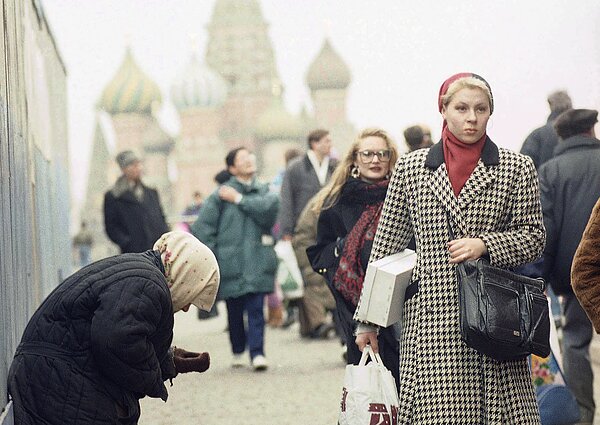
I’ve watched for the last 30 years as the narrative has developed and changed. Obviously, in the immediate aftermath of 1989, and 1991 in the former Soviet Union, there was this real happiness and euphoria around democracy and capitalism, and the end of these oppressive states with centrally planned economies, shortages, travel restrictions, and secret police. There was a real sense of hope – that there would be this thing called “the peace dividend”, that the world would be a more equitable and peaceful place.
And that didn’t happen. I also think that there was a concomitant feeling that life for ordinary people in most of these former socialist countries would improve substantially. And these hopes met with reality, a very unfortunate reality, throughout the 1990s.
And so, I think there’s a lot of amnesia around the transition, partially because it was so painful, partially because there really hasn’t been any systematic regional analysis of the last 30 years. I would argue that this book was really the first attempt to do an interdisciplinary analysis of 27 countries over the last 30 years.
The transition was really good for some people and it was really bad for a lot of others – and it remains bad for a lot of people. The problem with the narrative is that the winners get to tell the story. And the losers, their voices are just lost.
What we see is a complicated story. The transition was really good for some people and it was really bad for a lot of others – and it remains bad for a lot of people. The problem with the narrative is that the winners get to tell the story. And the losers, their voices are just lost.
And to the extent that we hear the losers, we hear them at the polls in Hungary and Poland, in places where there are more right-wing governments coming into power. They’re often discredited as backward or nostalgic, uneducated, rural voters. There are all sorts of ways in which these voices are marginalised, because they’re basically speaking to the fact that the last 30 years of democracy and capitalism didn’t turn out quite the way that people in 1989 or 1991 thought they
would.
Which promises in particular would you say were frustrated and undelivered?
I would say that, first of all, the promise of democracy. There was a hope about the future, that you wouldn’t just have the creation of oligarchs – in some countries, they never really even pretended to have a democracy.
Other countries really did build democracy. But if you read Ivan Krastev and Stephen Holmes’s book The Light That Failed, they argue that you could elect governments in Eastern Europe that still had to do whatever Western governments or the EBRD, the World Bank, or the IMF told them to do. They were told to implement these reforms, or implement certain kinds of austerity measures, or implement a flat tax, or whatever.

That wasn’t really democracy. You had elections and then the leaders that you elected had to do what the West said no matter what, so there was a disconnect between the discourse of democracy, self-determination and independence, and the reality of doing what the West told you to do. I think that’s a big problem, people were very disappointed, and they expressed that anger very early on.
The other real issue is the economic one. We’ve seen an incredible amount of income inequality arise in that region, partially as a result of the capture of many of the formerly state-owned resources by a new class of oligarchs. We see an increasing percentage of national wealth going to the top one percent.
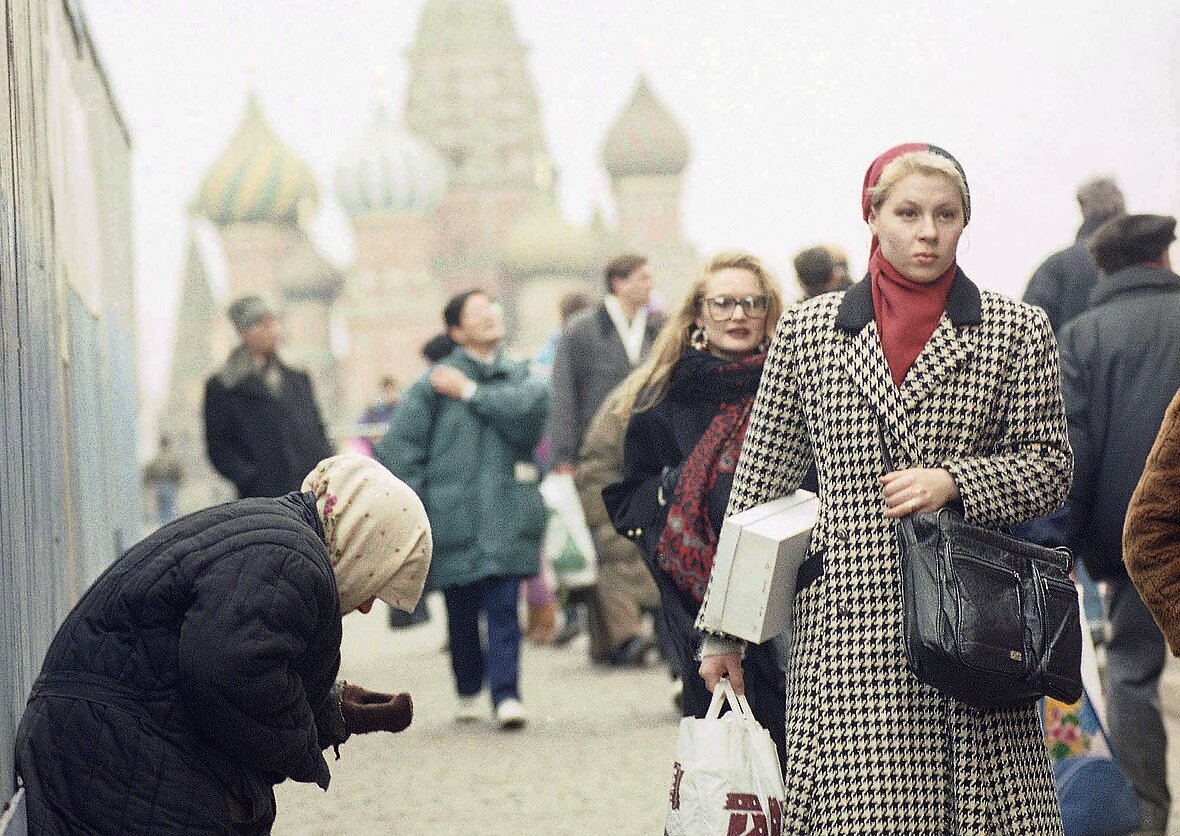
We found in our book that at the peak year of poverty, which was in 1998, there were 191 million people in the former socialist world living on less than 5.5 dollars a day, which was the World Bank poverty rate for Eastern Europe at the time. That’s almost half of the region in poverty. Much more than there had been before the transition.
And so, if you think of it in those terms, both capitalism and democracy failed to deliver on their promises. A lot of people were angry and disillusioned. And I think that a lot of the frustration that you see in the region today is not only about the way that the transition has been carried out, but also a reaction to the dominant narrative of economists and liberal elites insisting that the transition, in fact, has been successful. There’s this constant insistence that we’re way better off than we were before, that it’s not even worth talking about the past. We’re going to blow up all these monuments and change all these street names and pretend like that didn’t happen. I think that a lot of people are just really frustrated by that.
We’re going to blow up all these monuments and change all these street names and pretend like that didn’t happen. I think that a lot of people are just really frustrated by that.
Are there any significant variations across the region, say, between former Soviet republics, Warsaw Pact countries in Eastern Europe, former Yugoslavia?
It really depends on which indicators you’re looking at: the economy, demography, public opinion, everyday life experiences. It’s very different for different regions. The one thing that I will say is that there are some interesting regional patterns.
From a demographic point of view, we see a massive population decline. Demographers call it the “demographic death spiral,” where countries are haemorrhaging people either because of high death rates, low fertility rates, or massive out-migration – in the worst case, a combination of all three. And Lithuania, I think, has got the second fastest shrinking population in the world.
The demographic problem is just not the same in Russia and in Central Asia. It’s horrible in places like Latvia, Lithuania, Bulgaria and Romania; there’s massive haemorrhaging of population in Croatia, Slovenia, too. The migration crisis has hit harder those countries that are closer and more integrated into Europe than it has hit countries further away.
We also see a big difference between vodka-drinking cultures and wine-drinking cultures. Particularly when we look at the male mortality crisis, it tends to be concentrated in what we call the vodka belt (Russia, Ukraine). And because of their high male mortality, it also has a depressive effect on fertility. Whereas in Central Asia, they’re actually having a baby boom, because they don’t drink and tend, for cultural reasons, to have lots of children.
We also see a big difference between vodka-drinking cultures and wine-drinking cultures. Particularly when we look at the male mortality crisis, it tends to be concentrated in what we call the vodka belt
Moreover, obviously, some countries have natural resources, other countries do not. Some countries are more economically developed, like the Visegrad countries. Poland, Hungary, Czechia, Slovakia, Slovenia had a bigger industrial base, they’ve really done well economically. But they’re still facing a massive population decline. They are still haemorrhaging young people. They’re still haemorrhaging doctors and nurses. Young people still want to make their lives in the West rather than staying at home.
In your book, you look at economic indicators, GDP growth – which seem to show a picture of growth and development – but on the other hand, even “successful” countries are haemorrhaging their populations. So what’s the story there, what is hidden behind the GDP?
Inequality is what’s hidden there. It’s very clear. I have the statistic here: in 1990, 6.14 percent of Lithuanian wealth before taxes and transfers went to the top one percent. By 2015, that figure is 10.18. That’s a pretty large gap, one tenth of national wealth goes to one percent of the population. And that’s really visible in a small country. And so, GDP per capita hides income inequality.
And to the extent that people look at GDP per capita as an indicator of economic success, they’re ignoring the fact that a lot of people have, to this day, a worse standard of living than they did prior to 1989 or 1991. That’s a huge story that we don’t hear.
And I think it’s important to highlight this inequality. I mean, Lithuania is not as bad as Russia or Romania in terms of inequality, but it’s also a lot worse than Albania or Slovakia. It’s in the middle of the pack and people feel inequality very differently.

Sure, a lot of people are better off than they were before 1989 or 1991, there’s no doubt about that, especially if you were a young person who left Lithuania in the 1990s and made a life for yourself in England or the United States or Germany. Your life is just way better than your parents’ or grandparents’. I don’t think there’s any question about that. But for all those people living in the villages in eastern Lithuania where some of this massive depopulation is happening – their lives aren’t better off, and they really feel it. And, at the end of the day, they vote.
So I think it’s essential to not only look at the economic indicators – demographic indicators also tell you a story, which is that if I were a young person, I wouldn’t want to live in Lithuania or Bulgaria, I’d have a better life in the West. And I think that tells you that this is not an ideal, democratic capitalist society, because if it was, people would want to stay and have babies.
And not only young people feel the pressure to leave. I lived in Serbia, Belgrade, for a month last November. Some of my colleagues there, female professors around my age, they too are feeling pressure to migrate. They see their friends do it. Their children are now going off to university and they feel like, okay, now I can move to Germany or the UK, because they don’t need me here anymore. And so this pressure is ubiquitous in these societies – if you’re anybody, you get out.
That’s not a healthy society. That’s not a sustainable society in the long run. If anybody who has intelligence and initiative and drive feels like their opportunities are better in another country than in their own country – I think that’s a real problem. And that is a reflection of the disappointments of the last 30 years.
Do you think the recent backsliding of democracy in Poland and Hungary are also linked to this botched transition?
Absolutely. Unequivocally. And in former East Germany, the Alternative für Deutschland party actually uses the slogan “Vollende die Wende”, complete the change. Part of their campaign strategy has been to stir up people’s anger about the reunification and the loss of East German culture.

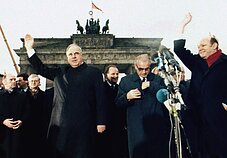
Definitely, there’s anger and frustration in places like Poland and Hungary, which, by the way, are countries that did well in the transition. Economically, data shows that they were some of the most successful countries. But they’re facing this backlash precisely because people were promised a certain bill of goods. And they didn’t get it. In 1990, Helmut Kohl, who was the chancellor of Germany at the time, told East Germans – and implicitly he told Eastern Europeans – no one will be worse off than before, but it will be much better for many.
And it wasn’t true. Many people were better off, but the vast majority of people were worse off. In our book, we basically say that if you look at all 27 countries over the last 30 years, about a third of the population did really well, and about two thirds of the population did poorly, meaning that they either have the exact same standard of living or worse than they did in 1989 or 1991.

Why do people who feel left behind then go and vote for the far right or nationalists?
Because there are no leftist parties in Eastern Europe, or they’re very few. To people in Eastern Europe, communism or socialism or any kind of leftist redistributive politics is totally anathema. So to the extent that there are redistributive politics, it’s taking the form of nationalism.
If you look at the platform of the Law and Justice party in Poland or Orban policies in Hungary they both have interesting redistributive socialist aspects, but they’re wrapped in the language of nationalism. So I just think that in Eastern Europe redistribution is more palatable if it’s done under the banner of the far right, rather than the left, let alone far left.
But is that constructive? Will the nationalists really deliver?
No, of course not. They never do. They always use the language of populism to shore up the economic and political interests of the elites, that’s just the way it works.
There may be some good policies. Look at Poland, what is called the Family 500+, which is a redistribution programme to give money to Polish women who have children. It’s not that different from what they did under socialism. At the same time, they’ve banned abortion, and women have to stay home. It is a very conservative policy, but it turns out that it’s very popular, especially in rural areas.
So the nationalists don’t completely abdicate responsibility – some of the policies that they propose, they actually do it. And we have some evidence, for instance, that child poverty in Poland has in fact been reduced by this. So they’re not completely disingenuous, but, given the abortion politics, for the most part you can’t really trust these far-right parties, because their agenda is different from what they say it is.

You’ve also written about Eastern Europe’s relation with the Holocaust and how sometimes the history of Soviet occupation is used to whitewash our own complicity in the Holocaust.
First of all, my work on this is very specific to Bulgaria. The Bulgarian government, which was allied with Nazi Germany, deported the Thracian and Macedonian Jews, and there’s an unwillingness to acknowledge the complicity of the Bulgarian state and the Bulgarian elite in the Holocaust.
In the immediate aftermath of the communist coup d’etat – or revolution, depending on who you are talking to – many of these elites were shot, on February 2, 1945, by a kangaroo court. By the way, these existed in many countries in Eastern Europe. In the case of Bulgaria, subsequent monuments to the victims of communism have used the word “innocent”, implying that these people were not responsible for anything, that they were innocent victims of communist terror.
Now, I am not at all suggesting that there weren’t real victims of communist terror in Bulgaria. However, when you include the name of somebody like Petar Gabrovski, who was the minister of interior and signed the actual orders for the deportation of Jews to the death camps, when you consider him an “innocent victim,” you are seriously undermining your moral authority of using the category “victims of communism”.
And there are multiple examples of people either directly or indirectly complicit in the Holocaust who then become rehabilitated as “victims of communism”. And I think this happens in a lot of Eastern European countries, where there are real fascists who were fighting either allied directly or indirectly with the Nazis, who were then killed or purged by anti-fascist forces, and are now being rehabilitated as heroes of anti-communist resistance, although they are really problematic for their anti-Semitic or fascist past.
Part of that, I think, is the use in Europe of the twin totalitarianisms discourse, trying to create an equivalency between Nazism and what is sometimes called communism, sometimes more specifically Stalinism. I think this debate has died down a little bit now. But certainly, after the global financial crisis in 2008-2009, it was a big point of discussion.

And it has real-world implications. For instance, in a place like Bulgaria or Romania, where people’s grandparents who were literally fascists and had their property expropriated by the communist state, their children and grandchildren get it restituted, once their reputations are rehabilitated as victims of communism.
By the way, this was a big problem in East Berlin. German journalist Daniela Dahn has written extensively about how families of former Nazi Party members went in and took property back from East Germans that had been nationalised in 1949. The Germans basically say that the East German government was not a legal state and so they had no ability to transfer property rights to anybody else. And so the contract under which the property was taken away from a Nazi and given to an eastern family was invalid.
There are many people in Eastern Europe today who have every economic interest in making sure that their families are seen as victims of communism and communist expropriation, rather than dealing with the complicated fact that some of their grandparents may have been in cahoots with the Nazis or domestic fascist forces. I know that this is a very difficult conversation to have in places like Lithuania. But pretending that it’s not true is historically problematic and inaccurate.
There are many people in Eastern Europe today who have every economic interest in making sure that their families are seen as victims of communism and communist expropriation, rather than dealing with the complicated fact that some of their grandparents may have been in cahoots with the Nazis or domestic fascist forces.
And the best way to have this conversation is to actually look at what contemporary factors are playing into these dominant historical narratives and try to depoliticise them. Controlling the discourse about complicity or not complicity in something that happened 75 years ago is relevant to political and economic arrangements today. And that’s why I think this is such a difficult conversation in Eastern Europe.
Another important strand of your work is about women’s rights. One of your books is called, intriguingly, Why Women Have Better Sex Under Socialism. What is your main argument?
My thesis is basically that socialist countries got some things right. They got a lot of things wrong. I’m not trying to whitewash it. I’m very clear that I recognise the secret police, the travel restrictions, the shortages, censorship and things that were wrong with these societies. But there were some things that they got right. And one of the things that they got right, I think, was the promotion of gender equality, women’s equality very specifically, and the support for the family.
People had babies in Soviet Lithuania. It does tell you something about the world when there were people having babies – and then people stopped having babies. Why? Especially given that, as we know, abortion was legal on demand in the Soviet Union, before and after the Stalinist era, and that many Soviet women had four or five abortions in their lifetime. So it’s not like it was in Romania, where there was no birth control or access to reproductive freedoms after 1966. In Lithuania, there were plenty of opportunities to terminate a pregnancy if you wanted to, and yet people still had babies.

So that tells you that there was something about that society that made people feel comfortable enough, that made them care enough about the future, that they were ready to bring children into the world. And so my argument is simply that we shouldn’t discount some of the policies that were put into place that supported women as workers and mothers, and which supported families.
It could be as simple as, well, everything else in life sucked, so the only thing we could do was have sex and hang out with our friends and family in dacha and drink vodka. Fine, you could say that this might be part of what was going on. And now everybody’s hustling. We all want to go on vacation to Ibiza or are working three jobs, nobody has time for kids. And it’s better because we have more stuff now than we did before.
I realise that in a place like Lithuania this is very controversial. But it’s occasionally worth looking back and saying: we could get rid of the bad and keep some of the good stuff that made people feel like they had more stable lives – so that they would not want to leave the country the first opportunity they get. What was it that made you want to have a family and raise children? Why did it change? And I think a lot of it has to do with a deterioration in women’s rights and support for the family.
Which rights in particular have deteriorated most profoundly?
The one thing I do want to say, because I know that everybody in Eastern Europe always says this:
There was a double burden, women worked and they still had responsibility for the home, they had to clean, cook, take care of the kids, so women worked a lot. And that’s not necessarily ideal.
However, there was an expectation that women would make real contributions to society, as well as being mothers, and that they weren’t primarily useful for their sexuality. Look at a place like Ukraine, where you had a really high percentage of women that were very educated in the sciences and mathematics. And what are Ukrainian women doing today? They’re renting their wombs out to Western families to make babies. And that’s on top of the mail order bride stuff.
I reviewed a great book called Soviet Signoras (by Martina Cvajner) about Eastern European women in Italy who worked as carers for elderly people. Often these women, Ukrainian or Romanian, who are working in Italy, are better educated than the people they’re looking after. You have a situation in which the right of women to be intellectual workers, to contribute to society in a non-sexual or non-caregiving way, has evaporated because of the economic situation. And because privatisation and new liberalisation has reduced the social safety net – you don’t have the same level of job protection, paid maternity leaves, child allowances.
So I just think that there are all sorts of ways in which when we think about women’s rights and opportunities, there were many opportunities that women had before. And I really want to emphasise that I’m not saying this was some perfect world – only that there were policies that we could take. We could think about ways of organising our society so that we emphasise women’s rights, and also care and respect for the family, whatever form the family takes.

Newsletter
Every Friday morning.