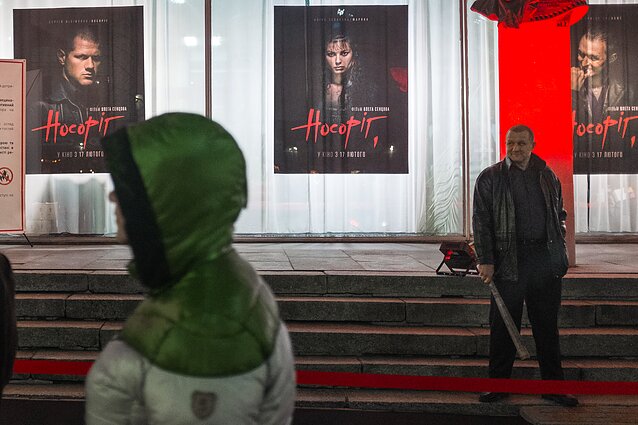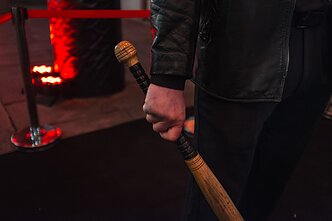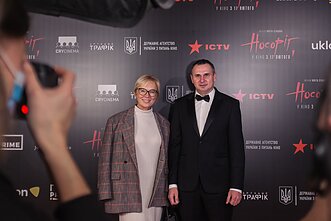











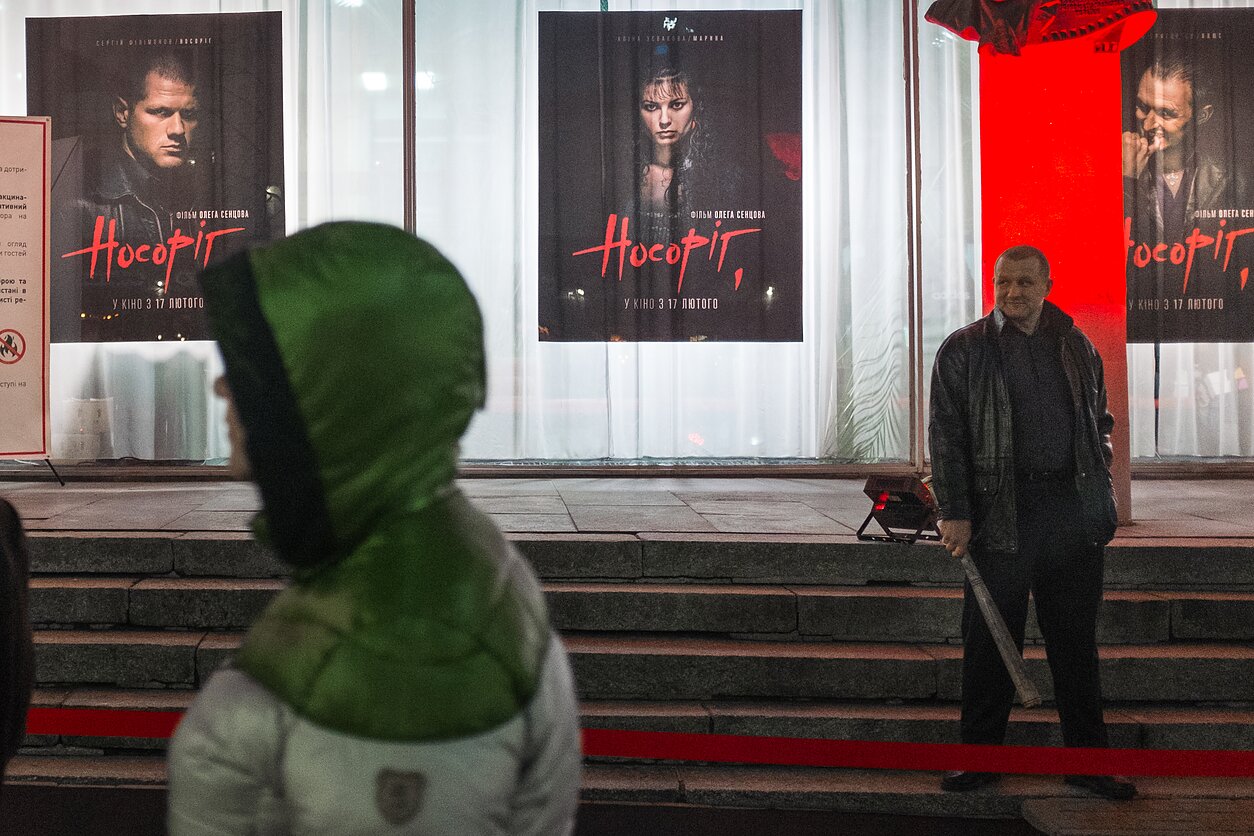
Amid threats of a looming invasion, Ukraine’s political and cultural elite flocked to see the premiere of Oleg Sentsov’s latest movie, Rhino. The red carpet glitz stood in stark contrast to the warnings of a Russian attack that was allegedly set to begin the following day.
“Excluding Russia’s aggression, it is the best time that Ukraine has ever seen,” Sentsov told LRT.lt.
“Unfortunately, Russian aggression is always breathing us in the back”, including the threat of a “full-scale war”, he added.
The movie premiered at the Venice Film Festival last year, but its opening in Sentsov’s native Ukraine took place on Tuesday.
Rhino is Sentsov’s first movie following his release during a prisoner exchange in 2019 after he spent five years in Russian prisons, where he was also tortured.
The film begins with a dizzying spin through Ukraine’s transformation, covering the collapse of the USSR, social ills, and the first signs of the looming upheaval of the 1990s, complemented by the telltale signs of the era – Anatoly Kashpirovsky, Bruce Lee, and unintelligible Japanese TVs.
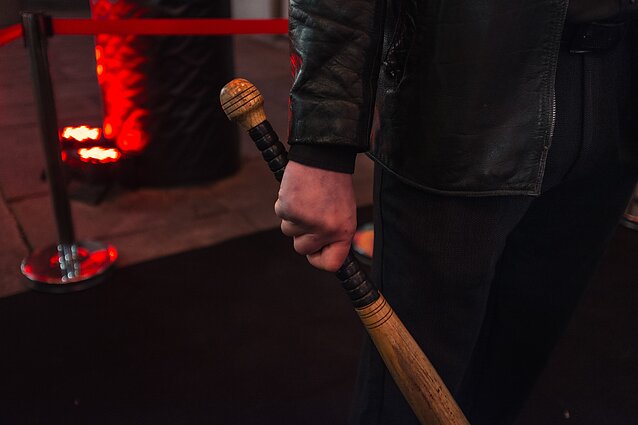
What follows is a journey through a life of crime, shoot-outs, and the largely mindless violence that sees no redemption. The movie sometimes comes across as a jumble of false nostalgia, crammed with chaotic markets, discotheques, fights, and bad boys.
At the same time, it presents a rare look into the 1990s, not via Western and Hollywood cliches of “Russian mafia”, but one that uses a native voice – something that has been noticed by Netflix, which has acquired Rhino's streaming rights.
For the local Ukrainian audiences, meanwhile, it stands as a reminder not to glorify and indulge in the white-washed memories of the 90s.
“The aim is to explore our history and to understand how horrible the times were 30 years ago,” Sentsov said. “And now, these times have finished. However, many still live according to the same understanding of the 90s, according to the rules of the gangs.”
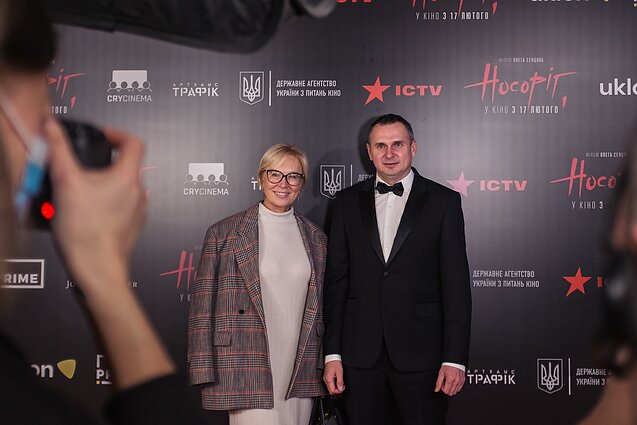
Political elite among attendees
“Sly ones became politicians. Yesterday they burned people. Now, they are on the TV,” one of the quotes in the film rang out, as it was followed by the laughter of several hundred people gathered at the premiere in Kyiv.
Among those laughing, presumably, was Petro Poroshenko, the former president of Ukraine, who is currently fighting legal charges that some say are political revenge by the celebrity-turned-politician and the current leader of the country Volodymyr Zelensky.
Strolling with his entourage, Poroshenko reminisced about his own time in the 90s and spoke about the looming threats today.
“Russia is demonstrating the confirmation of their aggression [in the] eastern part of Ukraine, [...] and this is a huge responsibility of Russia and the reason for undertaking heavy sanctions against Russia right now,” he told LRT.lt.
However, he was less ready to answer other questions on the lips of many Ukrainians – a mention of the failed Minsk 2 ceasefire agreement signed under his watch led to an abrupt ending of the conversation.
Previously, Sentsov said there was a connection between the characters in Rhino and oligarch Viktor Yanukovich, who is also the deposed Ukrainian president.
“Because we realised he was a criminal, we rose up and deposed him. And now, it’s a long road to change, but we’re doing it,” Sentsov told Euronews last year.
Among those who helped oust the pro-Russian president was Serhii Filimonov, the lead actor, who was also a Euromaidan activist and fought in the Donbass war. He was chosen during the casting of former soldiers, prisoners, and athletes.
“Russia attacked us eight years ago,” he told LRT.lt. Ukraine was not ready then, and Russia will do it again if “it has an opportunity”.
“Maidan has united the nation,” Filimonov said, adding that the revolution made Ukrainians understand the nation’s direction.
“This film shows very well what times we have lived through, but now, we can show that Ukraine is on the right path forward,” Filimonov added.
Sentsov’s towering character and reputation attracted a wide attendance of Ukraine’s political and cultural elite, including former ministers Oleksiy Honcharuk and Ulana Suprun, as well as former president Viktor Yuschenko.
“Because this is Sentsov – he was a prisoner of the Kremlin – everyone was waiting for his movie,” said Slava Ratynski, a local journalist and photographer.
Standing on the stage, Setsov thanked those working towards independence in Ukraine, reiterating that “now is not the 90s, and we live in a different time”.
“For our victory, thank you all, glory to Ukraine,” he concluded.
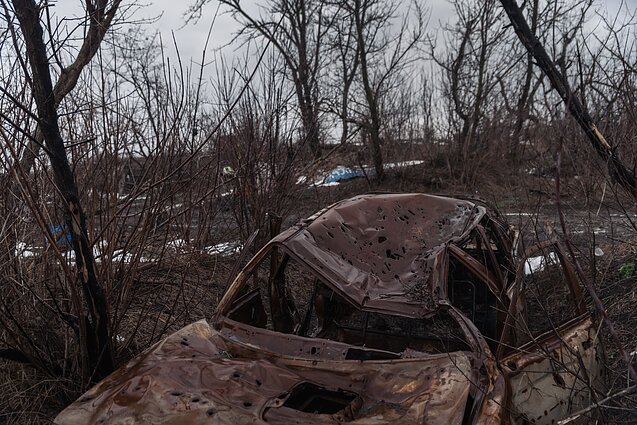
Threats to Ukraine
Washington named February 16, the day after the premiere, as a potential deadline for Russia’s invasion into Ukraine. Instead, Kyiv was the scene for multiple gatherings of an ad-hoc unity day, called for by Zelensky.
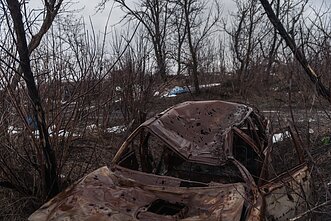
Russia, meanwhile, maintains a force of up to 150,000 troops, according to assessments made public by the United States. Moscow is still able to commit to large-scale aggression, Washington and Western leaders say.
During the latest bout of cross-border diplomacy, Russian President Vladimir Putin said the country would not seek war – words that sounded eerily similar to those uttered almost eight years ago, days before the Kremlin seized Ukraine’s Crimea and started the war in Donbass.
Today, just as Filimonov has implied, the Ukrainian society is more ready. In almost every conversation, Kyiv residents talk about the initial overcoming of the psychological barrier of having to accept that the formerly “brotherly” nation attacked Ukraine.
NATO has expressed cautious signs of optimism after Russia published images of an alleged troop pullback. As of Wednesday, however, the Kremlin has “just as many troops”, the French foreign ministry said.

Newsletter
Every Friday morning.