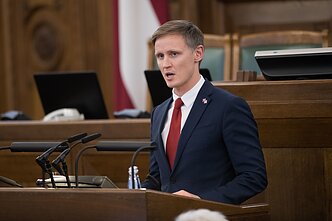















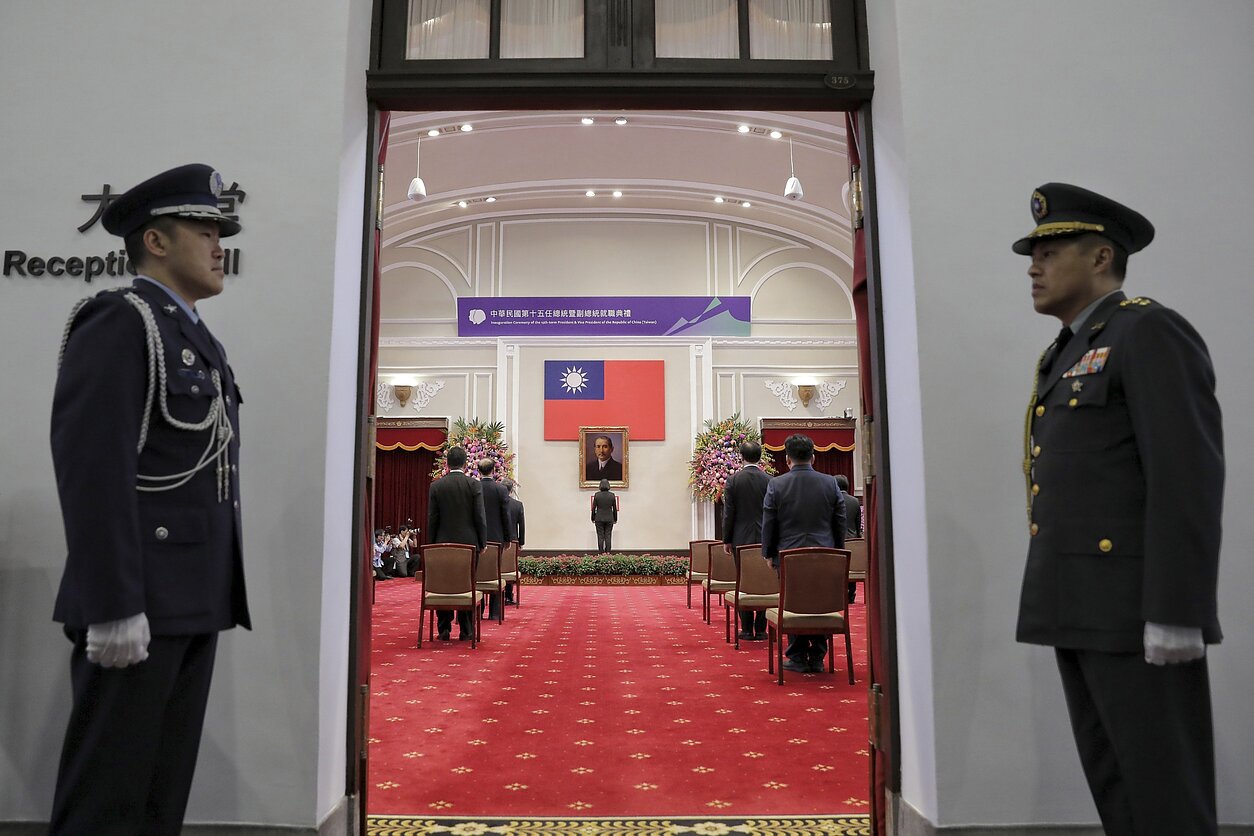
After Lithuania opened a Taiwanese office in Vilnius, it has suggested that Latvia should also rename the one in Riga, says Latvian MP Rihards Kols. However, the country is not convinced it would be expedient.
Latvia briefly hosted a consulate of the Republic of China (Taiwan's official designation) in the early 1990s, but closed it down in 1994 after Beijing froze relations with Riga. Since then, Taiwan is represented in Latvia by a Taipei mission.
According to Kols, chairman of the Foreign Affairs Committee in the Latvian parliament, Saeima, when Lithuania opened the Taiwanese office in Vilnius last November – and sparked a diplomatic row with Beijing – it did not consult with Riga.
“It's only afterwards, when the announcements came that [Lithuania] will open the Taiwan representation, [...] we were called to the opening,” Kols says in an interview with LRT.lt. “I'm like, we already have it. Yeah, but you have to rename it [we were told by Lithuanians].”

This, according to Kols, raises the question of what the purpose is of the new representation in Vilnius. “So are you opening it to generally foster the relationship with Taiwan, or are you opening the mission with that title just to piss off China, excuse my French?” he says.
Before that, Lithuania had made a loud exit from the so-called 17+1 forum, China's platform for relations with countries in Central and Eastern Europe.
Back then, Lithuania also wanted Latvia to follow suit, according to Kols.
“Our Lithuanian colleagues always stated, are you going to stay? You have to do the same,” says the Latvian Foreign Affairs Committee chairman.
According to Kols, however, this did not make sense to Latvians. “What exactly did you withdraw from? There's nothing to withdraw from, there is no agreement, there is no formal institutionalised structure.”
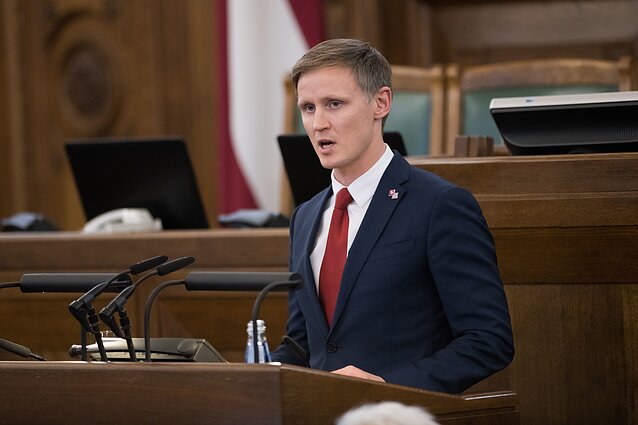
“My personal opinion is that it [the 17+1 forum] has outlived itself, it's not appealing anymore, but from the practical point of view, it has more risks than benefits,” Kols believes.
The platform was launched a decade ago when China was promising massive investments in Eastern Europe, but that did not materialise. “We don't see these huge investments, [...] we see constant promises,” according to Kols. “And these promises are followed by requests on certain topics, be it human rights or other dimensions.”
“I don't see that we have to really waste our energy [to shut down 17+1]. The format will die of natural causes, it will just die out,” he adds.
Lithuania's Foreign Ministry has suggested that, instead of 17+1, EU countries should interact with China in a format “27+1”, that is, as one unit.
“Well, again, I'm fed up with the numbers,” Kols comments. “What I'm arguing for is that if China has one China policy, then the EU needs to have one Europe policy when it comes to China.”
Lithuania has asked for EU support after China subjected it to pressure and, according to Vilnius, undeclared trade sanctions.
“I totally support the call for anti-coercive mechanisms to be established within the EU,” says Kols. “So we don't experienced something that Lithuania is experiencing right now, China's [...] pressure by different means.”

Newsletter
Every Friday morning.