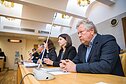


Emmanuel Levinas Centre, an affiliate of the Lithuanian University of Health Sciences (LSMU), was opened in Kaunas in December last year. But the son of the late French philosopher after whom the centre is named says his father did not want to have any links with Lithuania.
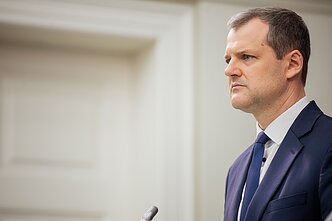
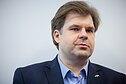
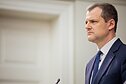
In December, French newspaper Le Figaro published an opinion piece by Michaël Levinas. He was critical of the fact that the LSMU named its new department after his father, a famous French philosopher of Lithuanian Jewish ancestry.
According to Michaël Levinas, his father's family and other Jewish people suffered from anti-Semitism in Lithuania during World War Two. Levinas' family were arrested and tortured at the Ninth Fort by local Nazi collaborators.
After moving to France, Emmanuel Levinas promised to never return to Lithuania and did not want to maintain any links with the country, his son added.

“His decision on the country, where his entire family was killed, was irrevocable,” he wrote.
In 2019, Michaël Levinas travelled to Kaunas and offered to name the LSMU affiliate Centre of Contemporary French Philosophy. But the then university rector Remigijus Žalimas told him that his wish would not be respected.
Commemoration
According to LSMU, the Emmanuel Levinas Centre aims to foster social and cultural activities and contribute to progress in society, country, and region.
By naming it after the famous philosopher, the university wanted to commemorate Emmanuel Levinas in Kaunas, it said, adding that the Levinas family is itself divided on the question.
“[Levinas’] son has reservations about the centre, while the daughter has expressed strong support. Levinas daughter’s son and his wife participated at the centre’s opening,” LSMU said in a written response.

LSMU says that the idea to open the centre was suggested by Kaunas City Municipality and the French Embassy in Lithuania. The latter said the situation is ambiguous because parties have different views on the centre’s name.
“The Embassy supports the study of contemporary French philosophy and, in this particular case, supports all initiatives leading to a peaceful agreement,” it said in a written response.
Michaël Levinas refused to provide his comments after finding out that LSMU’s position will be included in the article.
Emmanuel Levinas was born in a Litvak family in Kaunas in 1906. He left for France in the 1920s to pursue education and became a naturalised French citizen before World War Two. Soon after being drafted into the French army, he was taken prisoner of war and spent the rest of WW2 in a PoW camp in Germany. The Levinas family that remained in Lithuania perished in the Holocaust.
Correction: an earlier version of this article incorrectly stated that the French Embassy and Kaunas City Municipality collaborated in founding Emmanuel Levinas Centre.

Newsletter
Every Friday morning.