


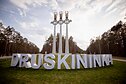

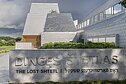






Artsy, quirky and country within a country: Welcome to the Republic of Užupis! The bohemian neighbourhood in Vilnius is one of the most unique places in the Baltics – and ever-popular in Lithuania and beyond. Is gentrification inevitable?
The whole world witnessed Lithuania becoming the first Soviet republic in 1990 to declare independence and break away from the crumbling Soviet Union. But only a few years later a new country should arise in re-independent Lithuania itself: the self-proclaimed Republic of Užupis – in Lithuanian, Užupio Respublika.
Being one of the smallest and oldest districts in the capital Vilnius and separated from the Old Town by the river Vilnelė, the bohemian neighbourhood and mecca of light-hearted behaviour declared its independence on April 1, 1997.
“If you cross the bridge, you can become yourself. We give the opportunity for people to do what they like in life,” is how Užupis’ foreign minister Tomas Čepaitis, one of the micro-nation’s founding fathers, explains the basic idea of the Republic.

Describing it as a “dear but forgotten dream”, he considers Užupis a place where people reconnect with what is important for them – not least because of the creative and freethinking community that inhabits it. “This district kept so strong its own character that it deserved its own country.”
What essentially began as a semi-joke on April Fools’ Day is now a serious endeavor. Meaning “beyond the river” in Lithuanian, Užupis boots its very own anthem, flag, government, currency and a very unique tongue-in-cheek constitution. Mounted in several languages in plaques along a wall in one of the main streets of the rebellious Republic, the 41 articles are a subtle mixture that affirms fundamental freedoms, individual philosophical principles and an indispensable portion of irony and absurd humor.

Vilnius’ vibrant artistic heart
While the breakaway enclave is not legally recognized as an official nation, the residents of Vilnius have embraced the neighbourhood’s ever-present free and independent spirit. Užupis adopts a laissez‐faire approach with a casual laid-back atmosphere that has been molded by an autonomous colony of artists, intellectuals and eccentrics.
Taking advantage of the bargain rents in the early 1990s when the suburb was in a state of despair, the like-minded creatives built a special and unique vibe in the district. It is most likely best captured in the black-and-white-movie K+M+B by filmmaker and Užupio Respublika president Romas Lileikis.

What once used to be a seedy, dodgy and neglected part of Vilnius has now grown into an affluent neighbourhood that is sometimes even dubbed the “Lithuanian Montmartre”.
Roughly 7,000 people now call Užupis their home. One in every seven is an artist, making it a very innovative and anti-conformist hub for creativity. Hundreds of art installations have been placed in the narrow streets and little squares of Užupis that are scattered with art studios, ateliers, galleries, cafes and shops. Street art and curiosities are waiting at every turn, while the backyards are full of hidden surprises.
Growing gentrification
Constantly surfacing with various events and its wealthy cultural life, Užupis has received strong attraction in Lithuania and beyond – the tourist numbers grow and the population swells.

The unintended consequence of this development is that the self-propelled Republic is confronted with a phenomenon well-known from other districts that have experienced a sudden influx of artists and creative people. Gentrification increasingly affects the creative habitat and has prompted a spike in property prices.
“Užupis is now considered a very prestigious neighbourhood. Right now, this is the second most expensive part of Vilnius, after Old Town,” says Raimondas Reginis from the pan-Baltic real estate agency Ober-Haus.

The shift in public image has eventually also changed the population make-up. The middle class and even some rich, young business types or national celebrities found it hip to move to Užupis and the surrounding quarters where new residential buildings are popping up en masse.
“During the last 15 years, developers built new homes for around 2,000 new residents in Užupis,” Reginis says.
Himself a former resident of Užupis, he personally has mixed feelings about the rapid changes in the district, but at the same time considers them nothing extraordinary.
“Gentrification happened quite naturally as a result of the on-going urbanisation process in Vilnius,” the real estate expert explains. “Užupis is no exception in this sense. Real estate owners and developers simply follow the logic of the free market of the growing city.”

Even though not overly happy about the current development, “foreign minister” Čepaitis is convinced that Užupis will manage to uphold its character – despite all the changes brought by the newcomers. “The spirit of Užupis remains intact. It is as constant and integral to the place as the river Vilnelė. The suburb changes and evolves, but its spirit will not let it lose identity.”
‘Užupis is ever-transforming itself’

Completely into art and a true Užupean: Ieva Matulionytė has spent all of her life in Užupis. In a short conversation with Baltic Business Quarterly, the former long-term head of the Užupis Art Incubator explains what is so special about the bohemian neighbourhood.
How important is art for Užupis?
It is the driving force for Užupis and I think this is the DNA what brought about the change in Užupis – all these creative initiatives and the engagement of artists with local people. I think this is what makes this place so attractive, the atmosphere so inviting, welcoming and peculiar.
Do you think this spirit can live on for another 25 years?
I absolutely believe in it. It is transforming itself because the generation that created it, they are now in their early sixties and a new energy is coming in.

What about the gentrification?
Užupis has a special atmosphere and I think that gentrification is setting in gently. It is actually wonderful that people from all walks of life find the aura of Užupis attractive and get exited about this idea of Užupis Republic. And, of course, it is ever-transforming itself, it is ever-evolving and that’s what is amazing about Užupis. That it is never in stagnation, that it is constantly reinventing itself.
What does Užupis mean for you personally?
For me, it is my whole life. When I walk up the hill to my home, I just feel those layers of history of Užupis because it changed so dramatically since I was a kid here. To me, it pulses with memories – it is dear to me. The lifestyle that we live here is absolutely joyful. To me it is everything – it is my whole microcosmos. It is home. That is the main idea about Užupis Republic. That it is our axis mundi, our centre of the world – Užupis. We all have created it together.
This story was originally published in Baltic Business Quarterly magazine.


Newsletter
Every Friday morning.


