











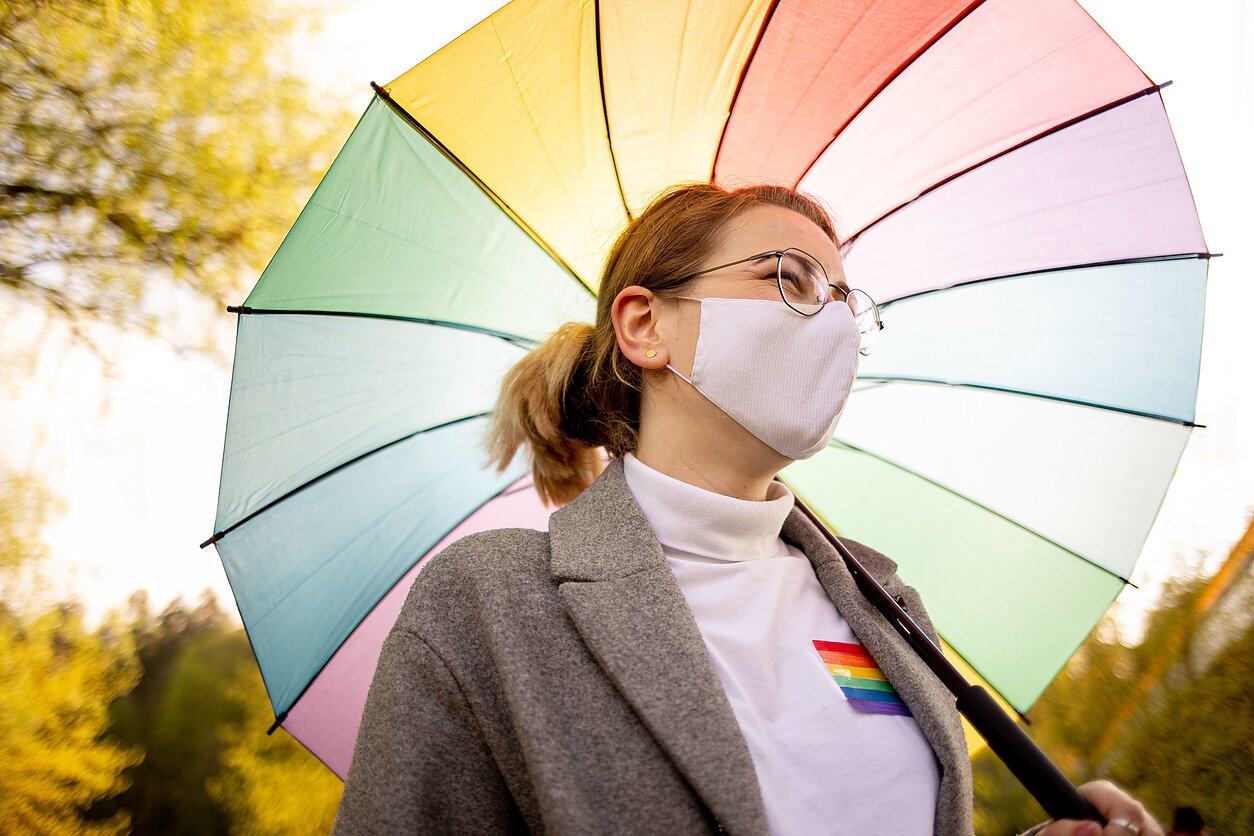
Lithuania has not made any progress in improving the situation of its LGBTQ+ people, ranking 34th among 49 countries in the latest edition of the ILGA-Europe Rainbow Europe Map and Index, which monitors queer rights across the continent.
Like last year, Lithuania scored 23 points on a scale from zero (gross violations of human rights, discrimination) to 100 (respect of human rights, full equality), outperforming its immediate neighbours Latvia (17), Poland (13) and Belarus (12), but behind most of Western and Southern Europe and Estonia (38).
The latest Rainbow Europe Map and Index, published on Monday by LGBT+ rights organisation ILGA-Europe, finds that over the past 12 months advances in LGBTI rights have come to – almost – a complete standstill.
However, with legislative proposals and action plans on the table in some countries, the organisation says that governments now have the opportunity to ensure the map will look very different this time next year.
Released every year since 2009 on International Day Against Homophobia, Transphobia, Biphobia, and Intersexphobia (IDAHOBIT), the ILGA-Europe Rainbow Map ranks all 49 European countries on a scale of zero (gross violations of human rights, discrimination) to 100 (respect of human rights, full equality).

Situation in Lithuania
The report notes that, according to a survey, 55 percent of Lithuanian LGBTI respondents have been discriminated against in the past 12 months, which is the highest rate in the EU.
Moreover, more than a third of the respondents in the survey felt “downhearted or depressed” all the time or most of the time, also the highest rate in the EU.
"Lithuania has one of the highest rates of school bullying in Europe,” the report also notes.
On the bright side, Lithuania's Interior Ministry established a working group in February last year to develop an effective response to hate speech and hate crimes.
“Together with several NGOs, the Police Department are developing an online course for police officers on investigating hate crimes and hate speech. This could lead to an increase in the reporting and recording of hate crimes in the country,” according to ILGA-Europe.
In last year's parliamentary elections, LGBT rights activist Tomas Vytautas Raskevičius was elected to the Seimas on an explicitly pro-LGBTQ+ platform. “Civil partnership will be high on the [Raskevičius'] Freedom Party’s agenda in the next four years,” the report says.
The full report on Lithuania is available here.

Central and Eastern Europe
Among the key findings from this year’s index for the Central and Eastern Europe region is the continued poor performance of Azerbaijan (which scores just 2 percent) and Armenia (4 percent), which occupy two of the bottom three places (the other is Turkey), and Poland, which remains the lowest-ranked European Union member with a score of 13.
Ukraine has gone down four places from 36 to 40, due to the expiration of its government’s action plan, while Georgia has gone down two places, from 30 to 32, due to the lack of clear procedure for legal gender recognition and the risky situation of LGBT+ human rights defenders in the country.
There is better news from North Macedonia and Bosnia and Herzegovina however, which are among the countries with the biggest jump in scores.
Albania meanwhile also improved its position by including sex characteristics protection in anti-discrimination legislation.
Montenegro, which boasts a score of 64, is by quite some distance the highest-scoring country in the region, in 10th place overall, outperforming the Netherlands, France, Austria and Iceland, among others.

Newsletter
Every Friday morning.