










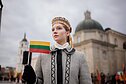




Lithuania has two celebrations merely a month apart that people casually refer to as “independence day” – and have a day off work.
The celebration on February 16 is actually called the State Restoration Day (Lietuvos valstybės atkūrimo diena). On February 16, 1918, the twenty members of the Council of Lithuania signed a document – the Act of Independence – declaring Lithuania a sovereign democratic state with the capital city Vilnius.
The document said Lithuania was severing statehood ties with all other nations – what it meant was primarily Russia, which ruled the land since the late 18th century, and Germany, under whose administration Lithuanians fell during World War One.
Read more: Losing and finding Lithuania's Act of Independence

Lithuania remained a democratic state until 1926, when a military coup installed the rule of President Antanas Smetona, and kept its capital in Vilnius only until 1920, when the city was taken over by Poland. Lithuania got Vilnius back in 1939, but only months later, in 1940, the country was occupied and annexed by the Soviet Union.
On March 11, Lithuania celebrates the Restoration of Independence Day (Nepriklausomybės atkūrimo diena). On that day in 1990, the Supreme Council of the Lithuanian SSR, the first one elected in free elections, declared the country independent from the Soviet Union.
Read more: Lithuania marks 80 years since bittersweet victory of regaining Vilnius – photos

It took another year and a bloody crackdown in Vilnius for the USSR to be dissolved and the world to recognise Lithuania as an independent state.
Read more: Occupied but not silenced. January 13, 1991: the night when Soviets stormed LRT
There is also one more national holiday celebrating Lithuania's statehood. July 6, the Statehood Day (Valstybės diena), pays tribute to King Mindaugas, the first Medieval duke to bring Lithuanian lands under his unified rule.
He received a crown from the Pope in 1253 and became Lithuania's first – and only – king.

It is unknown, however, if he was crowned on July 6. Historian Edvardas Gudavičius in 1989 proposed the day because it fell on Sunday in 1253, and a Christian king would have been crowned on a Sunday.

Newsletter
Every Friday morning.