















Few people know that Bored Panda, one of the most popular content websites in the world, was created in Lithuania. In an interview with LRT.lt, the company's founder Tomas Baniškauskas talks about his creation that grew from an online blog into one of the top 10 most viewed pages on Facebook and an offer that would allowed him to retire in his 30s.
You don’t appear in public much and many people do not even know that Bored Panda is a Lithuanian business. Why?
Maybe the main reason is that I want to remain a private, not a public, person. At first it seemed that it would be nice to be known. I was being invited to TV and radio shows, I was delivering messages in front of large audiences.
Finally, I understood that I don't need fame at all and it doesn’t give me happiness. I like to concentrate on business, aim for big goals, and let the results speak for themselves.
How did you create the project?
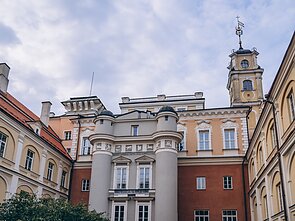
I founded Bored Panda in 2009, but the real start was a few years earlier. At that time, I was studying business management at Vilnius University. Together with a coursemate, we began thinking about how to make money online.
We decided we needed to create a website, so we started writing about other people’s success stories. [...] Finally, my friend went to Scotland, while I founded Bored Panda in Vilnius in 2009, using the knowledge that I had accumulated.
Before Bored Panda, I tried a few small businesses. One of my main activities was filming events, commercials, weddings. I also took photos that I sold online.
[...] However, Bored Panda was the project that started generating an average Lithuanian salary from the very beginning. Then little by little I started to let go of other activities and focus on this project.
In 2018, Crafty Panda appeared next to Bored Panda. Why did you start the project?
At that time, we were afraid that we were too reliant on Facebook and we were thinking on how to diversify. The breaking point was an idea mentioned by our competitors. Once we took part in a conference organised by Facebook. During the evening dinner, the organisers seated us at one table with our biggest competitors.
They boasted that they were doing really well creating DIY video content and asked why we weren't doing the same. [...] We started looking for people, and finally director Tadas Vidmantas joined the search for a team, while Rokas Jurkevičius, a video editor at our company, became the project director at Bored Panda Studios.
How has the team of Crafty Panda changed in two years?
At first there were only three people working on the project. Currently, together with freelancers, there are over 250 workers.
How did the beginning look for Crafty Panda? Where did you film the first videos?
We joke that, at the beginning, we filmed everything in office corridors in Vilnius. But because the videos required home environments, the whole filming transferred to apartments [before later moving to] a normal studio.
What is the main audience of Crafty Panda?
On Facebook, we mostly have a male audience. The majority of viewers come from the United States and India, and only a small part comes from Lithuania.
You are dependent on social media. What would happen if you couldn’t upload content onto one of the platforms?
The majority of [Crafty Panda's] content is shared on social media. The only way we can mitigate risks is to use multiple platforms. There have been instances when an algorithm changed on one social media platform, which resulted in a drop of views. But then they increased on other platforms. Therefore, we feel quite safe because we upload content onto multiple platforms.
When it comes to Bored Panda's content, we are less reliant on social media platforms because people come to our website directly, or are referred to the website from Google search. If something happened to social media, our articles would be fine, but the video content would take a bigger hit.
For 11 years, we have been worried that we are too reliant on Facebook. But the pandemic has shown that restaurants and travel businesses that were not afraid of anything are now facing bankruptcies. Therefore, it’s sometimes very difficult to gage risks.
The year 2020 was not great for many businesses. What about Bored Panda?
The company's turnover, compared to 2019, has doubled.
How do you monetise content on Bored Panda and Crafty Panda?
Both projects make money from ads [...] from Google and Facebook. Bored Panda monetises articles by selling ads on the website. We also make part of the money through Instant Articles – when a person clicks on a Facebook ad and sees the article directly on Facebook.
We monetise video content on YouTube by using YouTube ads, and ads are also included in the videos on Facebook. At the moment, we do not monetise our content on Instagram.
Bored Panda has always grown organically. Did you have any investment offers? If so, why didn’t you take up on them?
We have received offers. Venture capital funds have approached us on a number of occasions [and] we have considered and discussed [the offers]. However, we always knew that we would then have to allow another company into the management. We didn’t want that.
But this wasn’t the main problem. Bored Panda has always been profitable, meaning that we always had funds to grow. What we maybe needed was the know-how. The investors didn't have it, they could only offer us money.
Have you received any offers to sell Bored Panda?
We received a serious offer in 2017. A person from Forbes' 100 rich list wanted to buy the business. We travelled to New York to discuss the offer, but due to certain circumstances decided against selling the company, even though the money would have allowed us to retire.
If you’re not planning to sell the company, how do you see its growth and development?
We are planning very large growth, because Crafty Panda is constantly among the 10 most viewed pages on Facebook. Our goal is that our other project – Handy Panda, Lady Panda, Adventure Panda, and other pandas – also appear in the top 10.
Our main competitors have multiple projects, so we want to go down that path as well. We have several pandas planned.
What does your workday look like? How much time do you dedicate to management, and can you find time for creativity?
I start my day at 07:00 by looking for ideas for our texts online. Every day I browse through hundreds of news items and websites. At around 09:00, I hand over a plan of which articlers we will write to the team. Even though I'm the director of the company, I still fulfil the role of the chief editor.
Then, until lunch, I continue looking at the news that is important for us. After lunch, I work with individual projects, I dedicate time for business growth, management.
Why have you not handed over the editorial functions to someone else?
Having worked in this field for many years, I have accumulated a lot of experience and this work gives me pleasure. I would do it time and time again. However, since we are expanding rapidly, there is an increasing number of management tasks and I need to take care of business development, therefore, I have started to delegate this function.
So, in this field [of editorial tasks], we are awaiting changes, because we have already established a department for idea development, which will be responsible for searching information.
I dedicated a lot of time to training employees and their results are now so good that it’s making me change my conviction that I alone can do it best.
Now it’s better to hire talented people and pass my knowledge to them.

Newsletter
Every Friday morning.