











The departure of Linas Linkevičius marks the end of a significant era for Lithuanian diplomacy, writes Rikar Jozwiak for Radio Free Europe / Radio Liberty.
After Lithuania's second and final round of parliamentary elections, it appears that the Conservatives will form a coalition with two minor liberal parties. This will bring no discernible change in the Baltic country’s foreign policy other than Vilnius potentially becoming even more of a Russia hawk. But the country will likely continue down this path without one of its most recognizable diplomats at the helm – its foreign minister of the last eight eventful years, Linas Linkevičius.
It is not often that small countries such as Lithuania are heard in the Brussels bubble. Usually, it's the big fish like France and Germany and other older, western member states who frame discussions and make the deals. But little, plucky Lithuania broke that mold.
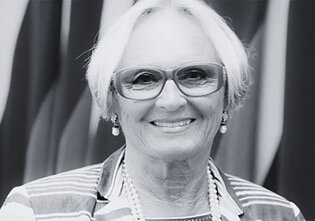
First, its telegenic former President Dalia Grybauskaitė became a force to be reckoned with among other European leaders at EU summits with her sharp, witty comments and cunning political moves.
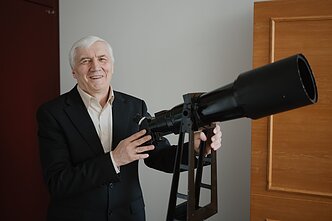
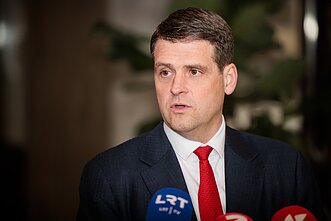
Then, there was Linas Linkevičius, who stood out at foreign ministerial gatherings at NATO and the EU – and not only due to his bear-like frame. When he faced the press, he did so often with brutal honesty and sometimes despairing openness, a rarity where diplomatic speak reigns supreme, but he also appeared to carry his views into the meeting rooms.

This jarred with some of the other member states, particularly those that wanted warmer relations with Moscow. Here, he was unapologetically against any rapprochement with President Vladimir Putin’s Kremlin and an unequivocal supporter of ever closer ties with other countries in the EU’s eastern neighborhood such as Georgia, Moldova and Ukraine.
Being one of very few Russian-speakers in the Council, his grasp of the post-Soviet space and his unrivalled address book of contacts from Kyiv to Tbilisi made him a force to be reckoned with in Brussels.
Serving as his country’s defence minister for a stint during the turbulent 1990s shortly after his country’s independence from the faltering Soviet Union and then during Lithuania’s accession to NATO, he became acutely aware of his country’s precious position as “a frontline state” both geographically and politically. The ambassadorial duties at the NATO HQ and in Minsk that followed made him appreciate that other nations in the region were in the same boat.
When he eventually landed the foreign ministerial portfolio in late 2012, his tasks were obvious: keep relations as warm as possible with Berlin and Washington and try to fix often complicated ties with Warsaw. Only then could Lithuania help others face up to the pressures from Moscow.
Linkevičius' first major challenge was the Eastern Partnership Summit in his hometown Vilnius in late 2013. While the EU sealed association agreements with Georgia and Moldova in the Lithuanian capital, the failure to do so with Ukraine subsequently led to cataclysmic changes in the neighbourhood with the Euromaidan revolution, the annexation of Crimea and the war that to date is raging in Donbas.
Being one of very few Russian-speakers in the Council, his grasp of the post-Soviet space and his unrivalled address book of contacts from Kyiv to Tbilisi made him a force to be reckoned with in Brussels.
All this time, Linkevičius became a constant champion for stronger EU and NATO reactions and actions on its eastern flank, even as other countries wanted to shift focus to other hot spots in the southern neighbourhood.
And, while he often lamented that the EU moved “too little, too late”, it did manage to impose economic sanctions on Russia in 2014 that remain in place six years later. Ukraine finally did get its association agreement signed and together with Georgian and Moldovan citizens, Ukrainians can now travel visa-free to the bloc.
Ask most officials in Brussels, or in those countries, what role Lithuanian diplomacy played in those decisions and they will very likely praise Vilnius' persistence in keeping these issues on the agenda.

Ask about the role of Lithuania in the ongoing popular uprising in Belarus and people familiar with the situation will immediately point to Linkevičius’ personal engagement in giving Svetlana Tikhanovskaya and others from the opposition safe harbour in Lithuania or the outsized influence Vilnius enjoys in shaping the EU’s sanctions policy and diplomatic posture towards the regime of Alexander Lukashenko.
Perhaps his biggest diplomatic triumph was, however, when NATO, during a summit in Warsaw 2016, decided to deploy multi-national battalions to Lithuania as well as the two other Baltic States and Poland as a direct result of Russia’s aggression in Ukraine.
That NATO troops from all over the alliance would be present in former Soviet territory was no mean feat and one that bore the stamp of someone who had responsive ears in the corridors of power in Washington and Berlin.
Yet while his star was shining abroad, there were complaints back home that he was both too harsh and too kind to Moscow, about his past membership in the communist party in the 1980s and perhaps that he had lost his political touch by aligning with the wrong social-democratic party which got a proper walloping in October elections.
While Linkevičius will likely no longer be foreign minister in the next government, there are rumours that he might stay in the world of high diplomacy by becoming ambassador to either the United States or the EU.
One thing is clear: Linkevičius' likely departure comes at a time of busy diplomacy in the EU, as the bloc readies more sanctions against Belarus and prepares to introduce its own Magnitsky Act after slapping more restrictive measures on Russia. A hawk may be about to fly but only after making Brussels considerably more Lithuanian.
The views expressed in this article are the author's own and do not necessarily reflect those of LRT.

Newsletter
Every Friday morning.