









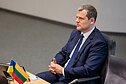





The appointment of a controversial author to advise Lithuania's state-funded genocide research institution has raised doubts among historians and drew protest from the country's Jewish community.
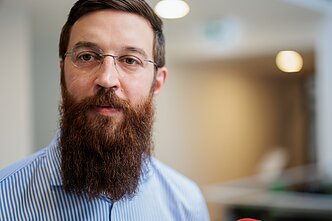
The Genocide and Resistance Research Centre of Lithuania (LGGRTC), which studies the crimes of the Nazi and Soviet occupying regimes in Lithuania, has appointed Vidmantas Valiušaitis as one of two advisers to its new director Adas Jakubauskas.
A journalist, author and a former editor-in-chief of a radio station, Valiušaitis has published work on the Lithuanian Activist Front (LAF), a short-lived resistance organisation established in 1940 to fight the Soviet occupation. The organisation remains controversial due to its alleged anti-Semitic views.
The Lithuanian Jewish Community has published an open letter, censoring Valiušaitis' appointment and criticising him for historical revisionism.
“In his publications over the last few years, Valiušaitis has been distorting and falsely presenting facts about the anti-Semitic actions of the LAF and its Provisional Government,” it said.
According to the statement, Valiušaitis' appointment compromises the LGGRTC's role as an unbiased research institution.
“A person who publicly defends anti-Semites who directly or indirectly contributed to the destruction of Lithuania's Jews, should not be considered for any role in a state-run institution charged with conducting unbiased research of genocide, ideology and mass murder crimes in Lithuania,” the Lithuanian Jewish Community said.

Some historians have also expressed disapproval.
According to Arūnas Streikus of Vilnius University, Valiušaitis' appointment makes the historical community fear that the LGGRTC might be nudged to adopt a nationalistic approach to memory politics.
“There is that danger, since the new director [Jakubauskas] is not someone who is directly working with the period or has studied its issues and research. It would be easy to manipulate him,” Streikus told LRT.lt.
Another Vilnius University historian, Nerijus Šepetys, said that “the absolute majority of researchers of WW2 and the post-war period that I know are very sceptical about Valiušaitis' publications and particularly his activities in history politics”.
Rather than a neutral researcher, Valiušaitis has been an active campaigner for memorialising Lithuanian anti-Soviet resistance, Šepetys said. “Under normal circumstances, historical research should not be a fight or romantic glorification of real or supposed heroes,” he told LRT.lt.
Valiušaitis himself has rejected the criticism, insisting that none of his historical publications have been accused of being dishonest.
“No one has disproved my facts, they just somehow don't like [my appointment],” he told LRT.lt.
According to Valiušaitis, attacks against him are personal rather than professional.
“Had I made any decision, this would be professional criticism. [...] In this case, this is a purely ad hominem attack, a hit below the belt,” he said.
He added that he had received numerous state awards for his work. “People have their opinions. You can't make everyone agree,” Valiušaitis said.
Read more: Lithuania's genocide research centre must ‘double-check’ its findings, says director candidate

Newsletter
Every Friday morning.