













Inciting moral panics and scapegoating vulnerable groups is a tried and tested political tactic that has been used to win elections in Eastern Europe, but to varying success, argues Simonas Bartulis.
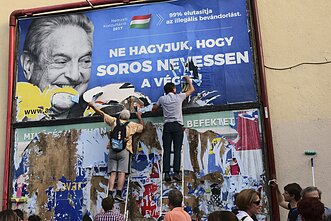
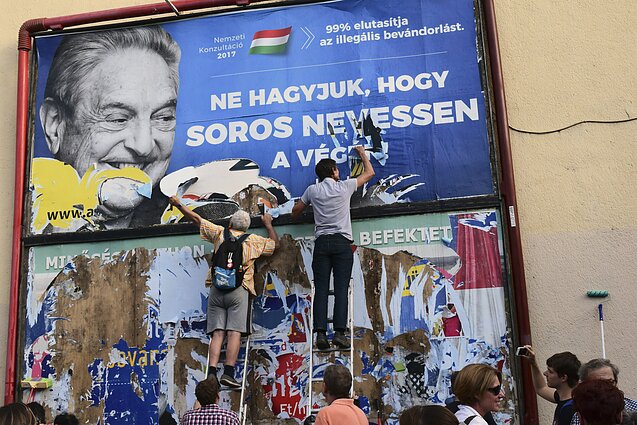
If you were driving across Hungary two years ago, you could notice large posters demonising a man called George Soros. Though familiar to many, he was not running in the 2018 Hungarian elections, yet was turned into public enemy number one by the ruling party.
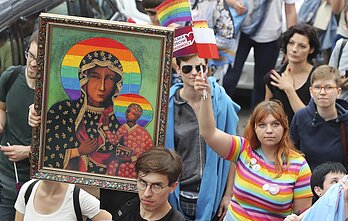
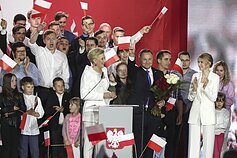
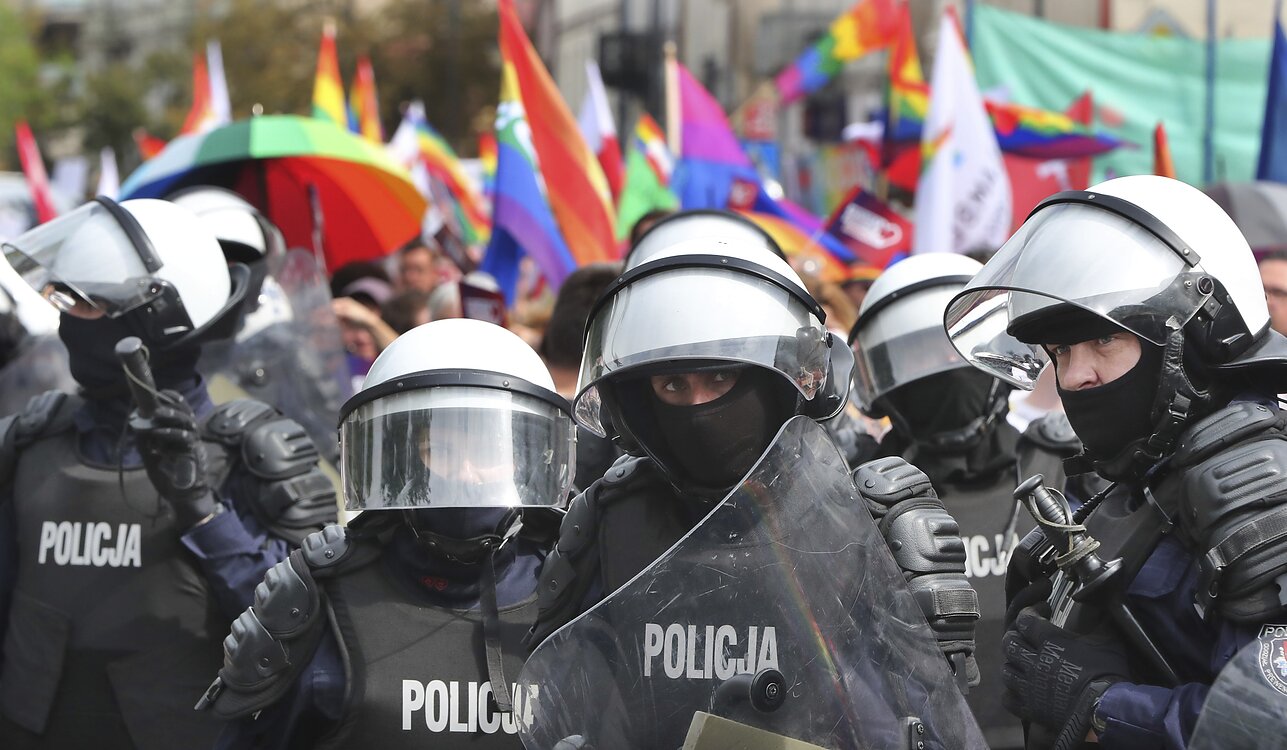
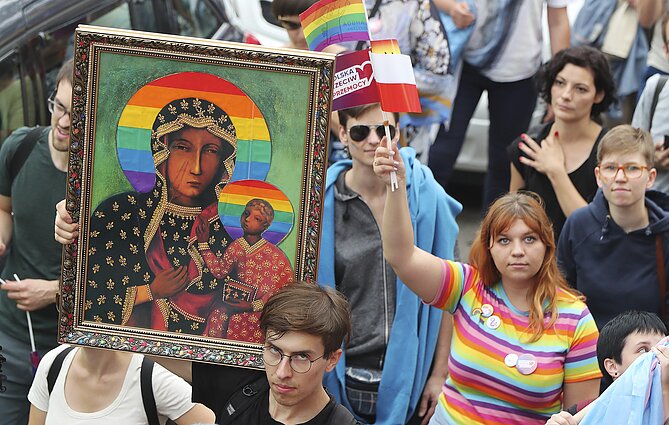
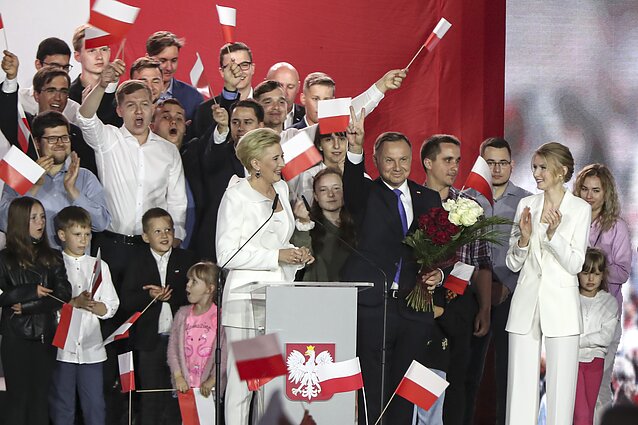
Two years later in Poland, another right-wing ruling party was competing in elections. Andrzej Duda, the incumbent president representing the Law and Justice (PiS) party, decided to shift focus away from an upcoming coronovirus-induced recession, attacks on the rule of law and deteriorating relations with the EU. Instead, he was stoking fears about the country’s LGBTQ+ population, claiming they were as dangerous as communism.
The strategy of attacking a vulnerable group instead of addressing complex political issues was not Duda’s invention; PiS had already done this in the previous parliamentary elections with some success.
While the rule of law and economic forecats are prominent and measurable political problems in Poland, adoption by same-sex couples – something Duda was promising to ban – was already illegal, as were same-sex partnerships and marriage.
Why were these ostensibly secondary issues pushed to the forefront of political debate? More importantly, why did the electorate accept them so readily, instead of focusing on the bread-and-butter politics that affects everyone?
Minority groups, especially ones that the majority has historically seen as threatening, are perfect scapegoats for politicians faced with complex issues with no easy solutions. They turn on the social other, knowing these groups cannot fight back and that historical animosities will fire up the masses. The resulting public debate is aggressive and at times violent, as the whole society is drawn into what theorists call a moral panic.
Moral panics crystallize common social fears and anxieties, but instead of dealing with the real causes fueling these anxieties, they shift the blame onto particular social groups
Moral panics in electoral politics are not uncommon. According to sociologist Jeffrey Weeks, they crystallize common social fears and anxieties, but instead of dealing with the real causes fueling these anxieties, moral panics shift the blame onto particular social groups.
According to Weeks, these groups often embody “folk devils”, people who have been historically disliked or seen as “immoral”. Moral panics therefore are often directed against LGBTQ+ populations, because in many Eastern European societies they encapsulate social “immorality”.
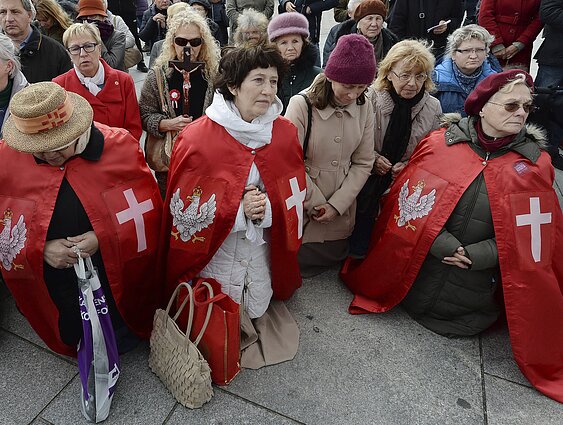
Moral panics function according to a fairly stable schema. First, a politician would need an anxious population. A recession, poverty, a transition or a global pandemic are perfect causes of fear and concern. Then they would need an outlet for the anxiety, a folk devil the population dislikes. The group can have real or perceived influence. Depending on the context, the role can can be filled by the witch, the homosexual, the Jew, or the refugee.
These groups are easier to demonise than others. Stereotypes about them are abundant, waiting to be weaponised: all homosexuals are paedophiles; Jews control the state; non-white migrants are plotting a “hostile replacement” of whites.
The already stigmatised groups have fewer means to control narratives about them. Where LGBTQ+ people are most reviled, they are more reluctant to come out publicly. Jews are very few in Eastern European populations and refugees have no political power.

One can argue that moral panics are simply a political PR tactic; politicians always want to divert attention from serious and complex issues, such as law or the economy. While there is some truth to that view, what make moral panics unique are their targets and the ease with which politicians can successfully scapegoat them, describing them as “moral issues”.
For a moral panic to be effective as political propaganda, it needs to be at least partially grounded in reality. While political divisions or impending economic woes in Poland are not caused by gay people, these issues are real enough and animosity against LGBTQ+ people in some social segments is palpable. Unfortunately, those opposing a moral panic often dismiss the underlying issue altogether as “ridiculous propaganda”. And while it is ridiculous to blame gay people for economic problems, ignoring these problems can be counter-productive.
Poland and Hungary, both led by far-right parties, offer prime examples of successful moral panics carefully crafted for elections. But it would be a mistake to think moral panics are either exclusively right-wing or uniquely Central and Eastern European phenomena. Western European moral panic-mongers successfully utilised the migration crisis – and exported it, with limited success, to Eastern Europe.
It would be a mistake to think moral panics are either exclusively right-wing or uniquely Central and Eastern European phenomen.
Moral panics are familiar in Lithuanian politics, too. In the 2016 parliamentary election, the Labour Party (Darbo Partija) attempted to run an anti-migrant campaign, stoking fears about “streams of refugees”. In the 2012 election, the newly founded Way of Courage (Drąsos Kelias) party capitalised on anxieties about judicial corruption, accusing the justice system of protecting an alleged massive paedophile ring.
Some were more successful than others. The Labour Party’s anti-refugee campaign flopped completely, and they missed the 5-percent electoral threshold for the first time in history. The Way of Courage campaign was more successful, winning them 8 percent of the vote.
The Labour Party’s folk devils – refugees – were so small in number that they couldn’t make the electorate anxious. Having a scapegoat is not enough, there has to be a major anxiety in need of displacing to begin with.
Moral panics also work well when they purport to protect a vulnerable group: women in the case of refugees, kids in the case of abuse. Moreover, in 2012, unlike in 2016, Lithuania was still suffering the consequences of austerity and the financial crisis, which made for a fertile ground to stoke anxiety.
The moral panic of the recent Polish election appears to have paid its dividends, too. Anti-LGBTQ+ rhetoric played well into the narrative of rural vs. urban, traditional vs. liberal divisions in Poland.
The particularly harsh words from Duda also made it difficult for LGBTQ+ activists, liberals, and left-wing voters – as well as his opponent – to ignore his agenda.
Finally, international media also bought into Duda’s strategy by publicising the election as one mainly about LGBTQ+ rights, downplaying the significance of other issues. Perhaps scandalising homophobic rhetoric was easier for Western outlets, in part due to differences in how LGBTQ+ topics are discussed in Poland and some Western European countries.
It is important to note that moral panics do little to nothing to solve the underlying causes of the anxieties they capitalise on. They don’t even realistically address the perceived threats: in Poland, same-sex families are not recognised anyway, nor is adoption by same-sex couples.
For Lithuania’s Way of Courage, the root causes of the perceived judicial injustice remained unchanged during their tenure in parliament, while post-recession hardships continued. What the moral panics did achieve, unfortunately, was stoking distrust in the society and escalating attacks, often violent, against the targeted minorities.
What is the future for moral panics in Eastern Europe and Lithuania? With the refugee crisis slowly fading out, new folk devils are bound to emerge. In Poland and Hungary, sexuality and gender identity take centre stage.
It must be said that these societies are more polarised on LGBTQ+ issues than Lithuania, where most people share a negative outlook on their lesbian, gay, bisexual and trans compatriots. Polarisation is helpful in flaming anxiety and in-fighting, since more actors will join in on one side or the other.

In more conservative contexts, moral panics can be used as a purity test for traditional politics. In Lithuania, where traditional-conservative parties compete for power among themselves rather than with socially liberal opponents, attacking a folk devil can help set oneself apart.
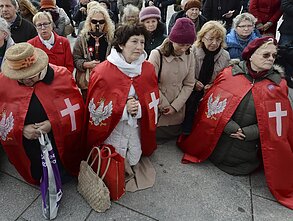
Moreover, general social attitudes make a large difference. Poland’s population is more religious than Lithuania’s, judging by worship attendance. As the Church joined the anti-LGBTQ+ rhetoric, they drew more people in.
Hungary and Poland also see a continuing concentration of power in the hands of one party, which also usurps public service channels that can help spread moral panics. In more pluralist Lithuania, diversity in both the government and the opposition can help avoid focus on scapegoating.
Yet, current conditions are a cause for worry. After months of quarantine and in the face of a recession that may leave many jobless and with reduced savings, social tensions and anxieties run high. No place in the world is without its own folk devils, and it may be a matter of time before our anxieties are displaced onto them.
Simonas Bartulis is a Philosophy, Politics and Economics graduate of Yale-NUS College. He lives in Singapore, works as an education consultant and writes on human rights and LGBTQ+ issues.