











As Vilnius cautiously reopened after the lockdown, it took pains to repurpose its space. Could the airport serve as a cinema? Could streets become cafes? Could bars double as fashion stores? But in the frantic drive to liven it all up again, has Vilnius shrunk its public space?
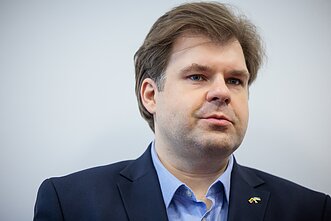
“The quarantine period completely changed the usual urban lifestyle. The city emptied out. The normal hubbub, the sense of togetherness and liveliness vanished. But these are precisely the qualities people seek when they choose to live in the city,” says Karolis Žukauskas, an adviser to the mayor of Vilnius. “Vilnius municipality’s goal is to keep the city centre vibrant [and] attractive, to give business a boost.”
Read more: Vilnius to turn into vast open-air cafe
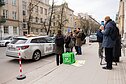
By June 1, the municipality had issued 380 permits to outdoor cafes, bars, and food trucks to serve their clients on public squares and pavements. The permits will be valid until September. Weather permitting, cafes may buzz even longer.
According to Žukauskas, the street by Jonas Basanavičius monument is one that has livened up. Meanwhile, a resident of the street contacted LRT.lt to complain about noise, vomit, and broken glass near her home. Her only consolation was that there are no tourists – yet.
“’Lending’ spaces of the city to outdoor cafes can create temporary inconveniences for pedestrians, cyclists and drivers,” the municipality admitted on its website. “But let’s be forgiving at this time so that Vilnius opens up alive after quarantine instead of staying with shutters closed.”
“Cafes and bars are important urban institutions,” says Dalia Čiupailaitė-Višnevska who lectures at the Faculty of Philosophy, Vilnius University. “They provide opportunities to go out and be with others. Outdoor cafes make cities feel safer at night. It’s cosier to walk past people than dark empty walls. They fill evenings with lights and conversations.”

Nonetheless, the cities researcher points to Savičiaus street as one where business needs have trumped those of residents. “There’s no balance on the street – cafes cover the entire passage and create terrible noise.”
“If the street is beyond what you can afford, you can’t even enjoy a walk or go people-watching there. You simply cannot pass,” says Čiupailaitė-Višnevska. When an outdoor cafe is expensive, it also adds psychological pressure.
One casual cafe close to a playground was beloved by parents who could rest while their children played, according to Čiupailaitė-Višnevska. But today, there is a pricier establishment in its place.
“This changes the crowd that can sit there. It’s less democratic,” she notes.
Around the UNESCO-protected historic centre of Vilnius, tables on a narrow pavement make movement awkward.
“You must trot carefully between the tables, pressing against the wall,” says Čiupailaitė-Višnevska. “Take Vilniaus street. It’s difficult to manoeuvre with a bicycle, so how would people with pushchairs or movement difficulties manage?”
Read more: Mannequins fill empty tables in Vilnius cafes to keep physical distance
According to the mayor’s adviser Žukauskas, old town cafes must maintain a 1.2m-wide area for pedestrians to move.
“They cannot limit the movement of non-clients in the territory, but principles of friendly coexistence apply to cafe owners, clients, and pedestrians alike,” says Žukauskas, adding that people can check territorial boundaries on the municipality’s online map. In case of any conflicts with residents or pedestrians, the municipality may review the permit.
He admitts that so far the municipality has been too busy rolling out its ‘unconventional’ cafe policy to conduct surveys among residents.
“We wanted to help cafes as soon as possible so that they don’t go bankrupt, leaving Vilnius half-empty. […] Now we have time to evaluate the decision and collect residents’ opinions,” says Žukauskas.
Overall, Čiupailaitė-Višnevska can see many reasons for Vilnius residents to be excited about cafes in public spaces. “When outdoor cafes opened up [after the lockdown], the city felt like a festival. It was filled with people savouring sunshine. This shows how much they need to be in public, to be in the city, to meet others outside of homes.”
“Some cafes are chaotic like the city itself. Other cafes are like tidy drawers, where pencils and yarns lurk in separate compartments,” says Čiupailaitė-Višnevska.
To make the outdoor cafe policy work for residents and businesses, the city will need to hold spontaneity and strict observance of rules to equal measure.
Daiva Repečkaitė is a freelance journalist focusing on human rights, health and innovation. She tweets at @daiva_hadiva

Newsletter
Every Friday morning.