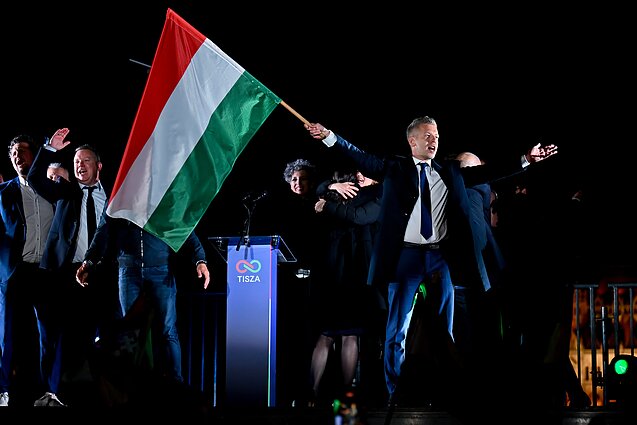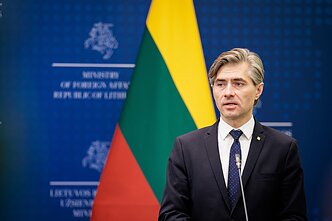










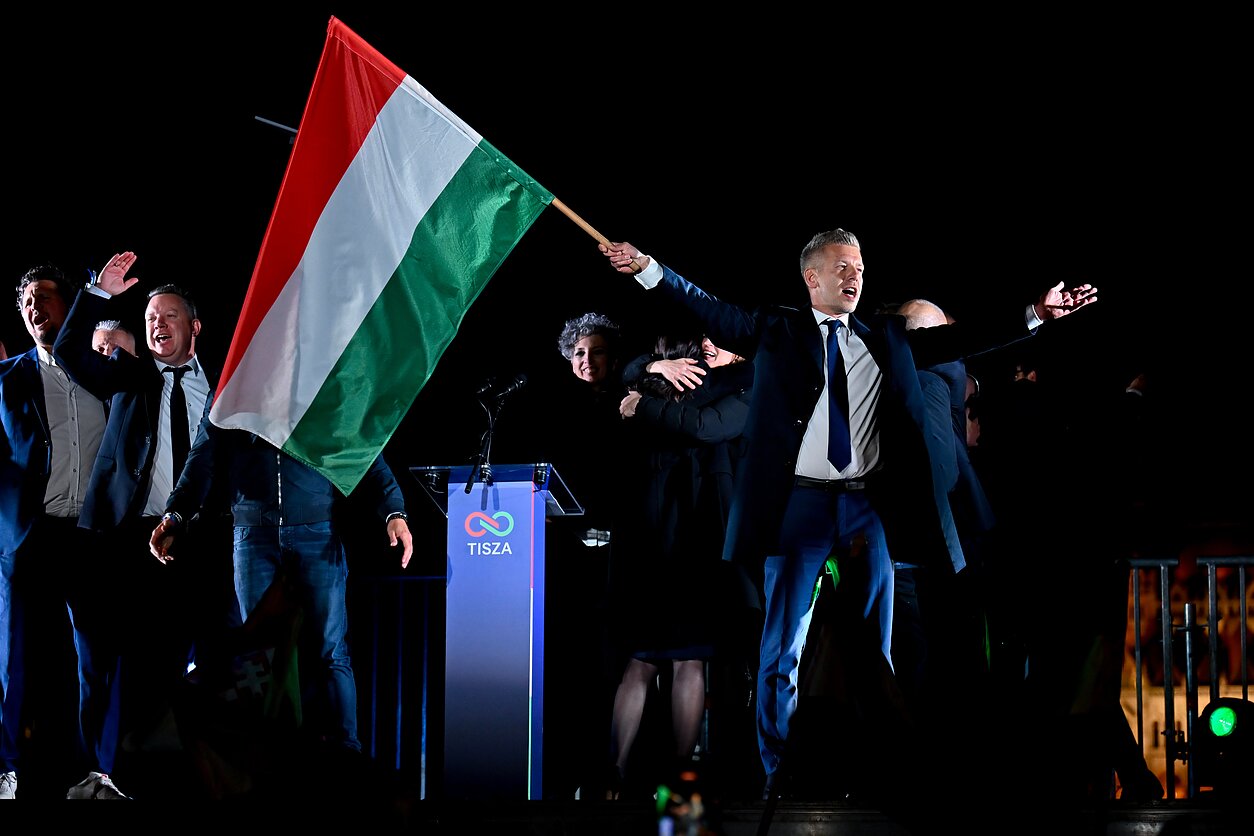
Foreign Minister Kęstutis Budrys on Tuesday said he expects Hungary’s election winner, Péter Magyar, to stop blocking key European Union decisions, including a 90 billion euro loan package for Ukraine, calling it the “absolute baseline” for the new administration.
“What everyone expects from Hungary is to unblock those essential decisions; this is not setting the bar high, it is the absolute basic minimum,” Budrys told LRT RADIO. “To unblock the 90 billion-euro loan for Ukraine, in which Hungary is not even participating.”
Budrys also called on Hungary to lift its opposition to previously agreed measures, including 6.6 billion euros in support for Ukraine’s defence needs through the European Peace Facility.
“This concerns, for instance, 6.6 billion euros in support for Ukraine’s defence needs – the so-called European Peace Facility – and a host of other decisions,” he said.
The Lithuanian minister said the European Union has frequently failed to adopt unified positions due to Hungarian vetoes.
“In the vast majority of cases where we failed as the European Union to adopt a unified position, it was due to a Hungarian veto,” Budrys said. “This kind of malicious destruction must end. I do not think this is an excessive expectation. It is simply what other EU member states expect.”
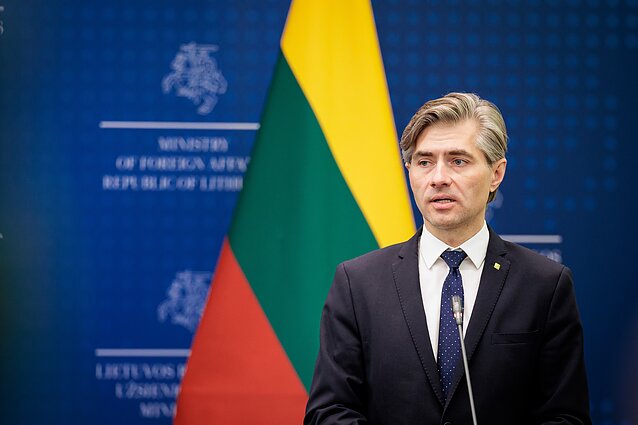
He added that while expectations are high, policy shifts may not happen immediately following Hungary’s election.
“We also understand that the system does not reset immediately after elections; it will probably take time,” Budrys said.
Budrys also criticised Brussels’ decision to freeze some funds earmarked for Hungary, describing the move as unacceptable and expressing hope that the new government would remove the need for such measures.
“These were absolute last-resort, hard measures that the European Union is probably not proud of,” he said. “It was completely unacceptable to me when you have to buy votes for some support or withhold support to unblock certain decisions. This is not good. It shows there is a flaw in the system and it is stalling.”
He said the EU would have no reason to continue withholding funds if Hungary addresses concerns raised by the European Commission and member states regarding democratic standards.
Budrys also said he expects scrutiny of contacts between Hungarian officials and Russia, including interactions by Foreign Minister Péter Szijjártó and Prime Minister Viktor Orbán with the Kremlin.
“I am convinced that the published facts regarding collaboration with the hostile side will be investigated,” Budrys said. “This cannot be left as it is. It is a matter of state responsibility.”

Newsletter
Every Friday morning.