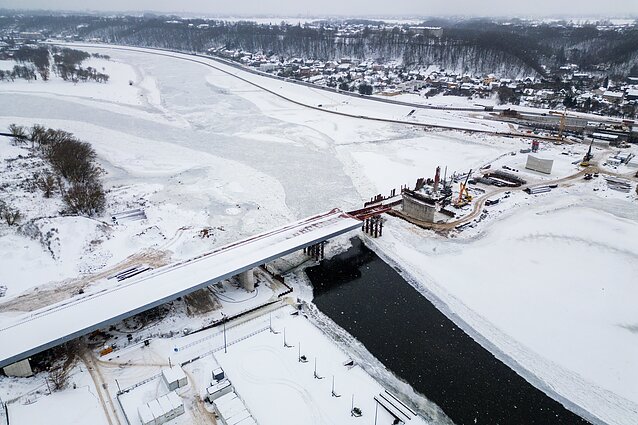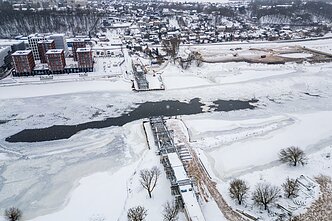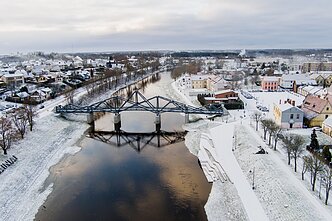













Lithuania is not expected to face flooding this weekend, and forecasts suggest a favourable situation may continue, officials said Friday.
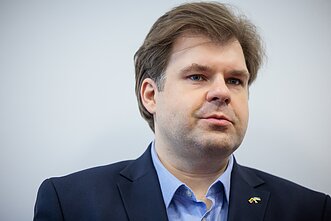
Vilmantas Vitkauskas, head of the National Crisis Management Centre (NKVC), said weather conditions remain manageable because temperature fluctuations are gradual, slowing snowmelt and allowing water to seep into the ground rather than run off into rivers.
“The swings in temperature are actually helpful,” Vitkauskas told reporters in Kaunas. “Ice is melting slowly, and snow in fields and on the ground is also melting gradually. The frost isn’t deep, so water can penetrate the soil instead of flowing into rivers.”
According to Vitkauskas, river levels are currently lower than usual for this time of year. “So in the near term – over the weekend – flooding is not expected,” he said, adding that authorities continue to prepare for worst-case scenarios while hoping for the best.
Vitkauskas spoke after a meeting with municipal mayors and agency representatives in Kaunas District, where Lithuania’s first State Flood Risk Management Plan was presented. The plan establishes four phases: continuous monitoring and assessment, heightened readiness, active response, and emergency management with potential evacuation.
“If flooding were forecast, the services would act before it begins,” Vitkauskas said. “Right now, we are at phase zero.”
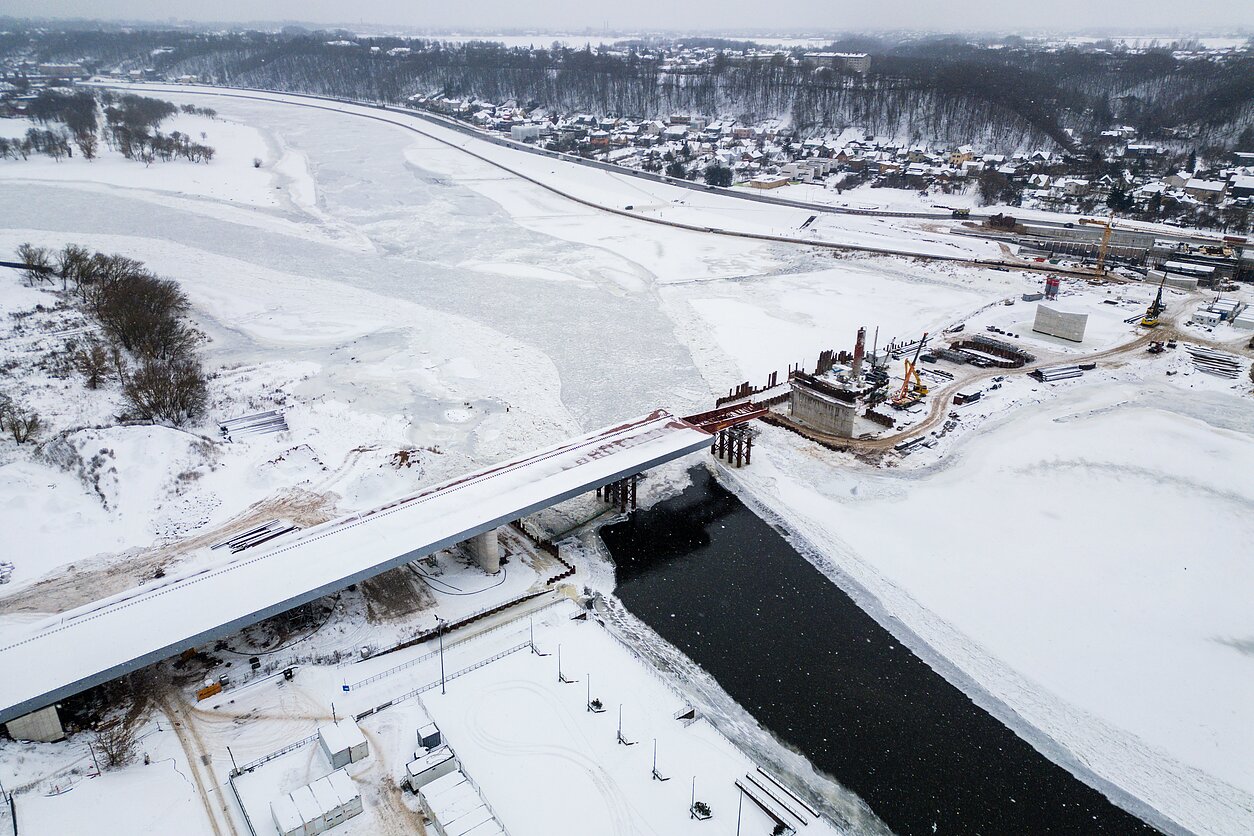
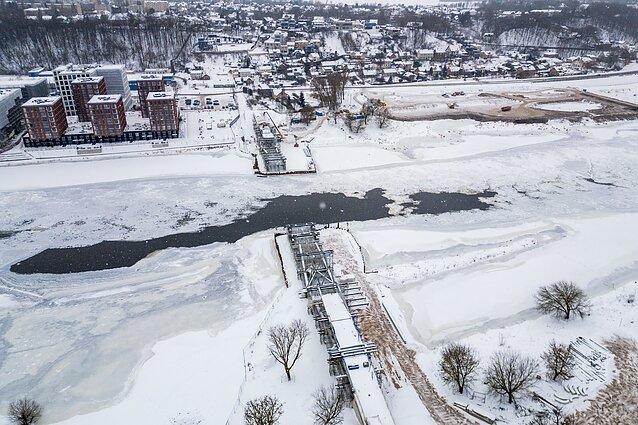
He cautioned that sudden warming or strong westerly winds could increase the risk of flooding by slowing river outflow to the sea. The Neris River is considered particularly vulnerable, with eight to ten potential ice jam points that could raise upstream water levels.
Vitkauskas noted that Kaunas City and Kaunas District face the greatest threat, where water levels could rise rapidly but recede quickly. In the Pamarys area, flooding would likely be slower and longer-lasting.
“The rescue teams and resources will be sufficient; the state will allocate what is needed. Citizens have no reason to worry,” he said.
The flood management plan details practical tools to be deployed depending on conditions, including temporary barriers, sandbags, pumps, generators, communication and lighting equipment, and rescue gear for evacuation centres.
Prime Minister Inga Ruginienė previously said that 33 municipalities are currently monitoring potential flood risks, ensuring early response capabilities.
The NKVC emphasised that while the immediate threat is low, authorities remain vigilant and prepared for any rapid changes in weather.

Newsletter
Every Friday morning.