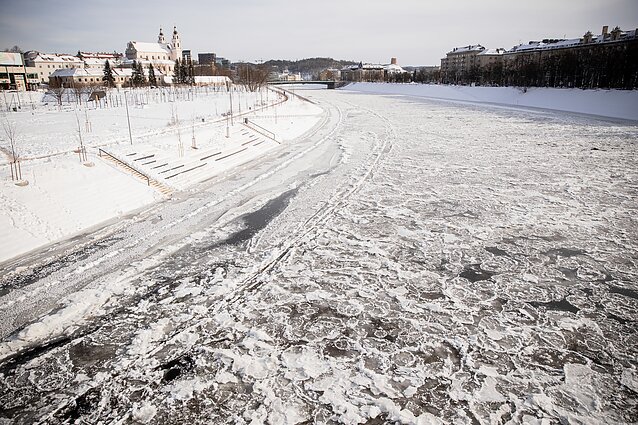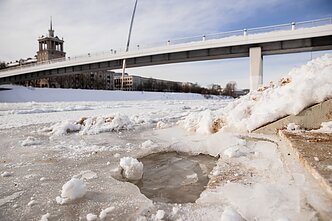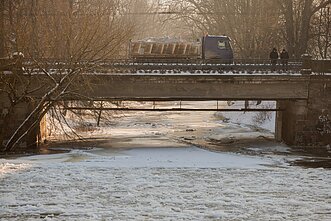












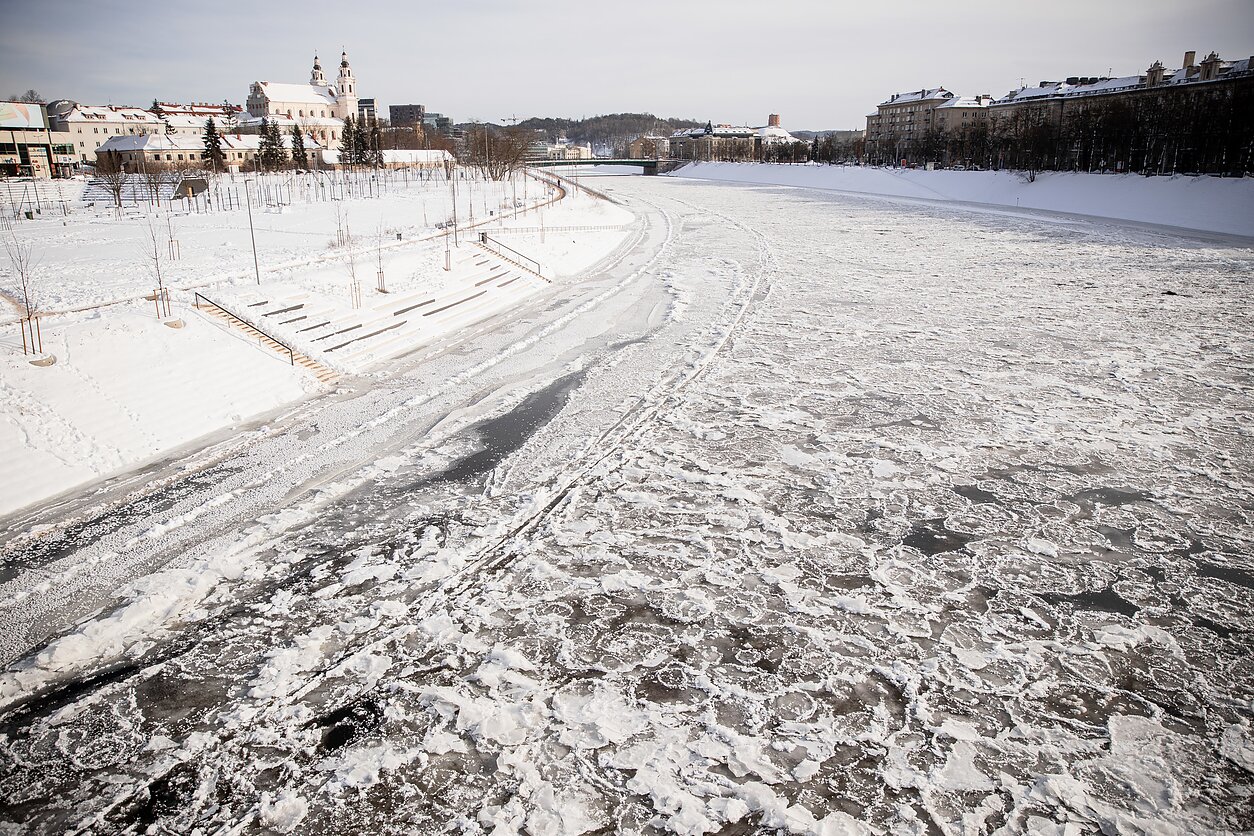
Although freezing temperatures continue across Lithuania, authorities are urging residents in some areas to prepare for possible flooding if a thaw causes the Neris River to swell.
Warnings were issued as early as January to residents of the Kaunas district about potential flooding along the Neris. While forecasters are not predicting a sharp warm-up in the coming days, the capital, Vilnius, says it is preparing for various scenarios.
According to the Vilnius City Municipality, the most vulnerable areas are where the Neris could overflow most significantly: parts of Grigiškės, Rasos, Naujoji Vilnia, Paupys and several pockets of the Old Town, particularly near the confluence of the Neris, Vilnelė and Vokė rivers.

“It is especially difficult to predict exactly how the water will behave, because rivers in Lithuania form a network, and the situation in one place depends on the overall network,” municipal officials said in written comments. “For example, the situation in Vilnius directly depends on conditions near Jonava and Kaunas.”
The municipality said it is working with the Inland Waterways Authority to model worst-case scenarios and identify precise locations at risk of flooding.
Emergency centre activated
City officials said weather forecasts are monitored throughout the winter and that preventive measures are being adjusted accordingly. Snow piled along curbs is being cleared to free storm drains and allow meltwater to flow more easily.
Municipal services company Grinda is regularly checking low-lying residential areas, including Grigiškės, Žvėrynas and Markučiai, for rising water levels and potential inundation.

If needed, the city can deploy heavy equipment, as well as sandbags and concrete blocks, to protect vulnerable sites, officials said.
Vilnius has also activated preventive operations at its Emergency Situations Centre. Authorities are analysing historical flood data, monitoring river gauge stations and using drones to assess real-time river conditions. Local district offices are also evaluating on-the-ground risks.
Residents urged to prepare
The municipality said it is prepared to evacuate residents who cannot leave flooded areas on their own. Temporary accommodation would be provided in collective protection facilities or social housing if necessary. Those affected by flooding would be eligible to apply for compensation.
However, officials stressed that residents also bear responsibility for protecting their property and health by taking preventive steps, such as safeguarding basements and moving valuables to higher ground. Local ward representatives have been instructed to visit residents in at-risk zones and distribute guidance on flood preparedness and potential compensation.
Forecast uncertainty
When a significant thaw might occur remains unclear. Gytis Valaika, a representative of the Lithuanian Hydrometeorological Service, said forecast reliability has dropped sharply in recent weeks because prevailing air masses are arriving from eastern continental regions rather than the Atlantic.
“In such conditions, forecast reliability is only about three days, and some would say even less,” Valaika said.
A thaw once expected in southern Lithuania over the weekend now appears to have shifted or may not materialise at all, he said. Long-term projections suggest that wintry conditions could persist through late February and even into early March.
“Spring will come, of course, as the days grow longer and the sun rises higher,” Valaika said. “But it does not look like it will be an early spring this year.”
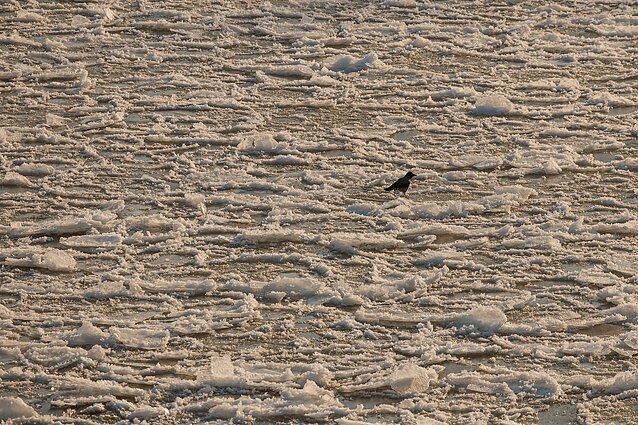
He added that thick ice on rivers and lakes and compacted snow accumulated over several weeks will require significant warmth to melt, potentially prolonging the flood risk once temperatures rise.

Newsletter
Every Friday morning.