













Lithuanian medical professionals are being encouraged to gain hands-on experience in Ukrainian hospitals as the country considers changes to medical training programs to better prepare doctors to treat war-related injuries.
Ukrainian doctors, meanwhile, warn that training alone is not enough without major investment in infrastructure that allows hospitals to operate during air raid sirens.
So far, Lithuania has secured only about one-fifth of the funding needed to adapt hospitals for such conditions.
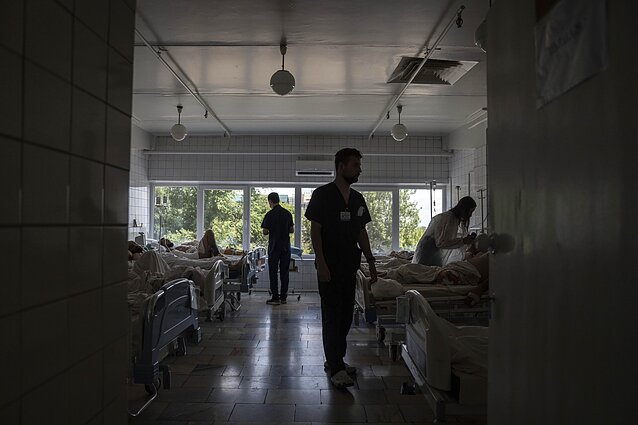
In early December, a missile strike near Ukraine’s Mechnikov Hospital in Dnipro wounded 40 people, 13 of whom could not be saved. Visiting Kaunas Clinics recently, the hospital’s director said Ukraine’s medical system has learned to work under wartime conditions at a heavy cost.
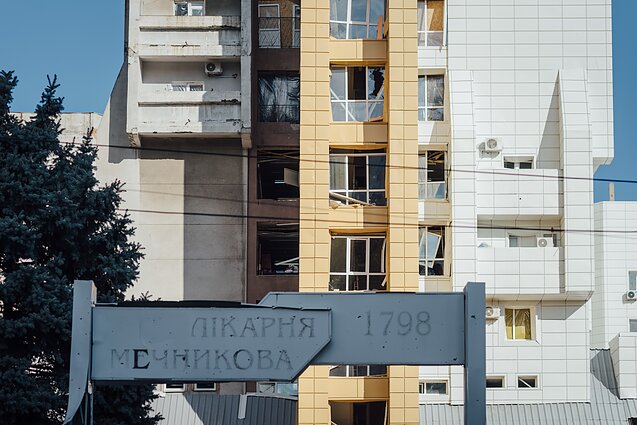
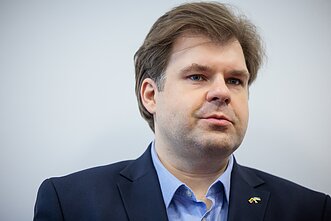
“Every day we take an exam again – whether civilians and soldiers will survive or not,” said Serhii Ryzhenko, director general of Dnipro’s Mechnikov Hospital.
Since Russia launched its full-scale invasion, the hospital – located about 100 kilometres from the front line – has seen the number of patients double from 1,000 to 2,000 a day. The need for intensive care beds has increased fivefold, from 50 to 250.
“Work must be precisely planned – from ambulance arrivals to the readiness of intensive care units,” Ryzhenko said. “All teams must be prepared to receive 50 to 100 severely injured people at the same time.”
The injuries sustained in war are unlike those typically seen by civilian doctors, Lithuanian medics say. Kaunas Clinics physician Vilma Traškaitė-Juškevičienė, who recently returned from Ukraine, said the experience was eye-opening.
“These are injuries that civilian doctors in Lithuania simply do not encounter,” she said. “Sometimes a fragment removed from the body looks small, but the damage it causes is massive – injuries to the abdomen, the chest.”
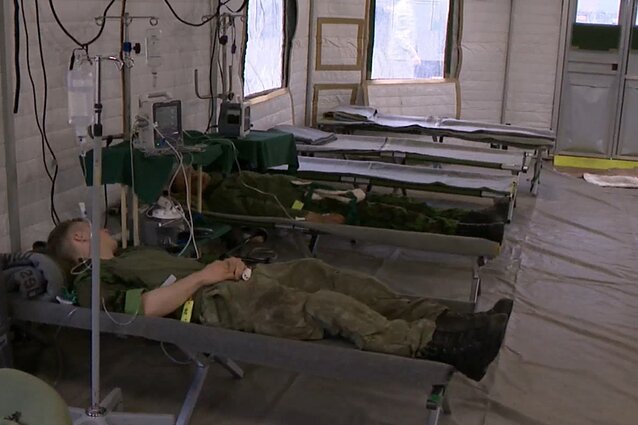
Doctors say training, especially gaining experience in hospitals operating under real wartime conditions, is essential.
“You must learn to make the right decision at the right time,” said Kęstutis Stašaitis, Kaunas Clinics’ director for medicine and safety. “In civilian medicine, we often perform surgery from start to finish, even reconstruction. In war, you do only what is needed to save a life, stop there and move on to the next patient.”
Lithuania’s Health Ministry is discussing with universities possible changes to medical curricula and the creation of postgraduate courses focused on treating war trauma. A bigger challenge, officials say, is building sufficient reserves of supplies and staff.
“If you want to have a reserve of materials, you need to fill it – and that requires money,” Vice Health Minister Skirmantas Krunkaitis said.
Funding is also lacking to adapt hospital infrastructure so facilities can operate safely and independently underground during emergencies. Officials estimate that about 350 million euros is needed.
“At the moment, we have only about one-fifth of the resources required just to prepare the infrastructure,” Krunkaitis said.
Adapting hospitals would require renovating basements, installing engineering systems and ensuring access not only to water and electricity but also to medical equipment. Stašaitis noted that while Mechnikov Hospital expanded its intensive care capacity from 50 to 250 beds, Lithuania would struggle to do the same overnight.
“We currently have about 90 intensive care beds. We could not suddenly double or triple that in a single day, but there are plans for redistributing resources,” he said.
Of roughly 60 inpatient medical facilities in Lithuania, 23 would be designated as key hospitals providing services in the event of war, according to officials.

Newsletter
Every Friday morning.