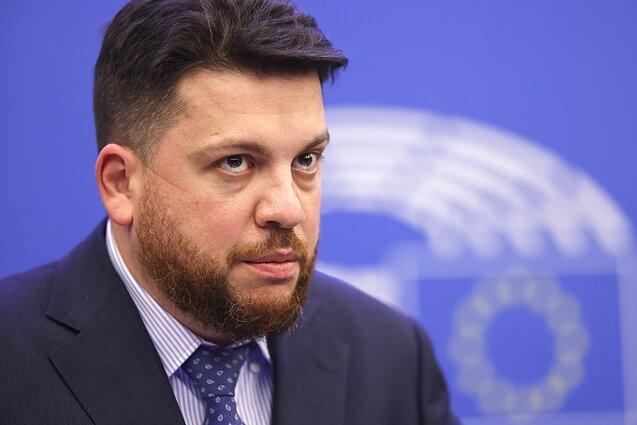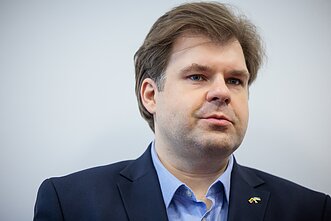













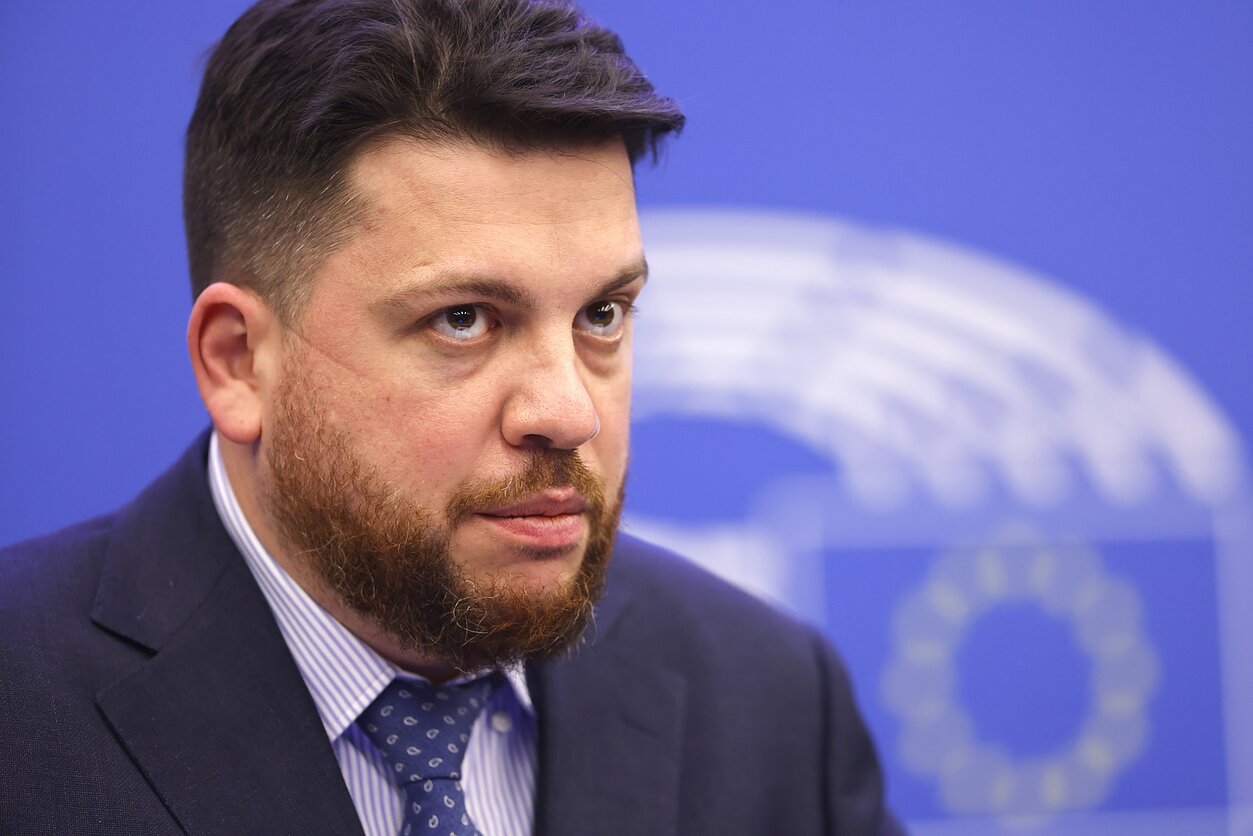
Russian opposition figure Leonid Volkov, a former close ally of late Kremlin critic Alexei Navalny, said he regrets controversial remarks about Ukrainians that surfaced this week but continues to reject what he described as “propagandistic rhetoric” from Ukraine’s leadership.
“I regret that I wrote that message. It was foolish, wrong and an emotionally harsh message that should not have been written,” Volkov said in an interview with LRT.lt, referring to a private exchange that was published by a former associate and sparked criticism in Lithuania and beyond.
His comments also prompted some politicians to call for revoking his residence permit in Lithuania. On Tuesday, the Migration Department said it asked the State Security Department to asses whether Volkov’s presence in the country poses a threat to national security.
Further reading
The comments became public Monday after Anna Tiron, a representative of the Russian Volunteer Corps fighting alongside Ukraine’s military, released screenshots of a private conversation with Volkov. In the exchange, Volkov appeared to welcome the reported killing of Denis Kapustin, the corps’ leader, and harshly criticised senior Ukrainian officials.
“At least in some sense, denazification really did happen. A Nazi died who, by his very existence, was a gift to Kremlin propaganda,” Volkov wrote in late December, also using derogatory language to describe Ukrainian military intelligence chief Kyrylo Budanov whom he called “a disgusting provincial political technologist”.

He went on to say he hoped Kapustin’s associates, including senior officials in Ukrainian President Volodymyr Zelenskyy’s administration, would be imprisoned, arguing that Ukraine could not win the war while relying on figures like Kapustin.
It later emerged that Kapustin’s death had been staged by Ukraine’s military intelligence as part of a counterintelligence operation, a fact that became public in January.
After the messages were disclosed, Volkov apologised, calling the remarks “emotional and harsh,” but reiterated his condemnation of neo-Nazism.
In the interview for LRT.lt, Volkov said his message to Tiron, a former employee of Navalny’s Anti-Corruption Foundation, stemmed from his refusal to support neo-Nazis. Kapustin, a Moscow-born Russian who moved to Germany as a teenager, was widely known for his ties to far-right extremist circles and for founding a clothing brand that used Nazi symbolism. Germany revoked his permanent residence permit in 2019 and banned him from the Schengen zone for “efforts against the liberal democratic constitution”.
Following Russia’s full-scale invasion of Ukraine in 2022, Kapustin formed the Russian Volunteer Corps in Kyiv, which became the largest unit of Russian nationals fighting on Ukraine’s side. Russia has designated the group a terrorist organisation, and Kapustin has been sentenced in absentia to life in prison on charges including treason and terrorism.
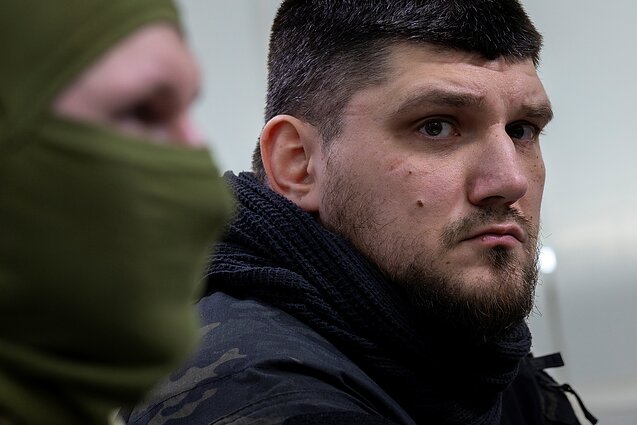
Volkov said he was angered by what he described as efforts by some Russians to portray Kapustin as a hero.
“I dislike neo-Nazis and believe it is wrong to support or cooperate with them,” Volkov said. “Fighting evil with evil is not the best idea.”
Volkov also said he fundamentally disagrees with statements by some Ukrainian officials suggesting that all Russians bear responsibility for Moscow’s war in Ukraine, calling such claims counterproductive.
“We have seen a lot of public propagandistic rhetoric: ‘all Russians are bad’, ‘all Russians are guilty’, ‘everyone with a Russian passport shares responsibility for Putin’s crimes’,” he said, adding that similar messages had been voiced by representatives of Ukraine’s presidential office.
Such rhetoric, he argued, plays into Kremlin propaganda by reinforcing the narrative that the world is collectively hostile toward Russians. At the same time, Volkov said he understands the emotional roots of those statements given the scale and duration of Russia’s aggression.
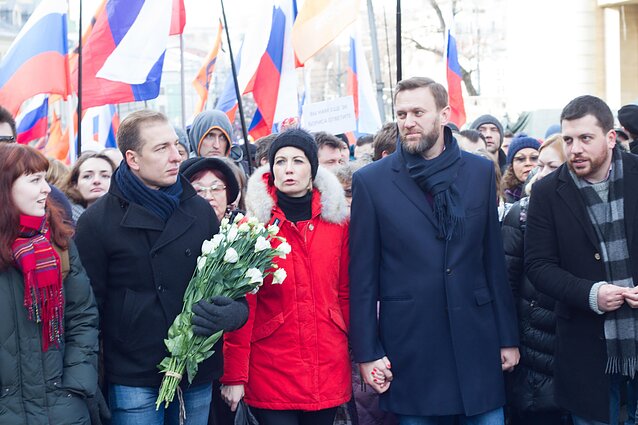
Volkov stressed that his views do not represent the position of the Anti-Corruption Foundation.
The opposition politician said he has been living legally in Lithuania since 2019, when Russian authorities opened a criminal case against him and sentenced him in absentia to 18 years in prison. He currently holds a temporary residence permit and plans to apply for permanent residence after passing Lithuania’s language and constitutional exams.
Volkov said he and foundation staff are protected by a privately funded security service and denied having any financial ties to the Lithuanian state beyond paying taxes. After he was attacked in Vilnius in March 2024, Lithuanian police provided protection for about a week, he said.
Responding to criticism from Lithuanian conservative politicians questioning whether the country should continue hosting Russian and Belarusian opposition figures, Volkov expressed gratitude to Lithuania.
“I am very thankful to Lithuania for allowing us to continue our work against Putin’s regime from here,” he said, calling the country’s policy of supporting dissidents “a source of great pride”.
Asked which side he supports in the war, Volkov said, “Putin’s Russia must lose, and I am doing everything possible to make that happen”. He added that he considers the military reconquest of all occupied Ukrainian territories unrealistic.

Newsletter
Every Friday morning.