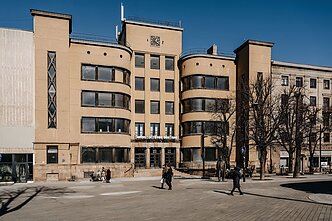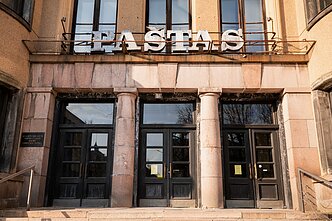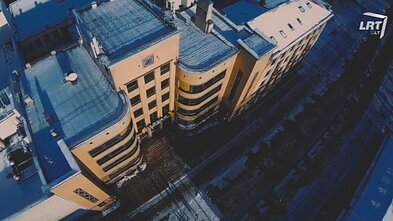
















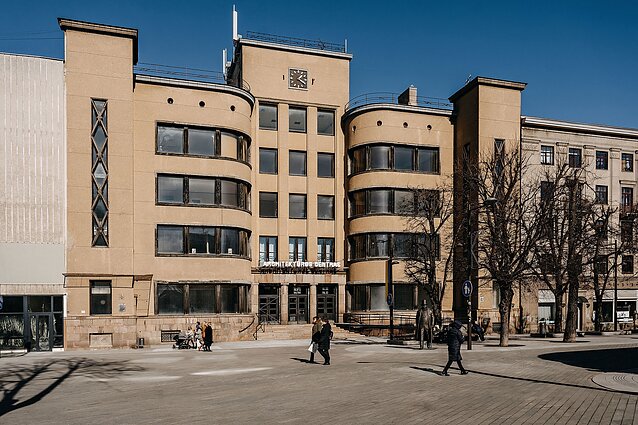
Renovation work on Kaunas’ historic central post office, one of the most significant buildings from the city’s interwar period, will begin soon, officials said. Nearly €10 million has been allocated for the project, after which the building will house the National Architecture Institute.
The last letters were sent from the building’s grand hall six years ago. After the Lithuanian Post decided it no longer needed the property, the state-owned company considered selling it at auction. Following a public campaign from Kaunas residents, the government opted to repurpose the building for public use, prompting plans for restoration.
“The structural condition is truly good – it is a well-built structure. There is no need for major reconstruction,” said Šarūnas Šoblinskas, director of the Cultural Infrastructure Centre. “But its engineering systems have a lifespan, and some work was done even during Soviet times. Later, when the Lithuanian Post operated the building, there were some accidents.”

Five companies participated in the tender launched this autumn by the Cultural Infrastructure Centre. A contract has been signed with the winning bidder, with work expected to cost nearly €10 million.
“There were many questions and clarifications. We answered everything received during the tender process. The contractors, being professionals, clearly evaluated their capabilities,” Šoblinskas said.
Marijus Drumsta, head of the winning company Ekstra Statyba, said preparatory work is already underway.
“We expect to start full-scale work at the end of this year or early next year. About 15 months have been allocated. If there are no errors in the project, we should meet the deadline,” he said.

Designed by architect Feliksas Vizbaras, the post office was inaugurated in 1932 and is considered one of Kaunas’ architectural landmarks, it sits within a UNESCO heritage zone. Contractors are already examining challenges such as restoring the building’s curved windows.
Once the overhaul is complete, the National Architecture Institute – currently operating out of temporary premises – will move into the five-story building. Institute director Kęstutis Kuizinas said plans include an architects’ residency, a reading room, children’s spaces, exhibition areas and a permanent display.

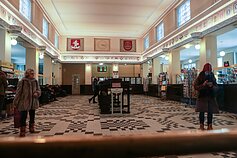
“In the main operations hall – a large, beautifully decorated space with many protected heritage features – we plan to host large-scale installations commissioned from artists, architects and designers,” Kuizinas said.
The institute has also begun collecting materials from senior architects to preserve drawings, recordings and artifacts, said institute representative Algirdas Šapoka.
If work proceeds as scheduled, the institute expects to move into the former post office by the end of 2027.


Newsletter
Every Friday morning.