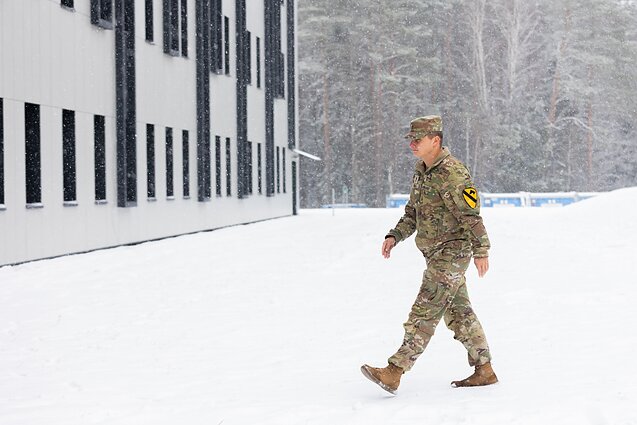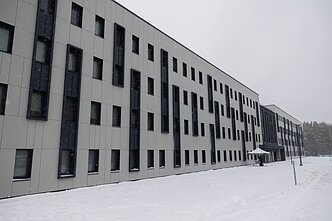













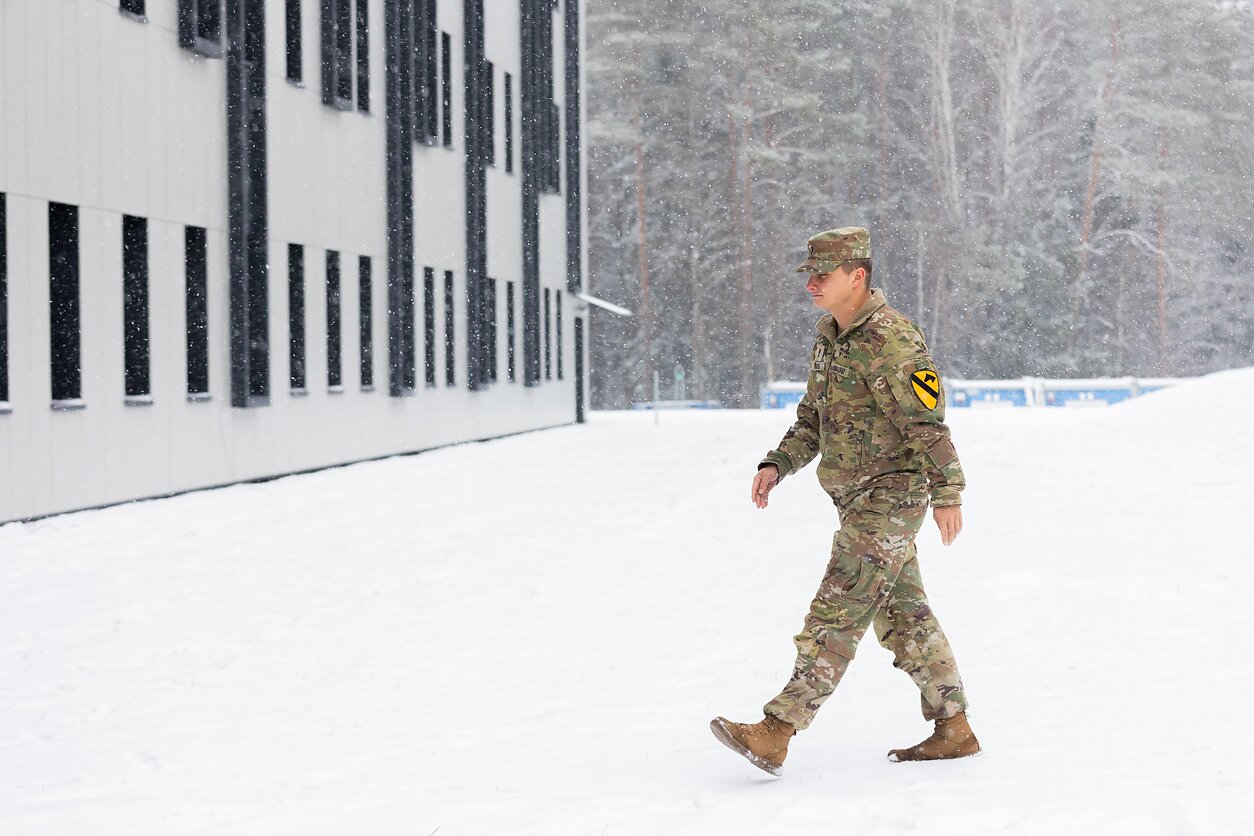
US soldiers stationed at the Gen. Silvestras Žukauskas Training Area in eastern Lithuania have moved into newly built barracks, classrooms, dining facilities and maintenance zones, Lithuanian defence officials said. It is their hope that Washington’s stated intentions to reduce its military presence in Europe will not include the Baltics.
The upgrades were unveiled Thursday during a ribbon-cutting ceremony attended by an American delegation, Lithuanian political leaders and senior military commanders. The facilities will house the 12th rotation of US troops, who arrived in October.
For the past four years, rotating US units had been living in modular housing at Camp Herkus, which also included a gym and recreation areas. The new complex consists of three fully equipped barracks named Oak, Maple and Birch at the request of the US Army.
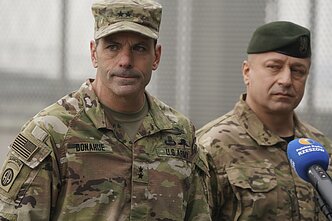
“These facilities truly reflect the relationship between the United States and Lithuania,” said Lt. Gen. Christopher Donahue, commander of US Army Europe and Africa. “Our soldiers know why we are here, to ensure the defence of NATO’s eastern flank becomes a reality. With all of our allies, your work helps ensure war never comes here. And if an adversary crosses the line, we will win.”

Two US battalions from the Texas-based 1st Cavalry Division – equipped with Abrams tanks, Bradley fighting vehicles and Paladin self-propelled howitzers – are now stationed at the site, totalling about 1,000 personnel.
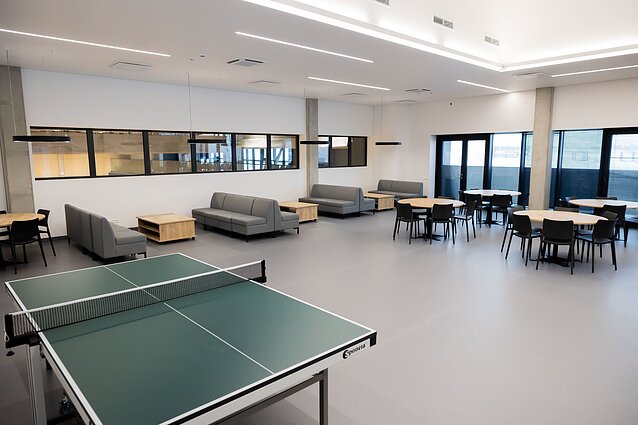
A new multipurpose complex was also built to host classes, training planning and sports events. It carries the name of American troops who died in a nearby swamp this summer.
The ceremony was attended by the commander of US Forces Europe and Matthew Whitaker, the US ambassador to NATO.
Lithuanian officials applauded the improved living and training conditions. Defence Minister Robertas Kaunas said the country has tripled its investment in supporting US forces as part of its host-nation commitments.

“This entire infrastructure and our increased investment send a strong signal that we are not only security recipients but contributors as well,” Kaunas said.
Concerns about a potential US drawdown surfaced earlier this autumn, after the United States significantly reduced its troop presence in Romania. American officials said the change was due to modernised systems requiring fewer support personnel, not a strategic withdrawal from Europe.
Further reading
Lithuanian Land Forces commander Brig. Gen. Nerijus Stankevičius said there are no indications the US intends to scale back its presence in Lithuania. He noted that next year Lithuania expects to receive its first HIMARS rocket artillery systems, the same system the 12th US rotation brought with them.
“We are already preparing our teams so we can begin training with this equipment as soon as possible,” Stankevičius said.
Lithuania has raised its defence spending to over 5% of its GDP, meeting and surpassing the level President Donald Trump repeatedly demanded from NATO allies. The country has also invested heavily in infrastructure and support for US rotational forces.
But a decision on whether a 13th US rotation will follow has not yet been announced.

Newsletter
Every Friday morning.